


A weight loss plateau is a sustained period spanning several weeks or more where the scale stops moving despite the same diet and exercise effort that produced earlier results. Plateaus are a normal part of losing weight, not a sign that something has gone wrong. Before changing anything else, we recommend an honest audit of your recent food logging, portion sizes, and workout consistency, since that review usually reveals the fastest path forward.
Key Takeaways
Addressing physiological and behavioral factors through careful monitoring and incremental adjustments effectively breaks weight loss plateaus.
| Point | Details |
|---|---|
| Track food and activity accurately | Review recent logs for overlooked entries, portion misestimations, or decreased activity before making any changes. |
| Make gradual nutrition adjustments | Reduce calorie intake modestly, increase protein and fiber, and consider short refeed days to manage hunger and fatigue. |
| Emphasize resistance training and variety in exercise | Add strength sessions to preserve muscle and vary cardio workouts to avoid adaptation and promote ongoing fat loss. |
| Prioritize sleep and stress management | Aim for consistent sleep routines and address stress, as both influence appetite regulation and recovery. |
| Consult Poshfitness for personalized guidance | We offer DNA-informed and lab-based plans tailored to your biology when standard methods no longer work. |
Table of Contents
- What Counts as a Weight Loss Plateau?
- Causes: Physiological and Behavioral Drivers of Stalled Weight Loss
- How to Break a Weight Loss Plateau: A Step-by-Step Plan
- Nutrition Deep Dive: Calories, Protein, Fiber, and Refeeds
- Exercise Adjustments: Strength Training, Cardio, and NEAT
- Behavioral and Lifestyle Checks: Sleep, Stress, and Tracking Fidelity
- When to Seek Medical Help or Consider Advanced Options
- How a Diagnostics-Informed Program Can Help With a Stubborn Plateau
- A Coach’s Perspective on Patience and Testing
- Get Hands-On Support for a Plateau That Will Not Budge
- FAQ
- Sources
What Counts as a Weight Loss Plateau?
A true plateau is different from the day-to-day bounce caused by water retention, sodium intake, hormonal shifts, or whatever is sitting in your digestive tract on weigh-in day. Those fluctuations can swing the scale by a couple of pounds overnight and resolve on their own within days. A plateau, by contrast, is a sustained flat line across several consecutive weigh-ins with no clear trend in either direction.
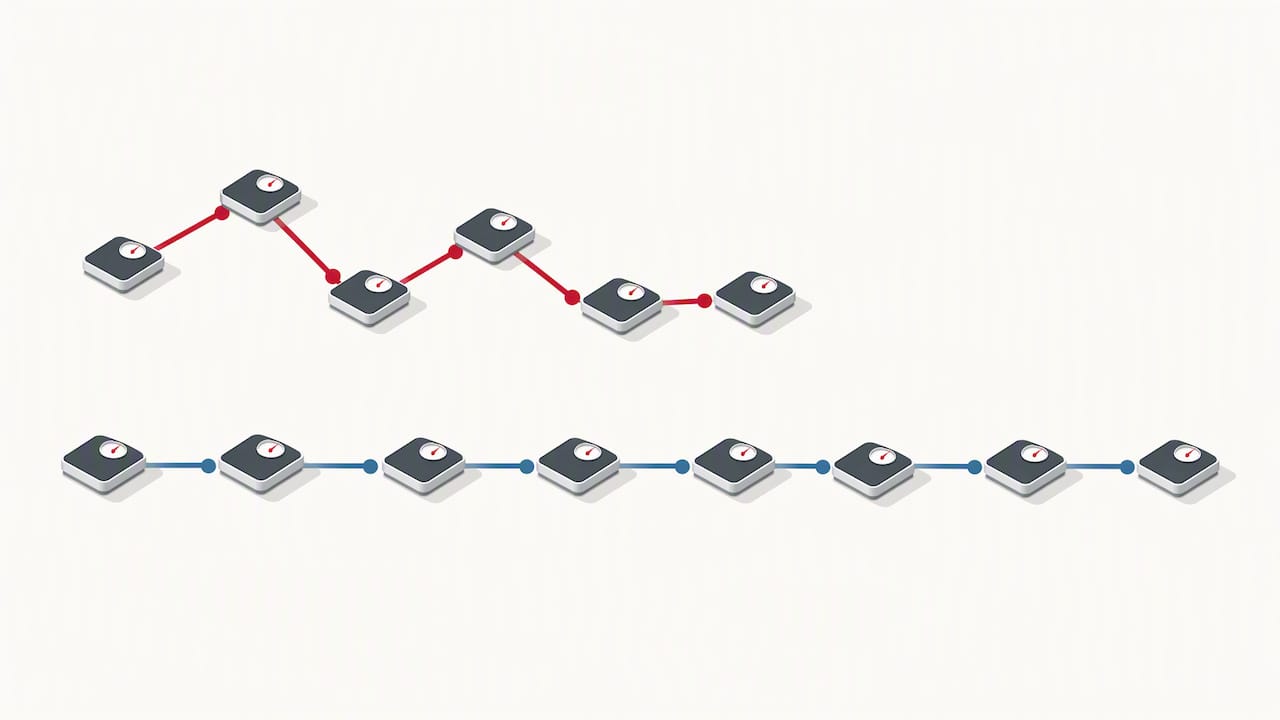
According to Mayo Clinic, weight loss plateaus affect approximately 85% of people who are actively trying to lose weight, which makes them close to universal rather than a personal failure. Plateaus commonly show up anywhere from a few weeks to several months into a weight loss effort, with the rate of loss often slowing noticeably around the six-month mark as the body adapts to a lower calorie intake and lighter body weight.
A few benchmarks help set realistic expectations:
- Healthy, sustainable weight loss runs about 1 to 2 pounds per week, or roughly 0.5 to 1 kilogram.
- Losing weight faster than that raises the risk of muscle loss, nutrient gaps, and a steeper metabolic slowdown.
- The pace of loss naturally decelerates as you get closer to a stable, lower body weight, even without any change in effort.
Causes: Physiological and Behavioral Drivers of Stalled Weight Loss
Plateaus usually come from a mix of biology and habit drift, and untangling the two is the first step toward a fix.
On the physiological side, adaptive thermogenesis is one of the best-documented mechanisms. As you lose weight, your resting energy expenditure drops by more than body composition changes alone would predict. Research tracking early metabolic response found that this greater-than-expected decline in 24-hour energy expenditure predicts smaller weight losses in the weeks that follow, which means your body is genuinely burning fewer calories at rest than it was at the start.
Hormones compound the problem. Falling leptin and rising ghrelin levels increase hunger signals, while shifts in GLP-1 and PYY can blunt the fullness cues that once helped you stop eating sooner. The StatPearls clinical review identifies these hormonal changes alongside adaptive thermogenesis as core, evidence-backed contributors to stalled progress. Losing lean muscle mass along with fat further lowers resting energy needs, and many people unconsciously move less throughout the day as fatigue or lower body weight reduces non-exercise activity thermogenesis, or NEAT.
Behavioral drift is just as common and far easier to correct. Portion sizes creep up gradually, tracking becomes less precise, and small additions like a splash of dressing, a handful of nuts, or an extra glass of wine add up without registering as a conscious choice. Certain medications, including some antidepressants, corticosteroids, and beta-blockers, can also slow weight loss, as can undiagnosed thyroid conditions, so ruling out a medical cause is worth a conversation with your doctor if the stall persists despite a clean tracking audit.
How to Break a Weight Loss Plateau: A Step-by-Step Plan
Breaking a plateau works best as a sequence, not a scramble. Change one variable, give it real time to work, and measure before moving to the next.
- Audit your tracking first. Before touching your calories or workouts, go back through the last two to three weeks of food logs, portion sizes, and workout records. Look specifically for skipped entries, underestimated portions, and any drop-off in step count or workout frequency, since these quiet changes are often the real explanation behind a stalled scale.
- Adjust nutrition in small, safe increments. Rather than slashing calories further, trim intake modestly, nudge protein and fiber higher to manage hunger, and consider a short planned refeed, a few days at maintenance calories, to ease any accumulated fatigue before continuing the deficit.
- Restructure your training. Add or increase resistance training to protect lean mass, vary your cardio intensity instead of repeating the same steady-state session, and set a concrete daily step target to rebuild the NEAT that often quietly declines during a diet.
- Shore up sleep and stress management. Poor sleep and chronic stress both interfere with appetite regulation and recovery, so treating these as part of the plan rather than an afterthought often unlocks progress that diet and exercise changes alone cannot.
Pro Tip: Change only one major variable at a time, nutrition, training structure, or NEAT target, and hold it steady for two to six weeks before judging the result; stacking three changes at once makes it impossible to know what actually worked.
This sequencing matters because plateaus rarely have a single cause. A reader who cuts calories again while also doubling cardio and cutting sleep short is likely to feel worse without any clearer sense of what moved the needle. Testing one lever at a time, and giving each one a full two to six weeks, lets you see a real signal in the data instead of noise. If the first lever produces no movement after a fair trial, combine it with the second rather than abandoning it entirely, since adaptive thermogenesis and hormonal hunger responses often respond to layered, modest changes rather than one dramatic one. A partner resource on auditing tracking before adjusting calories further walks through this physiology-first approach in more detail for readers who want a deeper dive into the sequencing logic.
Nutrition Deep Dive: Calories, Protein, Fiber, and Refeeds
Once your tracking audit is clean, the next lever is usually nutrition, and the goal is precision rather than further restriction. Start by recalculating your maintenance calories based on your current weight rather than your starting weight, since the number that worked at a higher body weight is almost always too high now. A modest reduction from that updated number, rather than a repeat of your original deficit, is usually enough to restart progress without triggering the steeper metabolic pullback that comes with overly aggressive cuts.
Protein deserves particular attention. Higher protein intake supports satiety and helps preserve the lean mass that keeps your resting metabolism from falling further, a point the StatPearls review highlights as part of evidence-based plateau management. Pairing protein with fiber-rich, high-volume foods, vegetables, legumes, and whole grains, adds bulk and chewing time that blunts hunger without adding many calories.
Practical steps that tend to help:
- Recalculate maintenance calories from your current weight, not your starting weight.
- Aim for a protein-forward plate at each meal to support fullness and muscle retention.
- Build meals around high-fiber vegetables and legumes to increase volume without increasing calories much.
- Consider a short, planned refeed of a few days at maintenance calories if hunger and fatigue have been building for weeks.
- Track with photos in addition to written logs, since photos often catch portion creep that a quick mental estimate misses.
Regular monitoring matters beyond nutrition choices alone. Major health organizations recommend consistent food and activity logging as part of sustained weight loss, since the simple act of writing things down tends to improve adherence on its own.
Exercise Adjustments: Strength Training, Cardio, and NEAT
Resistance training is central to breaking a plateau because it protects the muscle mass that drives your resting energy expenditure, the calories you burn simply existing. Losing muscle alongside fat lowers that baseline, which makes the next pound harder to shift. A reasonable weekly structure for most people includes two to four strength sessions covering all major muscle groups, with enough recovery between sessions targeting the same muscles.

Cardio still has a role, but variety beats repetition. Mixing a couple of lower-intensity steady sessions with one or two higher-intensity intervals tends to produce better results than the same 30-minute jog every day, partly because your body adapts to a repeated stimulus and partly because variety keeps joints and motivation fresher.
NEAT, the calories burned through walking, fidgeting, and standing rather than formal exercise, often drops quietly during a diet as energy feels lower. Rebuilding it is simple:
- Set a daily step target and track it with a phone or wearable.
- Take short walking breaks every hour instead of one long walk at the end of the day.
- Stand or pace during phone calls instead of sitting.
Pro Tip: If energy or recovery feels limited, increase NEAT and keep strength training steady before adding more cardio volume, since extra cardio on top of fatigue often backfires through poorer sleep and higher hunger.
Behavioral and Lifestyle Checks: Sleep, Stress, and Tracking Fidelity
Sleep and stress are two of the most overlooked plateau contributors. Short or poor-quality sleep disrupts the hormones that regulate appetite, which can quietly increase hunger and cravings the next day. The CDC’s guidance on losing weight groups sleep and stress management alongside nutrition and activity as core pillars of sustained weight loss, not optional extras.
Practical checks worth running this week:
- Aim for a consistent sleep and wake time, targeting seven or more hours most nights.
- Notice patterns around stress eating, such as reaching for snacks during work deadlines, and build in a five-minute pause before eating in those moments.
- Review your current medication list with your doctor if a stall coincides with a new prescription.
- Weigh yourself at the same time of day, two to three times a week, and track the weekly average rather than reacting to any single number.
When to Seek Medical Help or Consider Advanced Options
Most plateaus respond to the steps above, but certain signs warrant a conversation with your doctor rather than another round of self-adjustment. Unexplained fatigue, hair thinning, cold intolerance, or rapid regain despite no change in habits can point to a thyroid issue or another medical condition that deserves screening.
For some people, especially those with a higher BMI and weight-related health conditions, anti-obesity medications or bariatric surgery enter the conversation. The StatPearls review notes that GLP-1 receptor agonists can delay the onset of a plateau compared with lifestyle changes alone, though a plateau can still occur later in treatment. Bring your weight history, current medication list, and recent food and activity logs to that appointment so your clinician has a full picture.
How a Diagnostics-Informed Program Can Help With a Stubborn Plateau
When a plateau persists despite a clean tracking audit and a few rounds of nutrition and training adjustments, individual biology may be a bigger piece of the puzzle than generic advice can address. At Posh Fitness, we build personalized training and nutrition programs around DNA analysis, bloodwork, and gut microbiome testing, which lets us see what a food log alone cannot: how your body actually processes carbohydrates, fat, and protein, and where your hormonal and metabolic tendencies are working against a generic plan.
A diagnostics-informed plan typically starts with an initial assessment and testing panel, moves into a protocol tailored to those results, and includes measurable follow-up so adjustments are based on your actual response rather than guesswork. Our gut microbiome testing and coaching is one piece of that picture for readers whose plateau seems tied to digestion or appetite regulation rather than training alone.
A Coach’s Perspective on Patience and Testing
Plateaus feel personal, but they are almost always biological and behavioral, not a verdict on your willpower. The most useful thing you can do is resist the urge to change everything at once and instead test one adjustment at a time, giving your body a real chance to respond before you judge the result. If you are unsure where your own plateau is coming from, our Weight Loss Readiness Quiz is a quick way to spot which habits or gaps are worth addressing first.
— Peter
Get Hands-On Support for a Plateau That Will Not Budge
A stubborn plateau often needs more than another round of self-adjustment, and that is where working directly with a coach makes a real difference. We offer personal training, DNA-informed coaching, and bloodwork-based nutrition planning delivered in varied formats, so you get a protocol built around your own biology rather than a generic template.

This approach tends to help most if you have already tried the basic nutrition and training fixes and are still stuck, and you want a hands-on, diagnostic path rather than more trial and error on your own. Our 4 Week DNA Coaching program is a focused way to start, and you can review current pricing and packages on our pricing page to find the format that fits your schedule and goals.
This article is general information, not a substitute for advice from a qualified doctor. Consult a qualified healthcare professional about your own circumstances before acting on anything here.
FAQ
How do you break a plateau on weight loss?
Start with an honest audit of your recent food logs, portions, and workout consistency, since tracking drift is one of the most common hidden causes. From there, make one change at a time, a modest calorie adjustment, added resistance training, or a higher daily step target, and give it two to six weeks before judging the result.
How do you shock your body out of a plateau?
There is no single trick that forces the body to restart weight loss overnight, despite how the idea is often marketed. The more reliable approach is recalculating your calorie needs at your current weight, adding resistance training to protect muscle, and addressing sleep and stress, which together address the physiological and behavioral causes behind most stalls.
How long does a weight loss plateau last?
A plateau can last anywhere from a few weeks to a couple of months depending on how it is addressed, and plateaus affect about 85% of people actively trying to lose weight at some point. Plateaus that persist well beyond a few months despite consistent adjustments are worth discussing with a doctor to rule out a medical contributor.
How do you break a GLP-1 medication plateau?
GLP-1 receptor agonists can delay the onset of a plateau compared with diet and exercise alone, but a plateau can still occur as the body adapts over time, according to the StatPearls clinical review. If progress stalls while on medication, the same tracking audit and nutrition or training adjustments apply, alongside a conversation with your prescribing clinician about dose timing and any other medical factors.
Sources
- Getting past a weight-loss plateau — Mayo Clinic
- Management of Weight Loss Plateau — StatPearls (NCBI Bookshelf)
- Adaptive thermogenesis and early metabolic response — PMC study
- Steps for Losing Weight — CDC
One thought on “85% of Dieters Stall: Audit First to Break a Weight Loss Plateau”