
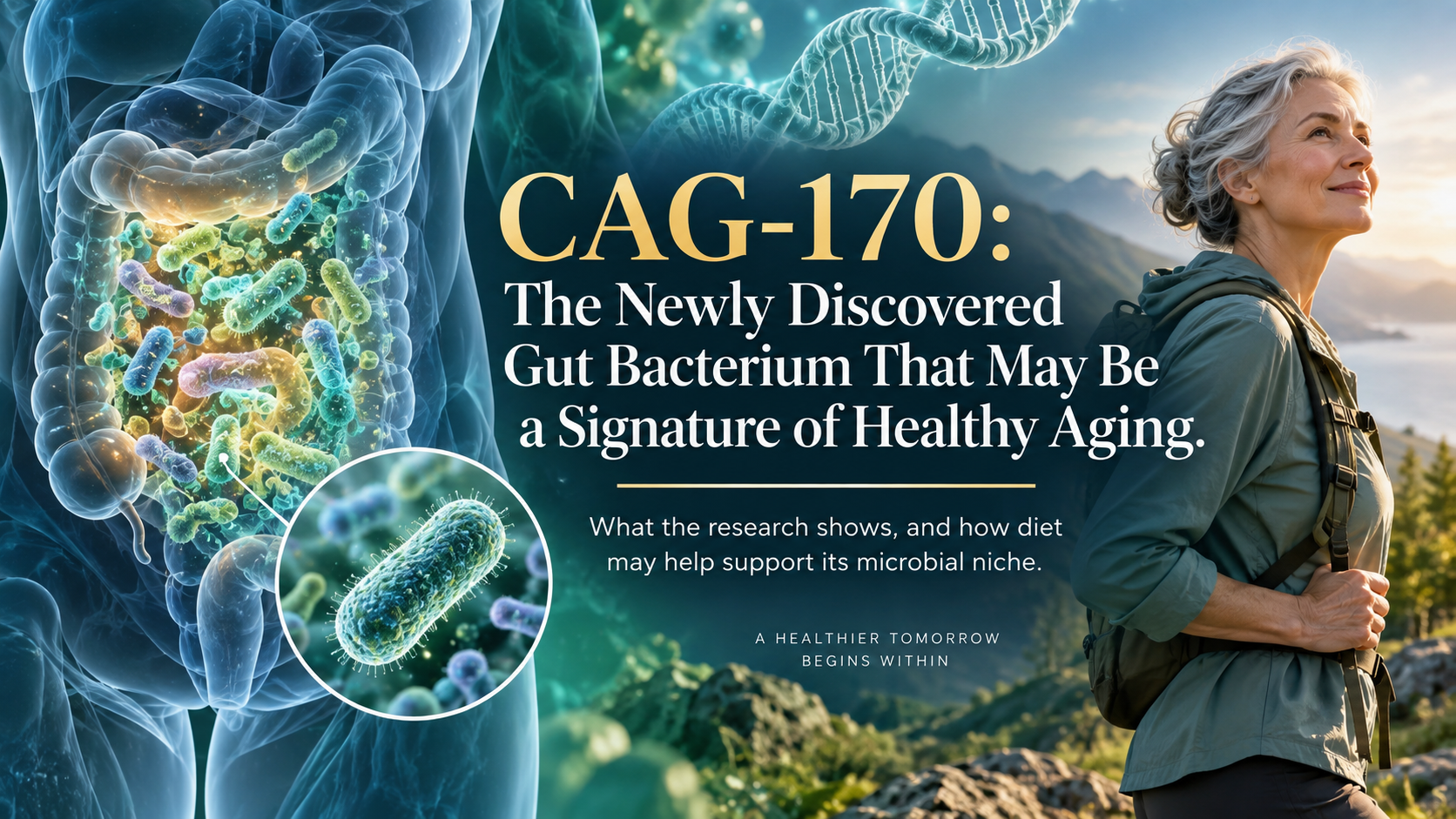


A mysterious group of gut microbes keeps appearing in healthy people. Scientists are beginning to ask whether CAG-170 might tell us something important about metabolic health, microbiome resilience, and perhaps even healthy aging.
For decades, conversations about the gut microbiome have revolved around a familiar cast of characters: Bifidobacterium, Lactobacillus, Akkermansia, Faecalibacterium and a handful of other organisms that have achieved something approaching celebrity status in nutritional science.
Then there is CAG-170. Most people have never heard of it. Until recently, many microbiome researchers probably had little reason to pay much attention to it either. That may be changing.
A major 2026 analysis published in Cell Host & Microbe examined 11,115 human gut metagenomes from 39 countries, comparing healthy people with individuals affected by 13 different noncommunicable diseases. Researchers identified 317 microbial species associated with different clinical states.
One microbial lineage stood out.
CAG-170 emerged as the strongest health-associated genus identified across multiple diseases and geographic populations (da Silva et al., 2026).
Even more intriguing, CAG-170 appeared to occupy a highly connected position within healthy microbial ecosystems, suggesting it may participate in relationships involving many other organisms.
Suddenly, one of the gut’s largely anonymous residents has become rather interesting.
Key Points
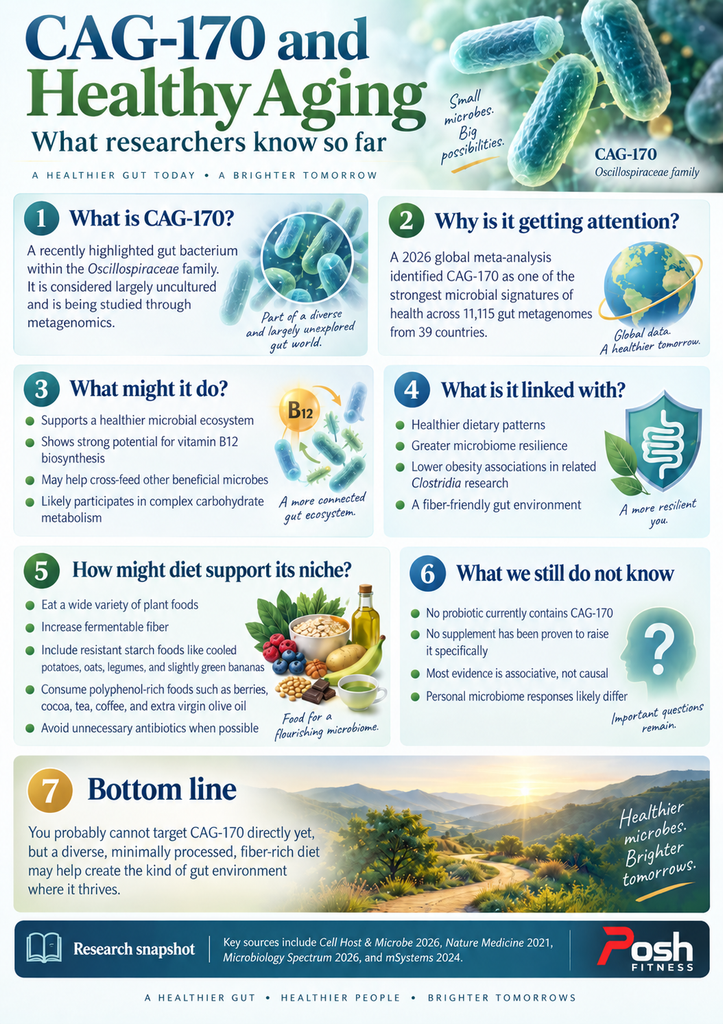
- CAG-170 is not a single fully characterized bacterium, but a genus-level microbial lineage containing largely uncultured organisms.
- A 2026 analysis involving more than 11,000 gut microbiomes identified CAG-170 as the strongest health-associated lineage across numerous populations and disease states.
- Greater CAG-170 abundance and subspecies diversity were associated with less gut microbiome imbalance over time.
- CAG-170 organisms appear genetically equipped for substantial vitamin B12 biosynthesis and microbial cross-feeding.
- Earlier research had already linked CAG-170 with healthier dietary patterns and favorable cardiometabolic characteristics.
- CAG-170 diversity has also been inversely associated with obesity.
- No probiotic, prebiotic, supplement, peptide or dietary protocol has yet been demonstrated to specifically increase CAG-170 in humans.
- Resistant starch, plant diversity, fermentable fiber and polyphenol-rich foods are intriguing strategies for supporting the kind of microbial ecosystem in which organisms like CAG-170 may thrive.
- CAG-170 should currently be viewed as a candidate biomarker of a healthy microbial ecosystem, not a proven longevity treatment.
First, What Exactly Is CAG-170?
The name sounds less like a bacterium and more like something being stored in Area 51. There is a reason for that.
CAG-170 belongs to the enormous portion of the human microbiome that scientists have detected primarily through genetic sequencing rather than conventional laboratory culture.
Da Silva and colleagues noted that more than 60% of gut microbial species remain uncultured, which makes experimental investigation considerably more difficult (da Silva et al., 2026).
Rather than growing these organisms in a laboratory dish, scientists can reconstruct their genetic fingerprints from stool samples using shotgun metagenomic sequencing.
Think of it as determining who attended a party by collecting DNA left behind after everyone has gone home.
CAG-170 had appeared in microbiome research before 2026. In the large PREDICT 1 study published in Nature Medicine, a CAG-170 organism was included among a group of microbial species associated with healthier dietary patterns and favorable cardiometabolic characteristics (Asnicar et al., 2021).
So CAG-170 was not technically discovered in 2026. What changed was its significance. The new global analysis moved CAG-170 from obscure supporting actor to a potential microbial indicator of health.
Why the 2026 Study Matters
The sheer scale of the investigation is important.
Researchers analyzed metagenomic data from thousands of people spanning 39 countries, healthy individuals and people with a range of chronic disorders.
CAG-170 repeatedly appeared preferentially in healthier microbiomes. It was also remarkably central within microbial ecological networks.
That matters because the intestinal microbiome does not function as thousands of isolated microorganisms living side by side. It behaves more like an ecosystem.
One organism digests a substrate.
Another consumes the metabolic product.
A third produces a vitamin required by a fourth.
Microbes compete, cooperate, exchange metabolites and modify their chemical surroundings. CAG-170 may be particularly good at participating in this microbial economy.
Da Silva and colleagues found that CAG-170 species possessed greater predicted capacity for vitamin B12 biosynthesis and metabolic cross-feeding. Its abundance and subspecies diversity were also negatively correlated with gut imbalance over time (da Silva et al., 2026).
In other words, CAG-170 may be less interesting as an isolated organism than as a participant in a stable microbial community. That distinction may turn out to be enormously important.
The Vitamin B12 Connection
One of the most fascinating findings concerns vitamin B12. The genomes of CAG-170 organisms contain substantial machinery associated with B12 biosynthesis. Vitamin B12 is not merely a human vitamin. Gut microorganisms use B12 and related compounds as cofactors for numerous microbial enzymes.
In fact, bacteria use cobalamin-dependent pathways far more extensively than humans do. A systematic review found that vitamin B12 availability can influence microbial composition and metabolism, although the human evidence remains inconsistent (Guetterman et al., 2022). This makes CAG-170’s predicted B12 production particularly intriguing.
It could theoretically supply B12-like compounds to surrounding organisms, helping create a microbial network based partly on nutrient sharing.
This is called cross-feeding.
Imagine a neighborhood in which one house grows vegetables, another bakes bread and another fixes everyone’s plumbing.
The health of the neighborhood depends less on any individual household than on the relationships between them.
CAG-170 may be one of the microbiome’s better neighbors.
There is an important caveat.
Microbial production of B12 in the colon should not be interpreted as meaning that CAG-170 provides humans with sufficient dietary vitamin B12. Human active B12 absorption occurs primarily in the small intestine, while much bacterial B12 production occurs farther downstream in the colon.
Nor is there currently evidence that taking additional B12 supplements will increase CAG-170.
The B12 connection appears more important for microbe-to-microbe ecology than as a replacement for human B12 intake.
CAG-170 and Metabolic Health
CAG-170’s relationship with metabolic health may be equally intriguing. In PREDICT 1, researchers analyzed more than 1,000 deeply phenotyped individuals and found that gut microbial patterns were strongly associated with habitual dietary quality and cardiometabolic responses. Microbial species associated with healthier foods frequently overlapped with species associated with more favorable metabolic biomarkers (Asnicar et al., 2021). CAG-170 appeared among this health-associated group.
Another study examining Clostridia diversity found that diversity within the Oscillospiraceae, the bacterial family containing CAG-170, was reduced in individuals with obesity. Greater diversity within the CAG-170 genus itself was negatively correlated with body mass index (Salazar-Jaramillo et al., 2024).
Again, correlation does not establish causation. Low CAG-170 could contribute to metabolic dysfunction. Metabolic dysfunction could create an environment unfavorable to CAG-170. Or both may reflect another variable entirely, such as diet. That distinction remains unresolved.
Does This Mean CAG-170 Is a Longevity Bacterium?
Not yet. This is where microbiome science can easily get ahead of itself. The 2026 CAG-170 study was principally a health and disease study, not a lifespan experiment. Researchers did not demonstrate that increasing CAG-170 extends human life. They did not show that CAG-170 slows biological aging. They did not give people CAG-170 and watch their health improve. Calling it a proven longevity organism would therefore be premature. But the healthy aging connection is biologically interesting. Large human studies have already demonstrated that gut microbiome characteristics are associated with healthy aging.
Wilmanski and colleagues examined data from more than 9,000 people and found that the gut microbiomes of healthier older adults tended to become increasingly individualized with age. Certain microbial patterns were associated with circulating metabolites, health status and survival during follow-up (Wilmanski et al., 2021).
Reviews of the aging microbiome similarly suggest that age-associated health decline involves not simply loss of microbial diversity, but the loss of beneficial commensals, expansion of potentially detrimental organisms and deterioration of microbial metabolic function (Simbirtseva & O’Toole, 2025).
CAG-170 therefore fits into a much larger hypothesis:
Healthy aging may depend partly on maintaining a resilient microbial ecosystem rather than simply accumulating a list of supposedly “good bacteria.”
That may be the more important story.
Can We Increase CAG-170 With Diet?
We do not currently know.
There has not yet been a controlled human feeding trial showing:
Eat Food X → CAG-170 increases → human health improves.
That experiment still needs to be done.
However, several dietary strategies make biological sense based on what we know about CAG-170’s ecological neighborhood and the broader human microbiome.
1. Increase Plant Diversity
The PREDICT research found that microbial signatures associated with health were strongly related to the presence and diversity of healthier plant foods (Asnicar et al., 2021).
Rather than obsessing over a single superfood, a better microbial strategy may be substrate diversity.
That means rotating:
vegetables, berries, other fruits, beans, lentils, nuts, seeds, herbs, spices, intact grains and tubers.
Different microbes possess different carbohydrate-degrading enzymes.
A chemically diverse diet therefore feeds a chemically diverse ecosystem.
For the microbiome, eating 20 different plant foods may accomplish something fundamentally different from eating the same three plants every day.
2. Pay Particular Attention to Resistant Starch
Resistant starch may be one of the most interesting candidates for future CAG-170 research.
Unlike ordinary starch, resistant starch escapes much of digestion in the small intestine and reaches the colon, where microorganisms ferment it.
A 2026 randomized crossover study showed that resistant starch types 2 and 4 produced distinct, reversible changes in the human microbiome and increased microbial genetic capacity for complex carbohydrate utilization (Piperni et al., 2026).
Importantly, the researchers also demonstrated enormous individual variability.
RS2 preferentially increased organisms such as Ruminococcus bromii, whereas RS4 favored different microbial species.
So even the phrase “resistant starch” describes several ecologically different substrates.
Food sources include:
- cooled potatoes
- cooked then cooled rice
- beans and lentils,
- oats
- slightly green bananas
- and other resistant starch-rich foods.
Another controlled human study used 40 grams per day of type 2 resistant starch for eight weeks in adults with overweight or obesity and reported changes in gut microbiota, improved insulin sensitivity and an average weight reduction of approximately 2.8 kg compared with control conditions (Li et al., 2024).
That does not mean everyone should immediately consume 40 grams of resistant starch. That was a research dose within a controlled dietary intervention. For practical use, tolerance matters enormously.
A gradual increase is generally more sensible because suddenly delivering large quantities of fermentable carbohydrate to the colon can produce enough gas to make both the patient and everyone sitting nearby reconsider the experiment.
3. Feed the Microbiome Fiber, But Think Beyond “More Fiber”
The microbiome cares about chemistry.
Inulin is different from arabinoxylan.
Beta glucan is different from resistant starch.
Pectin is different from cellulose.
Partially hydrolyzed guar gum is different again.
A randomized dietary study from Stanford demonstrated this beautifully.
Increasing fiber altered microbial carbohydrate degrading capacity, but individuals responded differently depending partly on their starting microbiome. Fermented foods produced another pattern entirely, increasing microbiome diversity while reducing several inflammatory markers (Wastyk et al., 2021). This argues against treating fiber like one substance. A better strategy may be fiber diversity.
What About Fermented Foods?
Fermented foods have not been demonstrated to specifically increase CAG-170. However, they remain interesting from an ecosystem perspective.
In the Wastyk study, people assigned to a fermented-food-rich diet experienced increasing microbiome diversity and reductions in several markers of inflammation (Wastyk et al., 2021). Examples included foods such as yogurt, kefir, fermented vegetables and similar traditionally fermented products. Whether this creates conditions favorable to CAG-170 specifically remains unknown. For now, fermented foods belong in the category of supporting microbiome resilience, not “boosting CAG-170.”
Polyphenols May Matter Too
Another category worth watching is polyphenols.
Berries, cocoa, coffee, tea, herbs, spices, colorful vegetables, pomegranate and extra virgin olive oil contain compounds that interact bidirectionally with intestinal microorganisms.
Microbes transform many polyphenols into smaller metabolites, while polyphenols can simultaneously alter the growth environment of microbial communities.
For healthy aging, this relationship may be particularly relevant because dietary phytochemicals interact with microbial pathways involved in inflammation, oxidative stress, metabolic regulation and gut barrier function.
Again, however, there is currently no convincing human evidence showing that a blueberry, green tea or cocoa intervention selectively raises CAG-170.
The better interpretation is ecological:
polyphenols give the microbiome additional chemical material to work with.
Can Supplements Increase CAG-170?
At the moment, there is no validated CAG-170 supplement.
There is also no commercial probiotic containing a clinically validated CAG-170 strain.
That is partly because the organisms remain difficult to culture.
Several supplements might theoretically alter the surrounding microbial ecosystem:
- resistant starch,
- inulin,
- fructooligosaccharides,
- galactooligosaccharides,
- partially hydrolyzed guar gum,
- beta glucan,
- arabinoxylan,
- and polyphenol extracts.
But none can presently claim: “Clinically proven to increase CAG-170.”
If you see that phrase on a supplement label anytime soon, the marketing department has arrived before the randomized controlled trial.
Of these options, resistant starch currently has some of the most compelling human intervention data for changing microbial carbohydrate metabolism, although its CAG-170 specific effect remains unknown.
Should You Take Vitamin B12 to Feed CAG-170?
Probably not for that purpose. CAG-170 appears capable of producing B12-related compounds rather than simply requiring supplemental B12. Although vitamin B12 status and supplementation can alter aspects of the microbiome, a systematic review found highly heterogeneous results and insufficient evidence for a predictable microbiome response (Guetterman et al., 2022).
Take B12 when it is nutritionally or medically appropriate. Do not currently take it as a CAG-170 supplement.
What About Genetics?
Here the story gets especially interesting. Your microbiome is influenced not only by what you eat but by the environment your intestinal cells create. Human genetic variation can alter mucus chemistry, carbohydrate availability, immunity, bile acids and intestinal signaling. Large microbiome genome-wide association studies have identified relationships involving genes such as LCT, ABO and FUT2, among others.
A 2026 Nature Genetics analysis involving more than 28,000 people across discovery and replication cohorts identified associations involving LCT, ABO, FUT2, MUC12, SLC5A11, FOXP1 and several other loci, demonstrating that the host genome can help shape microbial ecology (Wang et al., 2026).
FUT2 is particularly fascinating because secretor status alters the presentation of fucosylated carbohydrates on intestinal mucus, effectively changing part of the food supply available to microbes. Other work has demonstrated interactions between FUT2, ABO and the metabolic capabilities of specific gut bacteria. But we need another large caution sign here.
No validated human SNP currently tells us that a person will have high or low CAG-170 or that they should follow a specific CAG-170 diet.
That may eventually change. CAG-170 could become a fascinating target for microbiome genetics research.
Exercise, Sleep and Lifestyle
There is currently no evidence that doing squats three times per week selectively increases CAG-170. If only microbiome research were that convenient. But physical activity, sleep, metabolic health, medication exposure and dietary quality all influence the intestinal environment. For someone interested in healthy aging, targeting the broader ecosystem probably makes more sense than chasing a single organism. That means maintaining:
- regular physical activity,
- adequate resistance training,
- cardiorespiratory fitness,
- good metabolic health,
- adequate sleep,
- dietary diversity,
- and appropriate use of medications, particularly antibiotics.
Antibiotics can sometimes be lifesaving and should certainly be used when medically necessary. Unnecessary use, however, can produce substantial ecological disruption within the intestinal microbiome.
The CAG-170 Support Strategy
Based on the evidence available today, I would not recommend trying to “boost CAG-170.”
I would recommend trying to cultivate the type of intestinal ecosystem in which health-associated organisms appear to flourish.
That means emphasizing:
- Plant diversity. Rotate vegetables, fruits, legumes, nuts, seeds, intact grains, herbs and spices.
- Fermentable fibers. Use multiple fiber types rather than depending entirely on one isolated supplement.
- Resistant starch. Regularly include legumes, oats, cooled potatoes, cooled rice or other resistant starch sources if tolerated.
- Polyphenols. Berries, cocoa, tea, coffee, herbs, colorful vegetables and extra virgin olive oil offer an enormous range of microbial substrates.
- Fermented foods. Yogurt, kefir and fermented vegetables may improve microbial diversity in some individuals.
- Metabolic health. Exercise, adequate muscle mass and insulin sensitivity influence the physiological environment in which the microbiome lives.
- Judicious antibiotic use. Treat infections when needed, but avoid unnecessary microbiome disruption.
- And perhaps most importantly: Don’t try to micromanage one bacterium. Build the neighborhood.
Why CAG-170 May Matter for Healthy Aging
Much of longevity research focuses on human cells.
- Mitochondria.
- DNA damage.
- Cellular senescence.
- mTOR.
- AMPK.
- Insulin signaling.
- Inflammation.
But we are also hosts to an enormous metabolic ecosystem whose genes dramatically outnumber our own.
Those organisms manufacture metabolites, modify bile acids, transform dietary compounds, interact with immunity and communicate chemically with human tissues.
CAG-170 may ultimately prove important not because it possesses some magical antiaging molecule, but because its presence tells us something about the organization of that ecosystem.
That would make CAG-170 less like a longevity drug and more like an ecological biomarker.
And that possibility may be even more interesting.
The Bottom Line
CAG-170 has rapidly become one of the more intriguing organisms in human microbiome research.
Across more than 11,000 gut microbiomes, it emerged as an unusually consistent microbial signature associated with health. It appears relatively stable, highly connected to surrounding organisms and genetically equipped for vitamin B12 metabolism and microbial cross-feeding.
Earlier research also connects CAG-170 and related Oscillospiraceae diversity with healthier dietary and metabolic patterns.
But we cannot yet say that increasing CAG-170 will improve health or extend lifespan.
Nor can we currently buy a CAG-170 probiotic, swallow a particular prebiotic or eat one magical food and expect the organism to appear.
What we can do is cultivate the ecosystem.
- Eat many different plants.
- Feed intestinal microbes a variety of fibers.
- Include resistant starch.
- Consume polyphenol-rich foods.
- Consider fermented foods.
- Exercise.
- Protect metabolic health.
- Use antibiotics appropriately.
That may eventually turn out to be the central lesson of microbiome science. Healthy aging might depend less on finding one perfect bacterium and more on creating an environment in which an entire community of beneficial organisms can flourish. CAG-170 may simply be one of the microbial fingerprints that tells us when we are getting that environment right. To test your gut health I recommend Viome for the most thorough gut microbiome test, and yes, they do test for CAG-170.
Glossary
CAG-170: A genus-level lineage of largely uncultured gut microorganisms currently associated with healthy microbiome patterns.
Gut microbiome: The collective microorganisms and their genetic material residing within the gastrointestinal tract.
Metagenomics: Sequencing genetic material collected directly from an environmental sample, allowing scientists to identify organisms without first culturing them.
Shotgun metagenomic sequencing: A method that sequences large amounts of microbial DNA simultaneously, permitting identification of microbial species and their potential metabolic functions.
Oscillospiraceae: A family of anaerobic gut bacteria that contains numerous organisms associated with carbohydrate fermentation and metabolic health.
Cross-feeding: A microbial relationship in which metabolic products produced by one organism become nutrients for another.
Resistant starch: Starch that escapes digestion in the small intestine and reaches the colon, where it can be fermented by intestinal microorganisms.
Prebiotic: A substrate selectively utilized by host microorganisms that confers a health benefit.
Probiotic: A live microorganism that, when administered in adequate amounts, confers a health benefit on the host.
Polyphenols: Plant-derived compounds that can interact with the gut microbiome and be transformed into biologically active metabolites.
Microbial diversity: The variety of organisms, genes or microbial functions present within an ecosystem.
Microbiome resilience: The ability of a microbial ecosystem to resist disruption or recover following disturbances.
FUT2: A gene encoding fucosyltransferase 2, which influences intestinal mucus glycosylation and secretor status and can affect microbial ecology.
SNP: Single nucleotide polymorphism, a common form of genetic variation involving a single DNA nucleotide.
CAZymes: Carbohydrate-active enzymes that allow microorganisms to break down or modify complex carbohydrates.
References
Asnicar, F., Berry, S. E., Valdes, A. M., Nguyen, L. H., Piccinno, G., Drew, D. A., et al. (2021). Microbiome connections with host metabolism and habitual diet from 1,098 deeply phenotyped individuals. Nature Medicine, 27, 321–332. https://doi.org/10.1038/s41591-020-01183-8
da Silva, A. C., Lapkin, J., Yin, Q., Muller, E., & Almeida, A. (2026). Meta-analysis of the uncultured gut microbiome across 11,115 global metagenomes reveals a candidate signature of health. Cell Host & Microbe, 34(3), 379–392.e5. https://doi.org/10.1016/j.chom.2026.01.013
Guetterman, H. M., Huey, S. L., Knight, R., Fox, A. M., Mehta, S., & Finkelstein, J. L. (2022). Vitamin B-12 and the gastrointestinal microbiome: A systematic review. Advances in Nutrition, 13(2), 530–558. https://doi.org/10.1093/advances/nmab123
Li, H., Zhang, L., Li, J., Wu, Q., Qian, L., He, J., et al. (2024). Resistant starch intake facilitates weight loss in humans by reshaping the gut microbiota. Nature Metabolism, 6(3), 578–597. https://doi.org/10.1038/s42255-024-00988-y
Piperni, E., Blanco-Míguez, A., Mengoni, C., Piccinno, G., Punčochář, M., Ren, J., Segata, N., Asnicar, F., & Poole, A. C. (2026). Resistant starch types 2 and 4 induce distinct and reversible changes in the human gut microbiome. Microbiology Spectrum, 14(9), e00763–26. https://doi.org/10.1128/spectrum.00763-26
Salazar-Jaramillo, L., de la Cuesta-Zuluaga, J., Chica, L. A., Cadavid, M., Ley, R. E., Reyes, A., & Escobar, J. S. (2024). Gut microbiome diversity within Clostridia is negatively associated with human obesity. mSystems, 9(8), e00627–24. https://doi.org/10.1128/msystems.00627-24
Simbirtseva, K. Y., & O’Toole, P. W. (2025). Healthy and unhealthy aging and the human microbiome. Annual Review of Medicine, 76, 115–127. https://doi.org/10.1146/annurev-med-042423-042542
Wastyk, H. C., Fragiadakis, G. K., Perelman, D., Dahan, D., Merrill, B. D., Yu, F. B., et al. (2021). Gut-microbiota-targeted diets modulate human immune status. Cell, 184(16), 4137–4153.e14. https://doi.org/10.1016/j.cell.2021.06.019
Wilmanski, T., Diener, C., Rappaport, N., Patwardhan, S., Wiedrick, J., Lapidus, J., et al. (2021). Gut microbiome pattern reflects healthy ageing and predicts survival in humans. Nature Metabolism, 3, 274–286. https://doi.org/10.1038/s42255-021-00348-0