


A microbiome meal plan is a way of eating that feeds the bacteria already living in your gut and adds fermented foods that bring in live microorganisms. In practice that means more fiber-rich plants, a daily portion of fermented food, and fewer ultra-processed foods, all introduced at a pace your digestion can handle. Below you will find the food lists, a sample seven-day plan, an honest look at what the research says about gut bacteria and weight, and the situations where you should get a registered dietitian involved first.
Key Takeaways
- A microbiome-supportive plan pairs prebiotic foods (fiber that feeds your gut microbes) with probiotic foods (fermented foods containing live microorganisms).
- Add fiber and fermented foods gradually. A fast jump is the most common reason people feel bloated and quit.
- Diet clearly shapes the gut microbiome, but human evidence that gut bacteria cause weight gain is still limited. Treat the plan as a foundation for metabolic health, not a weight-loss shortcut.
- If you have IBS, SIBO, IBD or another diagnosed gut condition, have a registered dietitian shape the plan.
- Testing your microbiome can make the plan more personal, but food quality, protein, sleep and training still do most of the work.
Table of Contents
- What a microbiome meal plan actually includes
- How much fiber you need
- A sample seven-day microbiome meal plan
- Is this the same as an anti-inflammatory meal plan?
- Gut bacteria and weight: what the evidence supports
- Should you do a gut reset or a strict microbiome diet?
- Who should get medical advice first
- Where testing fits in
- Our perspective
- Work with us on a plan built for you
- Frequently asked questions
- Sources
What a microbiome meal plan actually includes
The U.S. Department of Veterans Affairs describes a microbiome-supportive eating pattern as one that supplies prebiotic foods, which feed existing gut microbes, and probiotic foods, which contain live beneficial microorganisms. That is the whole idea. Everything else is a matter of putting those two groups on a plate three times a day.
It helps to think in three layers:
- A fiber base. Vegetables, fruit, whole grains, beans and lentils at most meals.
- Prebiotic specialists. Foods especially rich in fibers that gut bacteria ferment.
- Fermented foods. One or two servings a day of foods that carry live cultures.
Prebiotic foods to rotate through the week
The VA lists asparagus, artichokes, bananas, oatmeal, leeks, chicory root and beans among the prebiotic foods. Mayo Clinic Health System adds that prebiotics occur in fiber-rich plant foods such as apples, berries, carrots, flaxseed, garlic, oats and sweet potatoes. A university wellness guide from Utah State also names garlic, onions, leeks, bananas and oats as easy everyday choices.
A useful habit is variety. Aim for several different plant foods across a week rather than the same three vegetables every day, because different fibers feed different microbes.
Fermented foods to add
Yogurt, kefir, miso, tempeh, sauerkraut and kimchi are the staples. The Utah State guide notes that these fermented foods feed beneficial bacteria directly. The VA also lists pickles, milk and kombucha. Read labels: look for products that say they contain live cultures, since heat-treated or shelf-stable versions may not.
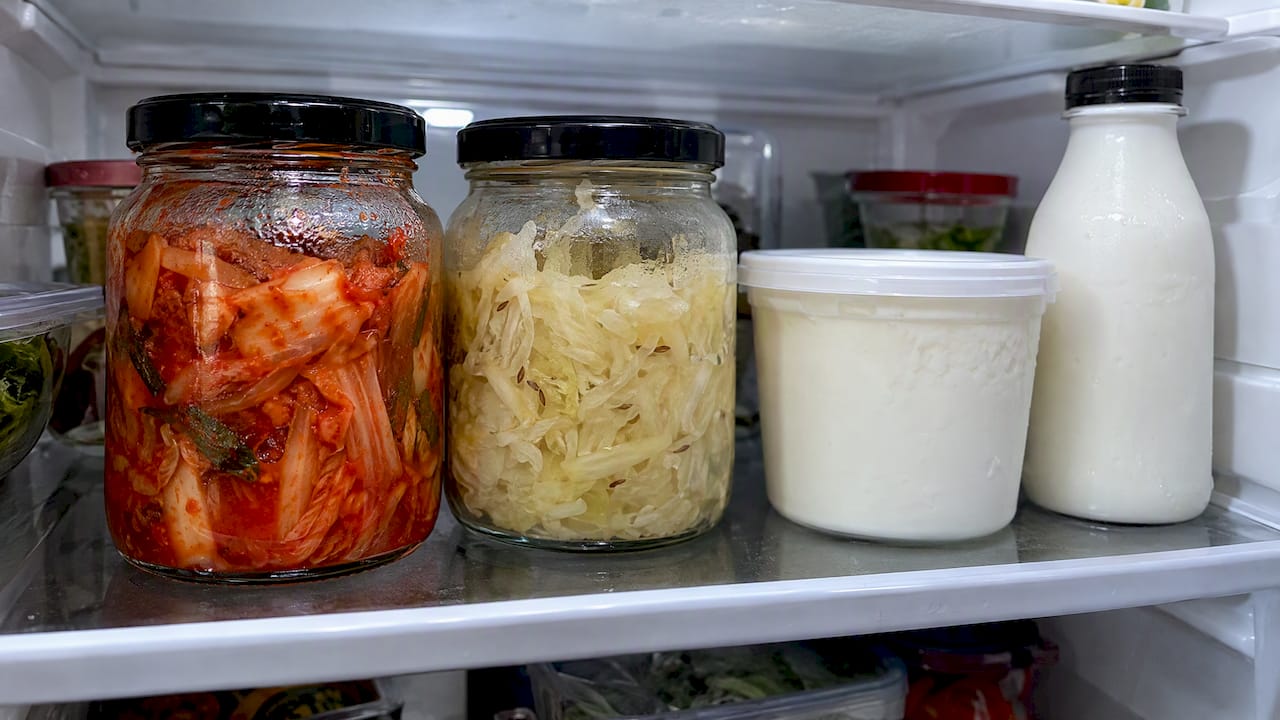
Mushrooms are not fermented, but they are a versatile plant food that fits the pattern. If you want ideas for working them into meals, this guide to the best mushrooms for gut health is a place to start.
How much fiber you need
Most American adults eat less fiber than they should. The Dietary Guidelines for Americans, 2020 to 2025, recommend 22 to 34 grams of fiber daily for adults, depending on age and sex. Where you fall in that range depends on your sex and age, so use the lower number as a first target if you currently eat very little.
If your current intake is low, do not jump to the top of the range in a week. Add one extra fiber-rich item per day for a few days, then another. Drink water alongside it. Introduce fermented foods the same way: a few spoonfuls of kimchi or half a cup of kefir before a full serving. The Utah State plan makes this same point, advising a gradual start for anyone who does not already eat much fiber or fermented food.
A sample seven-day microbiome meal plan
The Utah State plan gives examples such as kefir overnight oats with banana and walnuts, a rice and black bean bowl with kimchi, and salmon with sautéed greens and sweet potato. EatingWell’s seven-day plan likewise combines probiotic foods like yogurt, kimchi, kefir and kombucha with high-fiber fruits, vegetables and whole grains. The week below follows that same logic. Portions are yours to set for your size, activity and goals.
| Day | Breakfast | Lunch | Dinner | Snack |
|---|---|---|---|---|
| 1 | Kefir overnight oats, banana, walnuts | Rice and black bean bowl with kimchi | Salmon, sautéed greens, roasted sweet potato | Apple with almond butter |
| 2 | Greek yogurt, berries, ground flaxseed | Lentil soup, side salad with olive oil | Chicken stir-fry with garlic, onions and broccoli over brown rice | Carrot sticks and hummus |
| 3 | Oatmeal with sliced banana and cinnamon | Tempeh grain bowl with shredded cabbage and carrots | Baked cod, asparagus, quinoa | Small handful of nuts |
| 4 | Veggie omelet with leeks and spinach, whole grain toast | Chickpea salad with cucumber, tomato and herbs | Miso-glazed salmon, bok choy, brown rice | Plain yogurt with berries |
| 5 | Kefir smoothie with berries and oats | Turkey and bean chili | Roasted vegetable and white bean bowl with sauerkraut | Pear and cottage cheese |
| 6 | Overnight oats with apple and walnuts | Sardine or tuna salad on whole grain bread with greens | Lean beef or tofu stir-fry with mushrooms and peppers | Edamame |
| 7 | Yogurt parfait with oats and fruit | Leftover chili over a baked sweet potato | Roast chicken, artichokes, roasted carrots, side of pickled vegetables | Banana with peanut butter |
Make it work on a busy week
Batch-cook a pot of beans or lentils, a tray of roasted vegetables and a grain on one day. Keep a jar of fermented vegetables and a tub of plain yogurt or kefir in the fridge. Most meals then become assembly. Our guide to meal prep for weight loss walks through a weekly routine you can adapt to this plan.
Do not forget protein
A gut-friendly plan built entirely from fruit, grains and vegetables can fall short on protein, which matters for muscle, especially in midlife. Each meal above includes a protein source on purpose. If you want to check your intake, a food-tracking resource such as this daily protein intake guide can help you see where you land.
Is this the same as an anti-inflammatory meal plan?
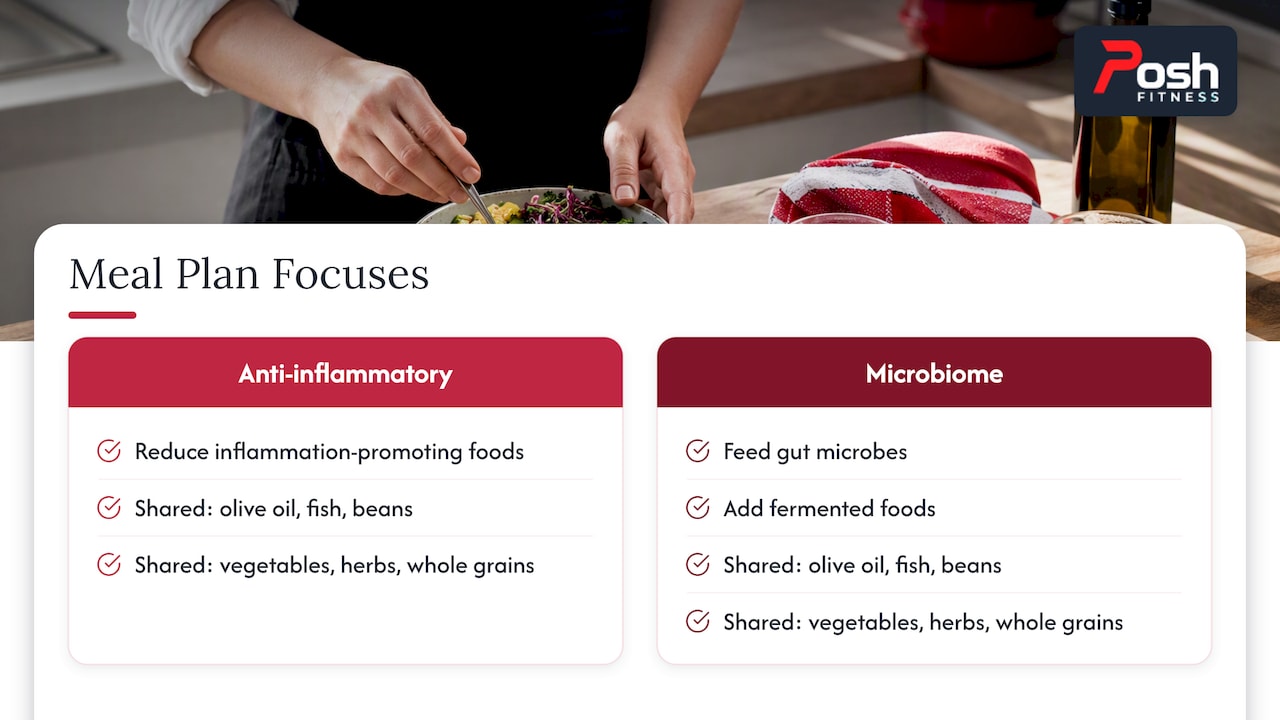
The two overlap heavily. A research review of anti-inflammatory diets describes them as emphasizing minimally processed foods and fiber, which can influence gut microbiota, along with unsaturated fats, lean protein and spices, while reducing red meat, high-fat dairy, and saturated and trans fats. If you follow the week above, you are already eating most of that way: olive oil, fish, beans, vegetables, herbs and whole grains.
The difference is emphasis. An anti-inflammatory plan is organized around reducing foods that promote inflammation. A microbiome plan is organized around feeding gut microbes and adding fermented foods. You do not need to choose. Build the fiber and fermented-food habits first, and the anti-inflammatory benefits tend to follow from the same food choices.
Gut bacteria and weight: what the evidence supports
It is tempting to believe that fixing your gut bacteria will fix your weight. The research is more careful than that. A 2023 review in Science Translational Medicine concluded that the gut microbiome is a potential factor in weight regulation, but that human evidence that it causes obesity remains scarce.
What is better established is the other direction. A 2024 Nature Reviews Microbiology review states that diet substantially shapes gut microbiome composition, function and diversity, while noting that more research is needed to establish causal relationships and to develop precision nutrition.
What does that mean for you?
- Eating for your microbiome is worthwhile on its own terms. More fiber, more plant variety and fewer ultra-processed foods are sound habits for metabolic health whatever the microbiome is doing.
- Weight change still comes from the whole picture. Total energy intake, protein, resistance training, sleep and stress management drive body composition. The meal plan supports those, it does not replace them.
- Be wary of promises. Any plan that guarantees weight loss by “resetting” gut bacteria is claiming more than the human research shows.
If stalled fat loss is your main frustration, our four-week guide to resetting your metabolism with habits covers the training, protein, sleep and daily-movement pieces that sit alongside gut-friendly eating.
Should you do a gut reset or a strict microbiome diet?
Short “gut resets” are popular, and the appeal is understandable. But a three-day cleanse is not what builds a healthier gut environment. Steady habits are. If you want a structured start, a gentle seven-day version of the plan above gives you the same benefits without extreme restriction.
Some structured diets are more restrictive. Kellman’s three-phase Microbiome Diet, as Healthline describes it, starts with plant foods and prebiotic and fermented foods, then reintroduces foods such as dairy, eggs, legumes, gluten-free grains and more fruits and vegetables in later phases. If a phased approach keeps you motivated, it can be a reasonable structure, as long as you stay nourished and do not cut whole food groups without a reason.
When a low-FODMAP approach comes in
Low-FODMAP eating is a different tool. The American College of Gastroenterology’s patient site explains it is a temporary approach for managing functional gut symptoms, best used to identify triggers rather than as a permanent lifestyle. It also notes these diets manage symptoms and do not cure conditions like SIBO, and that foods need careful reintroduction to avoid malnutrition. Note that many high-FODMAP foods, such as garlic, onions and beans, appear on the prebiotic list above. That is exactly why this needs professional guidance rather than guesswork.
Who should get medical advice first
For most healthy adults, the plan above is an ordinary, balanced way to eat. Some situations call for a professional before you change anything:
- Diagnosed IBS, SIBO or another GI condition. Work with a registered dietitian rather than self-starting an elimination diet, to avoid unnecessary restrictions or nutrient deficiencies.
- Inflammatory bowel disease, strictures, fistulas or recent surgery. The AGA notes that cooked, peeled or pureed vegetables may be better tolerated in these situations, so raw, high-fiber salads in the sample week may not suit you. Ask your gastroenterologist or dietitian.
- Medications, lab abnormalities or a medical diagnosis. Have a dietitian check the plan against them. Dietitians individualize interventions to each client’s health status, medications, circumstances and goals, which is exactly what a generic plan cannot do.
- Persistent symptoms. Ongoing pain, blood in stool, unexplained weight loss or changes in bowel habits need a medical evaluation, not a new diet.
As a coaching team, we work alongside your physician and dietitian, not in place of them.
Where testing fits in
A meal plan built on general principles works well for many people. Some readers want to know whether their own gut is responding. That is where microbiome testing can help: it adds personal data to an otherwise general plan, so food choices can be adjusted to you. We offer this through our gut microbiome testing and coaching, which we pair with the rest of your health picture. Personalization is the point, but the research above is a reminder that precision nutrition is still developing, so we treat test results as one input among several, alongside bloodwork, how you feel and how you perform.
If you also want a view of your biological aging, our DNA test for SystemAge is another option, and our post on lowering biological age with a 3 to 6 month plan explains how habits like these fit in.
Our perspective
We meet a lot of people in their 40s, 50s and 60s who are doing “everything right” and still feel tired, bloated or stuck. The usual advice treats everyone the same. Eat less, move more, repeat.
Our view is that the gut is one piece of a larger biological picture. Food quality, protein, training, sleep, bloodwork and, where it helps, DNA and microbiome data all inform one another. A microbiome meal plan is a strong starting point because it asks you to eat more real, plant-rich, minimally processed food, and that is good advice for nearly everyone.
Where we add value is in tailoring. We use diagnostics, physical assessments and coaching to help you decide what to eat, how to train and what to change first, whether we meet you at home, at an affiliated gym or virtually. We aim to support your longevity and energy, and we work alongside your doctor and dietitian when there is a medical question.
You do not need a perfect plan. You need one that fits your body and that you can keep doing.
Peter
Work with us on a plan built for you
If you would rather have a plan fitted to your biology than follow a generic one, we can help. Our coaching combines training, nutrition and, where appropriate, DNA, bloodwork and gut microbiome testing, delivered in your home in Fairfield County, Connecticut and Westchester County, New York, at affiliated gyms, or virtually.

If you want to start online, the Online Personal Fitness Plan Starter is $40 per month and the Truly Personal Plan is $99 per month. A single live virtual training session is $80. For deeper work, see our Longevity Coaching and membership options or our 4 Week DNA Coaching. If you live near Greenwich, Stamford, Westport, Norwalk or Darien, learn about in-home personal training in Fairfield County.
Frequently asked questions
How long does it take to notice a difference from a microbiome meal plan?
There is no guaranteed timeline, and individual responses vary. Many people notice changes in digestion, such as more regular bowel movements, within a couple of weeks of eating more fiber consistently, as long as they increase it gradually. If symptoms get worse or persist, talk to a clinician or registered dietitian.
Do I need probiotic supplements, or are foods enough?
Fermented foods such as yogurt, kefir, kimchi and sauerkraut are an easy way to include live cultures in your meals. Some people also choose a supplement, such as this probiotic with 40 billion CFU. Ask your doctor or dietitian first if you have a medical condition or take medication.
Does gut health affect weight?
The gut microbiome is a potential factor in weight regulation, but human evidence that it causes obesity is still scarce. Diet, on the other hand, clearly shapes the microbiome. Gut-friendly eating is a sound habit for metabolic health, and it works best alongside protein, strength training and sleep.
Are microbiome tests worth it?
They can add useful personal detail, especially if you want to tailor food choices and have a coach or clinician help you interpret results. They are not a diagnosis, and the science of precision nutrition is still developing. Use results as one input next to bloodwork, symptoms and goals.
What is a good starter plan if I eat very little fiber now?
Add one fiber-rich food a day, such as oatmeal with banana or a serving of beans, and a few spoonfuls of a fermented food. Increase every few days while drinking enough water. Work toward the 22 to 34 gram range recommended for adults, based on your age and sex.
Sources
- Promoting a Healthy Microbiome with Food and Probiotics, U.S. Department of Veterans Affairs
- Gut health: prebiotics and probiotics, Mayo Clinic Health System
- 7-Day Gut Health Meal Plan and Recipes, Utah State University
- Fiber: The Carb That Helps You Manage Diabetes, CDC
- 7-Day Meal Plan for a Healthy Gut, EatingWell
- Beneficial Effects of Anti-Inflammatory Diet in Modulating Gut Microbiota
- Evidence for the contribution of the gut microbiome to obesity, Science Translational Medicine
- The interplay between diet and the gut microbiome, Nature Reviews Microbiology
- The Microbiome Diet Review, Healthline
- SIBO: Managing with Diet, American College of Gastroenterology
- Inflammatory bowel disease: Role of fiber, AGA GI Patient Center
- Medical Nutrition Therapy Interventions Provided by Dietitians, Journal of the Academy of Nutrition and Dietetics