


You cannot permanently reset your metabolism overnight, because no scientific mechanism exists to do it. Most short “reset” programs change how many calories you eat, not your resting metabolic rate. What you can do is support metabolic health by preserving muscle, pacing calorie restriction smartly, and improving metabolic flexibility. The sections below cover habits, science, a 4-week plan, and safety.
Key Takeaways
You cannot permanently reset your metabolism overnight, but supporting metabolic health through consistent habits helps preserve muscle and improve metabolic flexibility.
| Point | Details |
|---|---|
| Strength training boosts metabolism | Training at least twice a week helps preserve muscle, which is essential for maintaining a healthy resting metabolic rate. |
| Protein supports muscle and calorie burning | Eating protein with every meal increases energy expenditure during digestion and helps protect muscle during calorie restriction. |
| Daily movement adds up | Engaging in everyday activities such as walking and taking stairs increases energy expenditure outside of formal workouts. |
| Metabolic resets are myths | Short fasts or programs claiming to reset metabolism do not raise basal metabolic rate long-term; weight loss mainly results from calorie deficits. |
| We base plans on individual assessment | Poshfitness emphasizes diagnostics and steady habits tailored to your biology for sustainable progress. |
Table of Contents
- Which daily habits support your metabolism?
- What do metabolic reset programs actually do?
- What does a practical 4-week program look like?
- How long does it take, and what should you track?
- When should you see a clinician before trying a reset?
- How do we build a sustainable plan around your biology?
- Why we favor diagnostics and steady habits over one-off resets
- FAQ
- Sources
Which daily habits support your metabolism?
Genetics is the largest single driver of how fast you burn energy, a point Harvard Health makes directly. The same source notes that lifestyle choices can still nudge the number upward and, more importantly, protect the lean mass that keeps it from sliding. None of these habits is exciting. All of them hold up better than a short reset protocol.
- Strength training at least twice a week. Muscle tissue costs more energy to maintain than fat, so keeping it matters most when you are eating less. Even modest lean-mass gains help over the long run.
- Protein with every meal. Digesting protein burns more energy than digesting fat or refined carbs, and it supplies the amino acids that protect muscle during a deficit. Unrefined carbohydrates also carry a higher digestive cost than processed ones.
- More everyday movement (NEAT). This is the energy you spend outside formal workouts: walking while on calls, taking stairs, standing to work, doing chores. Because it happens all day, it can add up to more than a single workout does.
- Consistent sleep. Short or broken sleep disrupts appetite regulation, which makes any calorie plan harder to follow. Fix the routine before you adjust the diet.
- Realistic expectations for caffeine and green tea. Small, short-lived bumps in energy expenditure are possible. They are a side note, not a substitute for food quality and training.
- Water and short post-meal walks. An acute bout of activity after meals reduces the rise in blood triglycerides and glucose, making a walk after dinner a simple habit to try.
Fueling matters here too. If you train in the morning, the timing and portions in this pre-workout meal guide can help you match food to the kind of session you are doing.
Pro Tip: Anchor one habit to something you already do every day, such as a walk right after your largest meal, before you add anything else.
Breakfast deserves a quick mention because it shows up in so many “reset” claims. Systematic reviews in the BMJ found no metabolic advantage to eating it, so skipping breakfast is not breaking your metabolism, and eating it is not fixing it. For a deeper look at food choices, our article on a metabolic flexibility diet covers evidence-backed moves for steadier energy.
What do metabolic reset programs actually do?
Resting metabolic rate (RMR) is the energy your body uses to keep you alive at rest. It depends mainly on genetics, body composition, age, and activity. That is why two people of the same weight can burn different amounts, and why losing muscle along with fat quietly lowers your baseline.
Many “reset” programs seem to work because they create a calorie deficit. That is the real engine. When people lose weight, they credit the protocol, but the same result would follow from any approach that reduces intake.
Why plateaus happen
During prolonged restriction, RMR can fall by more than the loss of body mass alone would predict. This is adaptive thermogenesis: the body conserves energy as a defense against ongoing scarcity. It is a large part of why weight loss slows after the first stretch of a diet, even when you are doing everything right. If you suspect that is happening, our guide on auditing a weight loss plateau is a good first step before cutting calories further.
What the MATADOR study found
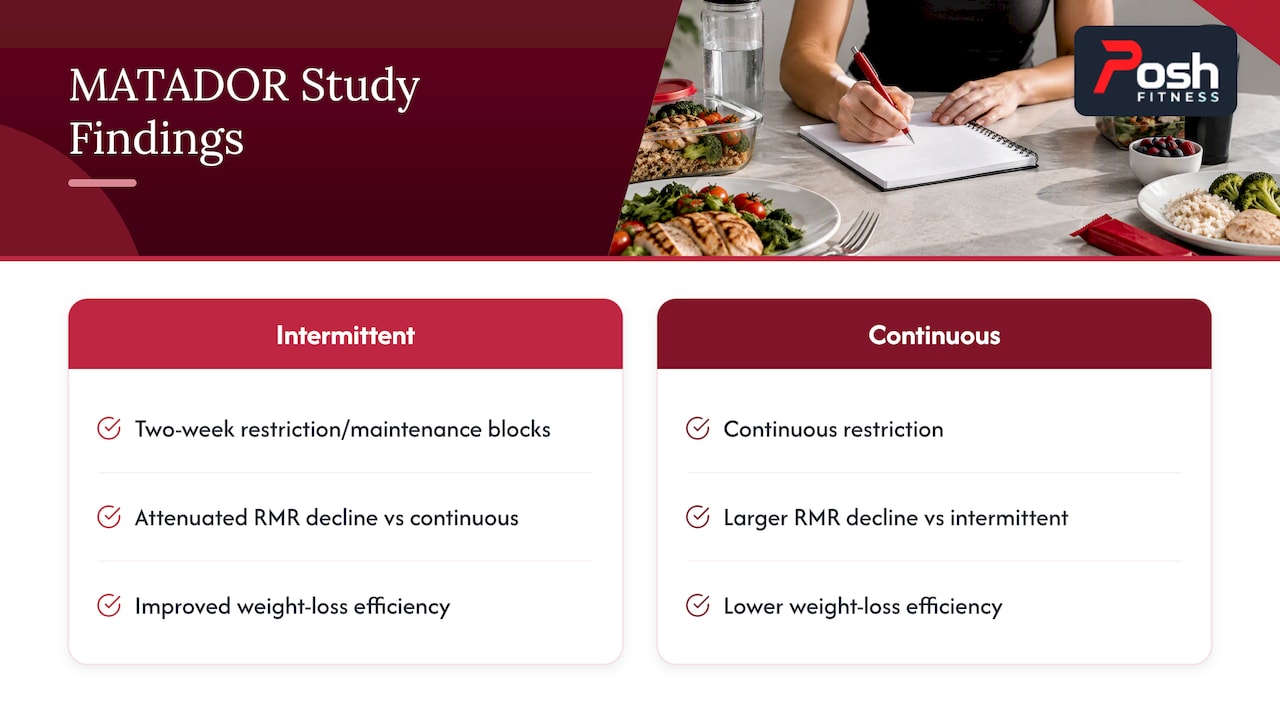
The strongest clinical evidence for managing this comes from the MATADOR study, published in the International Journal of Obesity. Researchers had participants alternate periods of energy restriction with periods of maintenance eating, in two-week blocks. Compared with continuous restriction, the intermittent approach attenuated the drop in resting metabolic rate and improved weight-loss efficiency. In other words, planned breaks acted like metabolic rest periods.
What systematic reviews add
A systematic review and meta-analysis of intermittent dieting with break periods reached a similar conclusion. Across many of the included studies, intermittent dieting improved body-composition outcomes and was associated with a smaller reduction in resting metabolic rate than continuous restriction. The effect is real but modest, and it describes slowing a decline, not boosting metabolism above where it started.
What about short fasts and three-day resets?
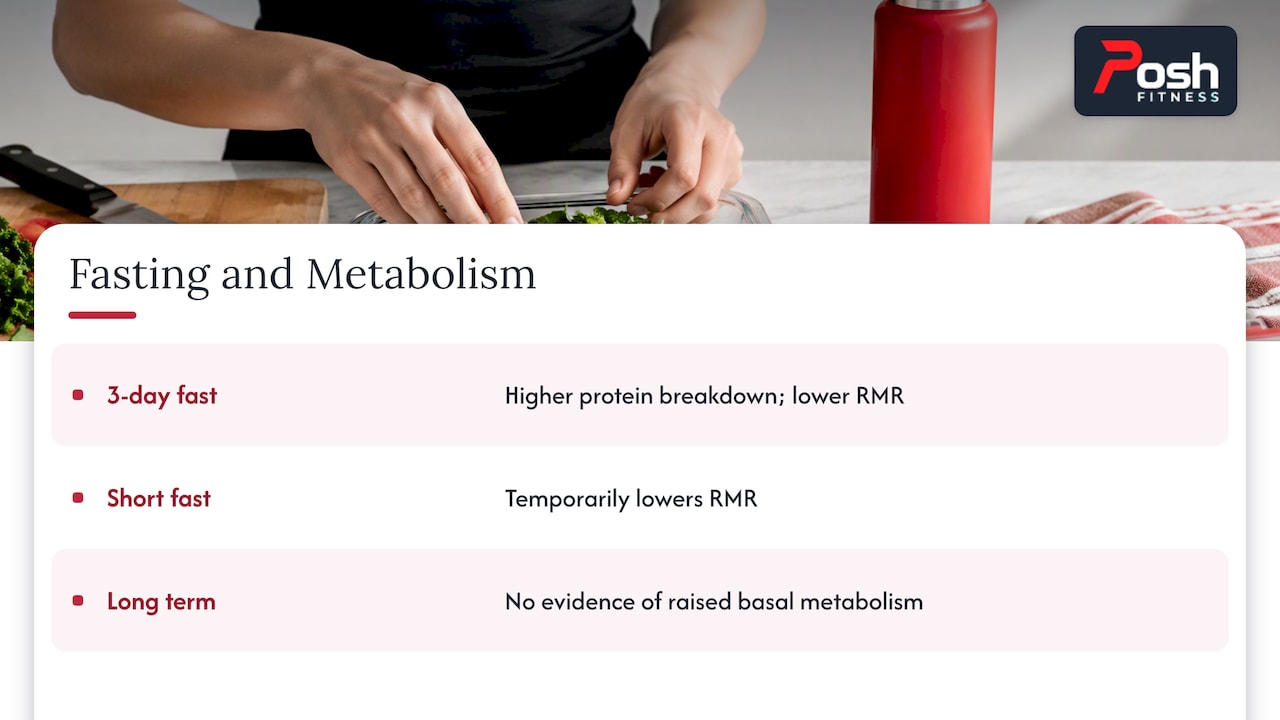
The evidence points the other way. Fasting alters energy use in predictable ways: during fasting, RMR falls while the body shifts toward burning fat and ketones. Research on three days of fasting in healthy adults found increased protein breakdown and a lower resting metabolic rate. A short fast may lower the number temporarily. Nothing in the evidence shows that it raises basal metabolism over the long term.
So when someone says they reset their metabolism, what usually happened is one of three things: they ate less, they lost water weight, or they simply started paying attention. All of those can feel like progress. None changes the biology underneath.
What does a practical 4-week program look like?
Use this as a template and adapt it to your schedule, training history, and health status. It deliberately avoids prescribing calorie numbers, because the right targets depend on your size, goals, and medical situation.
- Build your baseline. Schedule strength sessions. Set a protein target for each meal. Pick a daily step or movement goal you can hit on a normal day. Fix a consistent bedtime and wake time. Write down your starting weight, a few strength numbers, and how your energy feels.
- Progress the work. Add weight or repetitions to your main lifts when sets feel manageable. If fat loss is the goal, apply a modest calorie deficit rather than an aggressive one. Include short cardio sessions and keep your daily movement steady. If you want help keeping muscle while losing fat, our article on body recomposition versus weight loss explains the tradeoffs.
- Take a planned break. If you have been in a deficit for a long stretch, eat at maintenance for a while, applying the same principle MATADOR used with its alternating blocks. Keep training. Reassess your numbers afterward.
- Review and adjust. Compare your progress over time, including strength, energy, sleep, clothing fit, and average weight.
An example microcycle
Think of the plan as a repeating pattern: a stretch of modest restriction, then a stretch at maintenance, with training and protein held constant throughout. The idea is to give your body regular signals that food is not scarce, while still making progress over the full cycle. Longer breaks suit people who have been dieting for months. Shorter ones suit people newer to restriction.
If nothing is improving
Check the basics first. Are you hitting your protein target on most days? Are your lifts actually progressing? Has sleep slipped? Are your step counts lower than you think? If weight and performance both stall for several weeks, a longer maintenance block often works better than cutting calories further.
Pro Tip: Track one performance marker, such as your heaviest set of squats or push-ups, alongside the scale. If strength is holding or rising, you are likely keeping muscle even when weight moves slowly.
How long does it take, and what should you track?
Strength and energy may improve with consistent habits. Changes in body composition take time, and they are often invisible on the scale at first, because muscle gained can offset fat lost.
Day-to-day weight swings can reflect water and stored carbohydrate (glycogen), not true fat loss. Judge progress by the weekly average, not by any single morning.
Useful markers include:
- Weekly average weight change, interpreted in light of your goals and circumstances
- Strength numbers on your main lifts
- How your clothes fit
- Energy and sleep quality
- Body-composition testing or bloodwork when you want objective data beyond the scale
When should you see a clinician before trying a reset?
Some “reset” tactics carry real risk. Extreme fasting, very-low-calorie diets, and unmonitored supplement stacks can lower your resting metabolic rate, cost you muscle, and strain your health. Pushing hard on training while underfed adds to that load, and overtraining can drain energy and recovery in ways that look a lot like a slow metabolism.
Seek medical evaluation if you notice any of the following:
- Extreme fatigue that does not improve with rest
- Dizziness or lightheadedness
- Changes in your menstrual cycle
- Rapid weight change in either direction
- An existing medical condition, including thyroid or blood sugar concerns, or any medication that affects appetite or weight
Hormones such as thyroid and insulin do influence metabolism, and no habit change replaces a proper workup when symptoms point that way. Aging also plays a role, because muscle tends to decline over time, which is another reason resistance training matters more as years pass. If you want an aggressive plan, do it with testing beforehand and supervised coaching throughout.
How do we build a sustainable plan around your biology?
Our approach is built on the same evidence covered above. We combine DNA analysis, bloodwork, and personalized training to design plans tailored to your biology, so you are not guessing about what your body needs. This is the supervised alternative to a risky do-it-yourself reset, and it works as a complement to your doctor’s care.

Depending on your goals, you can book:
- DNA Coaching, a diagnostic-driven program that turns your results into a personalized plan
- Premium Coaching Plan, a program for deeper change
- Online personal plans: Online Personal Fitness Plan Starter at $40 per month, Truly Personal Plan at $99 per month, or Truly Personal Fitness Plan at $1000 per year
- Live Virtual Training Session at $80 one-off
- In-home personal training in Fairfield County, CT and Westchester County, NY, plus health coaching
If a plateau has you tempted by a quick fix, the better next step is a conversation. Book a consult with our team and we will show you where your own numbers point.
Why we favor diagnostics and steady habits over one-off resets
A plateau is not necessarily a broken metabolism. It is the predictable result of long dieting, lost muscle, and too little recovery, often after a fad reset that made things worse. A cleaner approach is to measure first, then train, eat, and rest in line with what the data shows. Our diagnostic offerings exist for exactly that reason. Before you try something extreme, take a measured step and get a professional evaluation.
— Peter
FAQ
Will a 3 day fast reset metabolism?
No. Research on a short fast in healthy adults found a lower resting metabolic rate, not a higher one. Any weight lost in that window is mostly water and stored carbohydrate, and it tends to return when you eat normally again.
What are the biggest metabolism killers?
Chronic aggressive dieting, losing muscle, poor sleep, and very low protein intake all work against you. Long stretches of severe restriction can trigger adaptive thermogenesis, where your energy expenditure drops more than expected. Staying active and strength training help offset these effects.
How long does it take to reset metabolism?
Metabolism is not something that switches back on at a set date. You can often feel better energy and strength within a few weeks of consistent training, protein, and sleep. Changes in body composition usually take months.
What is the Japanese trick to lose weight?
There is no single proven trick. Popular versions of it usually come down to a calorie deficit, a morning routine, or a hydration habit, and none of these has been shown to reset metabolism. Sustainable habits remain the more reliable route.
Sources
- Metabolism and weight loss: How you burn calories - Mayo Clinic
- Can you increase your metabolism? - Harvard Health
- Bmj
- Effects of intermittent dieting with break periods on body composition and metabolic adaptation: a systematic review and meta-analysis