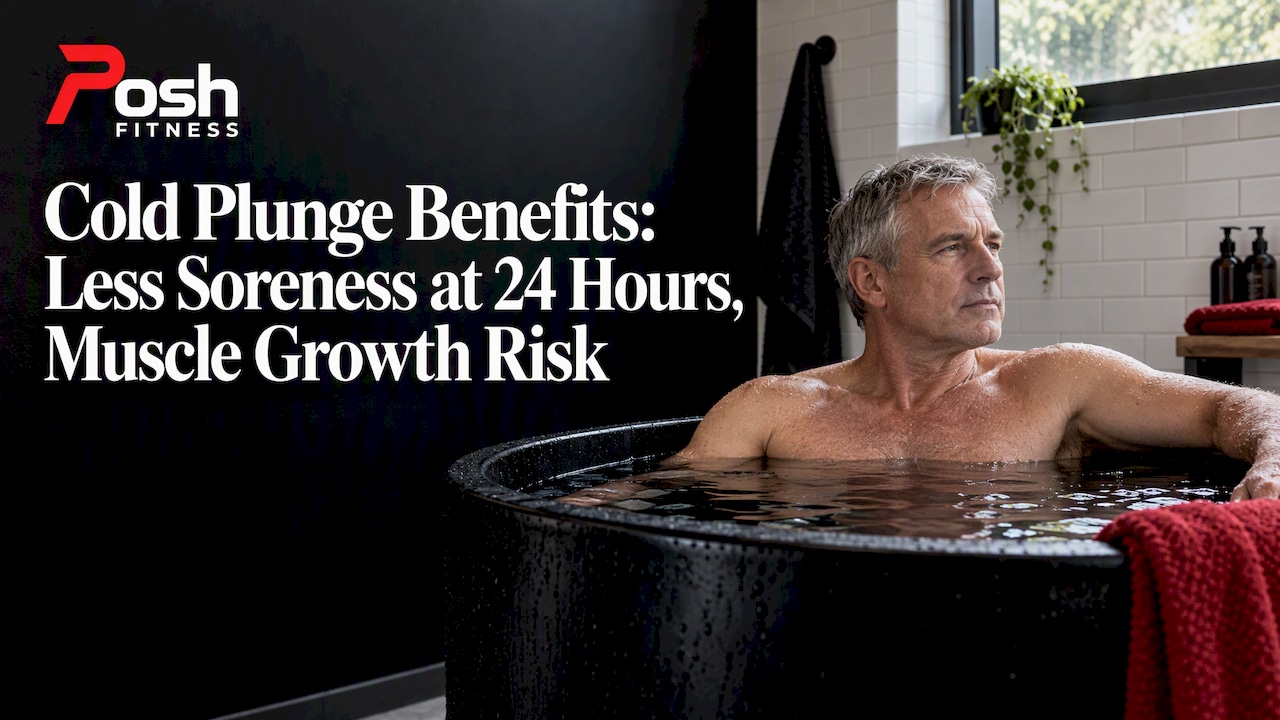

Cold plunges reliably reduce muscle soreness and improve perceived recovery after high-intensity exercise, especially around the 24-hour mark. Evidence for mood, stress, and sleep benefits is mixed and depends heavily on timing. We’d also flag a cardiovascular caution upfront: cold immersion causes a real spike in heart rate and blood pressure, so it deserves a safety read before you start.
Key Takeaways
Cold-water immersion effectively reduces muscle soreness and perceived recovery at 24 hours but offers limited evidence for mood, sleep, or immune benefits.
| Point | Details |
|---|---|
| Increased recovery from exercise | Cold plunges decrease muscle soreness and lower muscle damage markers when measured around 24 hours after high-intensity workouts. |
| Timing affects muscle growth | Avoid cold plunges immediately after resistance training, as they may interfere with muscle inflammation and growth processes. |
| Protocol variability matters | Temperature and duration of cold exposure, typically 5 to 15 minutes at 7°C to 15°C, significantly influence recovery outcomes. |
| Cardiovascular caution | Cold shock causes a rapid heart rate and blood pressure increase, making it risky for individuals with cardiovascular conditions. |
| Poshfitness offers personalized recovery guidance | We tailor recovery strategies based on bloodwork and DNA, ensuring safe and effective use of cold immersion based on individual health. |
Table of Contents
- What Cold-Water Immersion Actually Involves
- What the Research Shows by Outcome
- Cold Plunging and Muscle Growth: A Real Trade-Off
- Choosing the Right Temperature and Duration
- Cold Shock, Heart Rate, and Who Should Be Cautious
- A Simple Way to Start and Track Progress
- How We Help You Apply This Safely and Individually
- Where Cold Plunging Fits and Where It Doesn’t
- Posh Fitness: Supervised, Personalized Recovery Coaching
- FAQ
- Sources
What Cold-Water Immersion Actually Involves
Cold-water immersion, often shortened to CWI, covers a range of practices: full-body ice baths, partial immersion to the waist or chest, and cold showers used as a milder substitute. Researchers studying CWI have used strikingly different setups, which matters when you’re comparing claims across articles or studies.
Temperatures in published protocols typically range from 7°C to 15°C, with session lengths spanning 30 seconds to 2 hours depending on the goal of the study. Most trials fall into one of two categories:
- Single-exposure studies, which measure an immediate or next-day response to one cold session
- Repeated-protocol studies, which track outcomes across days or weeks of regular exposure
That distinction matters because a single cold plunge after a hard workout tells you very little about what happens with a twice-weekly habit over a month.
What the Research Shows by Outcome
The strongest, most consistent findings concern post-exercise recovery. A systematic review and meta-analysis covering high-intensity exercise recovery found that cold-water immersion reduced muscle soreness (SMD -0.89) and improved perceived recovery (SMD 0.66) at 24 hours, alongside lower serum creatine kinase, a marker of muscle damage.
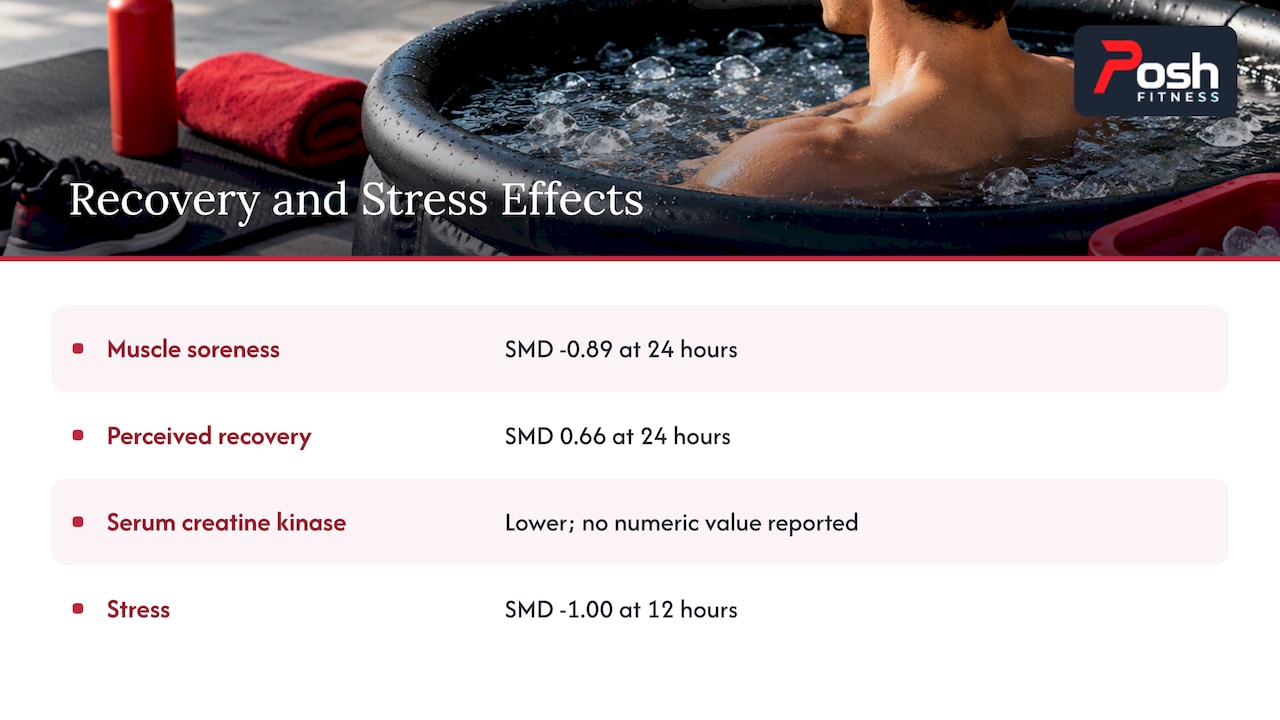
Recovery and soreness (DOMS): The 24-hour window appears to be where cold plunging earns its reputation. Reduced soreness and faster perceived recovery show up across multiple trials, even though the underlying samples vary in size and training background.
Mood and stress: A 2025 systematic review and meta-analysis of 11 studies and 3,177 participants found a significant reduction in stress 12 hours post-exposure (SMD -1.00, 95% CI -1.40 to -0.61), but not immediately afterward or at other short time points. A separate Frontiers review of 13 studies and 4,105 participants found that pooled estimates generally favored cold-water exposure for mood and stress, but those effects shrank toward null once the analysis was limited to controlled studies only.
Sleep and quality of life: Some smaller trials report sleep improvements, but the overall picture stays inconsistent and the studies themselves vary too much in design to draw a firm conclusion.
Immunity and metabolism: Evidence here is thin. Cold exposure does trigger measurable thermogenesis, but it’s rarely large enough on its own to produce meaningful fat loss or a durable immune boost without other lifestyle changes.
Across all these outcomes, researchers consistently flag the same limitations: small sample sizes, heavy reliance on single-session designs, athlete-heavy study populations that don’t generalize well to everyday exercisers, and wide protocol variability that makes head-to-head comparisons difficult.
Cold Plunging and Muscle Growth: A Real Trade-Off
If your goal is hypertrophy, timing your cold plunge matters more than most people realize. Research on cold-water immersion and muscle adaptation suggests that jumping into cold water immediately after resistance training may blunt the inflammatory signaling your muscles rely on to rebuild stronger, a process cold exposure appears to dampen rather than enhance.
That doesn’t make cold plunging off-limits for lifters, it just changes when it’s useful.
- Skip immediate cold exposure after sessions built around muscle growth
- Save cold plunges for after high-intensity endurance work, competition, or days when recovery speed outweighs adaptation goals
- Space cold sessions away from your heaviest hypertrophy days rather than stacking them daily
Pro Tip: If you’re training for size, wait several hours after lifting before plunging, or reserve cold exposure for your cardio and competition days instead.
Choosing the Right Temperature and Duration
Protocol details shape outcomes more than most casual guides let on. Commonly studied ranges run from about 5°C to 15°C (41°F to 59°F), with exposure times generally falling between 5 and 15 minutes depending on what the study was measuring.
Dose-response patterns show up here too. Protocol summaries suggest temperatures around 10°C to 15°C for 10 to 15 minutes are commonly used to reduce soreness and creatine kinase, while colder, shorter exposures tend to appear in studies focused on rapid analgesia after endurance events.
- For general post-workout recovery, moderate cold (around 10 to 15°C) for 10 to 15 minutes aligns with the most commonly studied protocol
- For rapid pain relief after an endurance event, colder and shorter sessions appear more often in the literature
- Repeated exposures, rather than a single session, are more likely to produce the mood and stress effects seen in pooled analyses
Frequency should track your training load rather than a fixed calendar. Monitoring how you feel the next day matters more than hitting a specific number of sessions per week.
Cold Shock, Heart Rate, and Who Should Be Cautious
The primary acute risk isn’t the cold itself, it’s your body’s reflexive response to it. Cold shock triggers an involuntary gasp along with a rapid surge in heart rate and blood pressure, and Harvard Health’s clinical guidance notes this surge can pose real risk for people with existing cardiovascular conditions.
- Known heart disease or uncontrolled hypertension raises your risk during sudden cold exposure
- A history of fainting or syncope means cold plunging should wait for medical clearance
- Recent cardiac events are a clear reason to consult a clinician before trying CWI
- Never plunge alone, and sit or stand near support when exiting in case of lightheadedness
- Start with brief, less extreme exposures and build up gradually rather than jumping straight to the coldest, longest protocol you’ve read about
Pro Tip: Practice slow, controlled breathing for at least 60 seconds during your first immersion. It’s the simplest way to manage the gasp reflex and keep your heart rate in check.
A Simple Way to Start and Track Progress
You don’t need an elaborate setup to test whether cold plunging works for you, just a clear starting plan and a way to measure results.
- Check with a clinician first if you have any cardiovascular risk factors
- Start with a short, moderate-temperature exposure (around 15°C for 1 to 3 minutes) rather than the coldest option available
- Breathe slowly and deliberately for the first 60 seconds to manage the initial shock
- Time your sessions based on your goal: after endurance work for fast recovery, away from hypertrophy sessions
- Track next-day soreness, sleep quality, and mood for two to three weeks before deciding if it’s worth keeping
- Stop and consult a professional if you notice chest discomfort, dizziness, or irregular heartbeat during or after a session
Our recovery checklist and red-flag guide walks through similar tracking steps for anyone managing persistent post-workout fatigue.
How We Help You Apply This Safely and Individually
We build recovery recommendations around your actual biology rather than a generic protocol. Through DNA and bloodwork-informed coaching, we assess how your body responds to training stress and recovery tools, including whether supervised cold exposure fits your cardiovascular profile and goals. Our in-home recovery visits let us tailor the details alongside your broader training plan.
Where Cold Plunging Fits and Where It Doesn’t
Cold plunging earns its place for people chasing faster recovery after hard training, particularly endurance work or competition, where soreness and perceived fatigue carry real costs the next day. We’d be cautious about treating it as a mood or sleep fix on its own, since the evidence there is thinner than the hype suggests.
A tailored approach beats a blanket recommendation. Pair cold exposure with solid sleep habits, adequate protein, and progressive training rather than expecting it to carry the whole recovery load, and get a clinical check first if you have any cardiovascular history.
— Peter
Posh Fitness: Supervised, Personalized Recovery Coaching
If you’d rather have a professional assess your recovery needs instead of guessing with a backyard ice bath, that’s where our coaching comes in. Our Health Coaching and 16 Week Premium Coaching Plan use your DNA and bloodwork to build a recovery strategy around your actual biology, not a generic protocol.
For a broader comparison of recovery tools, including heat-based protocols, a partner resource on heat versus ice recovery is worth a read alongside our own guidance. Book a session through Poshfitness to start with an assessment tailored to your goals.
This article is general information, not a substitute for advice from a qualified doctor. Consult a qualified healthcare professional about your own circumstances before acting on anything here.
FAQ
Does Cold Plunging Actually Reduce Muscle Soreness?
Yes, meta-analyses show reduced muscle soreness and improved perceived recovery at 24 hours after high-intensity exercise, along with lower creatine kinase levels. The effect is one of the most consistently supported benefits of cold-water immersion in the current research.
Can Cold Plunges Help With Stress or Anxiety?
The evidence is time-dependent: one review found a significant stress reduction at 12 hours post-exposure but not immediately after the plunge. Other pooled analyses favor cold exposure for mood generally, though the effect weakens in controlled-only studies.
Is Cold Plunging Safe for Everyone?
No, people with heart disease, uncontrolled hypertension, or a history of fainting should get medical clearance first, since cold shock causes a rapid spike in heart rate and blood pressure. Starting with brief, moderate-temperature exposures and never plunging alone reduces risk for most healthy adults.
Will Cold Plunging Hurt My Muscle Gains?
It can, if timed poorly. Immediate cold exposure after resistance training may blunt the inflammatory response your muscles use to adapt and grow, so lifters focused on hypertrophy should save cold plunges for endurance or competition days instead.
How Cold and How Long Should a Cold Plunge Be?
Commonly studied ranges run from about 5°C to 15°C for 5 to 15 minutes, with the exact temperature and duration depending on your goal. Moderate cold around 10 to 15°C for 10 to 15 minutes is typical for general recovery, while colder, shorter sessions appear more often in studies on rapid pain relief.
Sources
- Cold-water exposure and psychological outcomes in adults: a systematic review and meta-analysis
- Impact of Cold-Water Immersion Compared with Passive Recovery: systematic review and meta-analysis (Sports Medicine summary / PMC)