

Short sleep promotes weight gain mainly by raising appetite, not by slowing your metabolism. In controlled studies, people who sleep too little eat more than their bodies need, crave more carbohydrate-rich food, eat later at night and become less sensitive to insulin. The good news is that each of those pathways responds to sleep, training and food choices you can change. At Posh Fitness we build plans around your DNA, bloodwork and gut microbiome results, so the part of the problem that is yours alone gets measured instead of guessed.
Key Takeaways
- Sleep restriction raises hunger and cravings and lowers leptin while raising ghrelin, so you eat more than you burn, even though you burn slightly more while awake.
- Short sleep also lowers insulin sensitivity. In one study, five nights of five-hour sleep cut whole-body insulin sensitivity by 25%.
- Both aerobic and resistance training improve insulin action, and combining them works better than either alone.
- Fatigue makes you move less. Start with daily movement and short, harder sessions, then build toward guideline-level training.
- Persistent fatigue, snoring with daytime sleepiness or rising blood sugar markers deserve a conversation with your doctor.
Table of Contents
- What the research shows about sleep and weight gain
- How sleep affects insulin resistance
- Exercise that improves insulin sensitivity
- When you are too tired to train
- Habits that protect both sleep and weight
- When to talk to your doctor
- Perspective: why we start with your biology
- Get a plan built for your biology
- FAQ
- Sources
What the research shows about sleep and weight gain
The idea that tired people gain weight is not folk wisdom. It has been tested in sleep laboratories where researchers control food access, bedtime and activity.
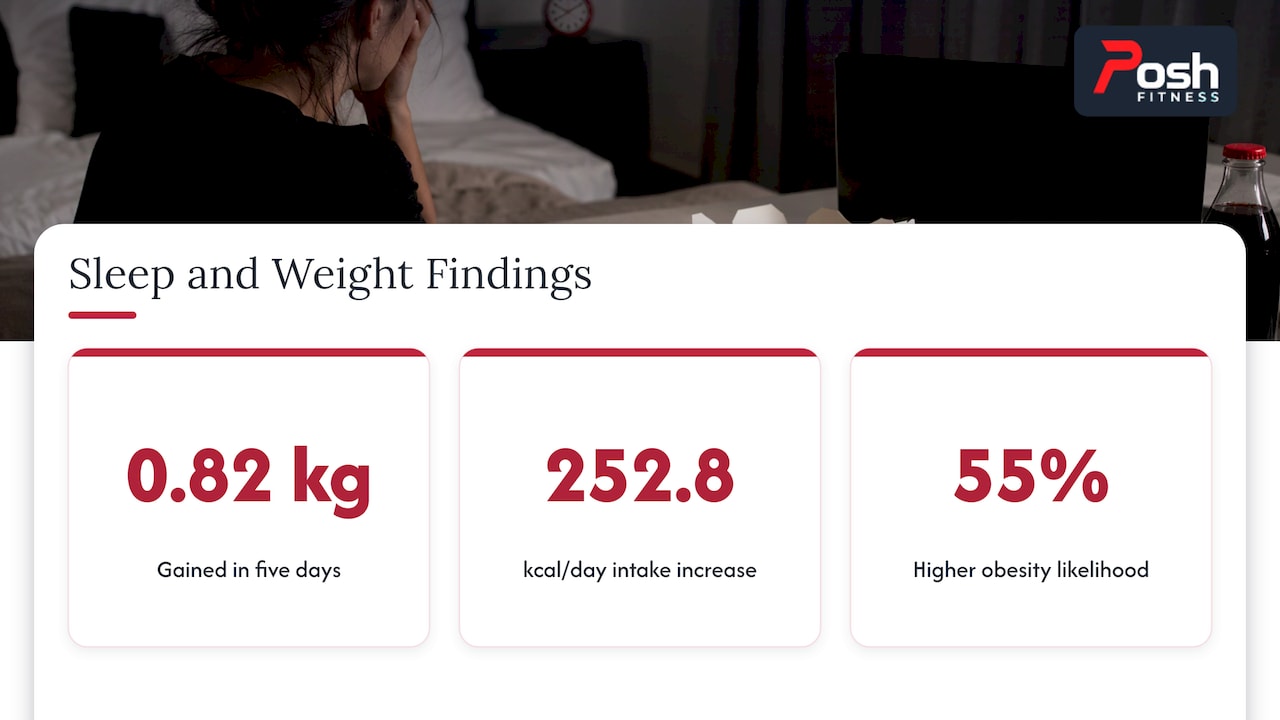
A 2013 study in PNAS put 16 adults through a 14- to 15-day inpatient protocol. Five days of insufficient sleep (5 hours in bed versus 9) increased total daily energy expenditure by about 5%, yet participants ate far more than that extra burn required, especially after dinner. The result was a weight gain of about 0.82 kg over those five days.
That is the key detail. Being awake longer does cost a little more energy. Appetite rises by much more than the cost.
A 2022 review of sleep and metabolism reports that one meta-analysis found sleep restriction in healthy adults raised energy intake by 252.8 kcal per day, which exceeds any small change in energy expenditure and creates a net surplus. Over weeks, a surplus of that size adds up.
Observational data point the same way. A 2020 review found that short-sleeping adults are 55% more likely to have obesity, are more prone to gaining weight over time and appear to accumulate more visceral and ectopic fat, the kind that sits around organs.
Hunger hormones: ghrelin and leptin
Two hormones do much of the work. Ghrelin signals hunger. Leptin signals fullness. According to Yale Medicine, sleep deprivation throws these appetite hormones out of balance: leptin normally rises during sleep, so when you sleep less it falls and you feel hungrier, while sleep disruptions of any kind can raise ghrelin.
This shift happens fast. A 2022 review notes that as little as two days of sleep restriction lowers leptin and raises ghrelin.
Cravings and the brain’s reward system
Hormones are only half of it. The same review describes a meta-analysis of 41 randomized controlled trials showing that restricting time in bed to 4 to 5 hours, compared with 8 to 9 hours, for 1 to 14 days increased subjective hunger and increased brain activity in reward centers in response to food. Duan and colleagues add that fMRI studies after total sleep deprivation show greater activity in food-related reward regions, which promotes eating for pleasure rather than need.
In practice this explains the pattern many tired adults describe: you are not short of willpower at 9 p.m., your brain is simply more interested in the pantry. A review of exercise and cardiometabolic health also reports that sleep restriction increases impulsivity around food cues, late-night eating, portion sizes and fat intake, and that people are more sedentary after a night of insufficient sleep.
Why modern life makes it worse
The PNAS authors suggest that eating more during sleep loss is probably an adaptation that fuels extended wakefulness. In an environment full of easily available food, though, intake overshoots what the body needs. If exhaustion also cuts your physical activity at work and at home, the gap widens.
How sleep affects insulin resistance
Weight gain is not only about calories. Sleep also changes how your body handles glucose.
Insulin is the hormone that moves glucose from your blood into muscle, fat and liver cells. According to the NIDDK, insulin resistance can lead to higher blood glucose and weight gain, and prediabetes means blood glucose is above normal but not yet high enough for a type 2 diabetes diagnosis.
The sleep connection is well documented:
- The NIDDK’s Diabetes in America reference links sleep disturbances and fragmentation to abnormal glucose metabolism, a 20% to 30% reduction in insulin sensitivity and higher diabetes risk.
- In 14 healthy adults, five nights of five-hour sleep versus eight-hour sleep lowered whole-body insulin sensitivity by 25% and peripheral insulin sensitivity by 29%, while liver insulin sensitivity did not change significantly.
- In a classic study of four hours per night for six days, glucose clearance was 40% lower than after recovery sleep, with values similar to older adults with impaired glucose tolerance.
- A 2022 meta-analysis found that short sleep was significantly associated with insulin resistance and that more than seven hours per night is needed for adults to help prevent metabolic complications such as type 2 diabetes.
Inflammation markers such as C-reactive protein and circadian misalignment may help explain the link, according to the same meta-analysis. The takeaway for training is simple: after a short night, your muscles take up glucose less efficiently, and the right kind of exercise is one of the best tools for getting that efficiency back.
Exercise that improves insulin sensitivity
This is where readers searching for an insulin resistance workout plan, cardio for insulin resistance or strength training for insulin sensitivity usually land. The evidence is encouraging and fairly specific.
Why a single workout matters
The American Diabetes Association’s position statement explains that aerobic exercise increases muscle glucose uptake up to fivefold without needing insulin. Afterward, glucose uptake stays elevated through insulin-independent mechanisms for about two hours and through insulin-dependent mechanisms for up to 48 hours if the session was prolonged.
That has a practical implication. The benefit is tied to your most recent sessions. In a 12-week trial of 31 inactive adults with obesity, peripheral insulin sensitivity was about 20% higher the day after the last session. When participants then stopped exercising for four days, insulin sensitivity returned to pretraining levels. Consistency beats intensity records.
Cardio, intervals or lifting?
The same trial compared high-intensity intervals (ten 1-minute efforts at 90% of max heart rate) with 45 minutes of moderate continuous exercise. Both produced similar improvements. So you can choose the format you will actually keep doing.
For most people the best answer is both aerobic work and strength training. The American College of Lifestyle Medicine’s 2025 guideline notes that combined aerobic and strength training is superior to either alone for fitness, body composition and glucose management, and that the Physical Activity Guidelines for Americans call for two strength sessions per week targeting large muscle groups.
A weekly template you can start from
The ADA’s updated guidance says most adults with diabetes should aim for at least 150 minutes of moderate to vigorous activity per week, on at least three days, with no more than two days between sessions. Fitter or younger people may get similar benefits from 75 minutes of vigorous or interval training. For resistance training, the ACSM position statement recommends 8 to 10 exercises, 2 to 3 days per week, never on consecutive days, 10 to 15 repetitions for 1 to 3 sets.
A week built on those numbers might look like this:
| Day | Session | Time |
|---|---|---|
| Monday | Full-body strength: squat or leg press, row, push, hinge, carry | 40 minutes |
| Tuesday | Brisk walk or easy bike | 30 to 45 minutes |
| Wednesday | Rest or a 10-minute walk after meals | 10 to 30 minutes |
| Thursday | Full-body strength, different exercise variations | 40 minutes |
| Friday | Intervals: 8 to 10 one-minute hard efforts with easy recovery | 25 to 30 minutes |
| Weekend | One longer moderate session, such as a hike or cycle | 45 to 60 minutes |
That template adds up to roughly the guideline range. If you have diabetes, take glucose-lowering medication, have heart disease or have been inactive for a long time, check with your doctor before ramping up intensity.
When you are too tired to train
The problem is circular. Poor sleep makes you want to skip workouts, and skipped workouts make insulin resistance harder to reverse. The ADA’s guidance offers a realistic way out: for people who are sedentary and unwilling or unable to start structured exercise, increasing daily movement is an appropriate starting point. It also notes that shorter sessions can still raise insulin sensitivity when they are harder or include high-intensity intervals.
A workable ladder:
- Weeks 1 to 2: a 10-minute walk after your largest meal, plus a daily step habit you can sustain on bad nights.
- Weeks 3 to 4: add two 20-minute strength sessions using body weight or light resistance.
- Weeks 5 to 8: build to three or four sessions, with one short interval session if your joints and heart allow it.
- After that: work toward the 150-minute and two-strength-session benchmarks above.
On days after a very poor night, shorten the session rather than skipping it. If you are unsure whether your tiredness is a recovery problem, our checklist for feeling tired after workouts lists the red flags worth acting on, and our guide to morning versus evening workouts can help you place training where it will not cost you sleep.
Habits that protect both sleep and weight
Exercise carries a lot of the load, but it works best inside a few other habits.
- Aim for about seven hours. A review of exercise and cardiometabolic health recommends roughly seven hours per night and limited alcohol, alongside dietary patterns built around energy balance, whole grains and unprocessed foods with adequate fiber. Our piece on alcohol and fat loss shows what a 21 to 30 day break can reveal.
- Keep a sleep schedule. Guestly Sleep’s overview of how lack of sleep affects your health connects insufficient sleep with appetite, calorie intake and weight management, which is useful context if you train regularly and wonder why the scale is stuck.
- Time your food around training. Eating well before and after sessions steadies energy later in the day. See our guide to meal timing for workouts.
- Use lifestyle pillars together. The American College of Lifestyle Medicine guideline treats nutrition, activity, restorative sleep, stress, social connection and avoiding risky substances as one package. Combined exercise and dietary change cut type 2 diabetes risk by 42% to 58% in the interventions summarized in the 2016 ACSM and ADA joint statement.
- Judge progress by more than the scale. When sleep improves and you lift regularly, body composition can change before body weight does. Our article on body recomposition versus weight loss explains how to track it, and what seven hours of sleep can change for fat loss goes deeper on the sleep side.
When to talk to your doctor
Some causes of poor sleep and weight gain need medical care, not a better workout plan.
Sleep apnea is the most common one to rule out. The Sleep Foundation notes that sleep apnea can contribute to weight gain and make weight loss harder because disrupted sleep affects metabolism, hormones and daytime energy. See your primary care doctor or a sleep specialist if you snore loudly, wake gasping, or feel sleepy through the day despite a full night in bed.
See your doctor as well if:
- You are fatigued for weeks without an obvious cause.
- You have a family history of type 2 diabetes, or you notice extreme thirst, frequent urination or darkened skin patches on the neck or armpits.
- You gain weight steadily despite regular training and reasonable eating. Thyroid function is worth checking; our hypothyroid workout guide covers how to train safely once you have answers.
Prediabetes and diabetes are diagnosed with blood tests ordered by a health care professional. Your doctor decides whether to test and how to interpret the results.
Perspective: why we start with your biology
Most advice about sleep and weight gain stops at “sleep more, move more.” That is correct and incomplete. Two people can sleep five hours and respond very differently: one craves sugar at night, another loses training quality and stops moving. A one-size-fits-all plan cannot tell them apart.
That is why we begin with data. Posh Fitness uses DNA analysis, bloodwork, gut microbiome testing and physical assessments to build training and nutrition programs around your biological makeup. Our trainers are scientifically credentialed, and our coaching aims to reset your biology and support your healthspan, so you can get back the energy and performance you had earlier in life.
When sleep has been poor for months, the plan has to respect it. Shorter sessions on depleted days, strength work you can recover from, protein-forward meals and movement that fits your schedule beat an ambitious program you abandon in week two. We deliver that coaching in your home, at an affiliated gym or virtually, and we work alongside your doctor when sleep apnea, thyroid issues or blood sugar need medical attention.
Peter
Get a plan built for your biology
If you live in Fairfield County, CT or Westchester County, NY and want training and nutrition that account for tired days and stalled results, our Personal Training comes to your home or an affiliated gym. If you want to see what is driving your results first, 4 Week DNA Coaching uses DNA analysis to personalize your program. Prefer to train from anywhere? Our online plans start with the Online Personal Fitness Plan Starter at $40 per month, the Truly Personal Plan is $99 per month, and a Live Virtual Training Session is $80 one-off. You can compare everything on our online personal training page.

For deeper coaching, our Longevity Coaching and membership options include the Ultra Membership 5 a Week at $2000 per month.
FAQ
Can lack of sleep really cause weight gain?
Yes. In controlled studies, restricting sleep raised hunger and calorie intake. One inpatient study found about 0.82 kg of weight gain after five nights of five-hour sleep, because food intake outran the small rise in energy burned. Over time, short sleep is also linked to higher obesity risk.
How much sleep do I need to protect my weight and insulin sensitivity?
A 2022 meta-analysis of short sleep and insulin resistance points to more than seven hours per night for adults. A review of exercise and metabolic health likewise cites about seven hours. Consistency matters as well as total time, so keep a regular bedtime and wake time.
What is the best exercise for insulin resistance?
A mix of aerobic exercise and resistance training works best. The ADA guidance cited above recommends at least 150 minutes of moderate to vigorous activity per week plus resistance training two to three days per week, with no more than two days between sessions. Intervals and moderate cardio produced similar gains in one 12-week trial.
Can I improve insulin sensitivity if I am too tired to work out?
Yes. Start with more daily movement, such as short walks after meals, then add brief strength or interval sessions as energy returns. Harder short workouts can raise insulin sensitivity without long sessions. If fatigue is persistent, see your doctor to check for sleep apnea, thyroid problems or blood sugar changes.
Sources
- Impact of insufficient sleep on total daily energy expenditure, food intake, and weight gain (PNAS, 2013)
- Connecting insufficient sleep and insomnia with metabolic dysfunction (2022)
- Sleep Extension: A potential target for obesity treatment (2020)
- Insufficient sleep and obesity: cause or consequence (2022)
- The Connection Between Sleep, Diabetes, and Obesity (Yale Medicine)
- Considerations for Maximizing the Exercise Drug to Combat Cardiometabolic Risk (2021)
- Insulin Resistance and Prediabetes (NIDDK)
- Impact of Sleep and Circadian Disturbances, Diabetes in America (NIDDK)
- Short Sleep Duration Disrupts Glucose Metabolism (2024)
- Does Insufficient Sleep Increase the Risk of Developing Insulin Resistance (2022)
- Physical Activity/Exercise and Diabetes: A Position Statement of the ADA
- Moderate-Intensity Exercise and High-Intensity Interval Training and insulin sensitivity (2020)
- Lifestyle Interventions for Treatment and Remission of Type 2 Diabetes (2025)
- Key Points from the Updated Guidelines on Exercise and Diabetes (2017)
- Exercise/Physical Activity in Individuals with Type 2 Diabetes (ACSM)
- How Weight Affects Sleep Apnea (Sleep Foundation)