
Feeling genuinely wiped right after a hard workout is normal, and for most people it resolves within a few hours once you refuel, rehydrate, and rest. The immediate steps that help are eating carbohydrates with protein, drinking fluids to match what you sweated out, and giving yourself a short period of rest or sleep. If instead you notice dark urine, fainting, or weakness severe enough to interfere with daily tasks, that calls for medical evaluation rather than more recovery time.
Key Takeaways
Proper post-exercise nutrition, hydration, sleep, and pacing are essential in preventing and managing workout fatigue and enhancing recovery.
| Point | Details |
|---|---|
| Refuel effectively | Consume 15 to 25 grams of protein with carbohydrates within two hours after exercise to support glycogen replenishment and muscle repair. |
| Stay hydrated during activity | Drink fluids regularly during longer sessions and consider electrolyte drinks after 60 to 90 minutes to prevent dehydration and reduce fatigue. |
| Prioritize sleep and rest | Incorporate short naps and rest days into your routine to allow glycogen restoration and tissue repair, preventing overtraining. |
| Monitor training patterns | Track perceived exertion, sleep quality, and mood over weeks to identify signs of overtraining or the need to adjust your workout plan. |
| Use Posh Fitness approach | When fatigue persists despite proper habits, personalized plans based on bloodwork and biological markers can optimize recovery and performance. |
Table of Contents
- What happens in your body that makes you tired right after exercise
- Immediate fixes: what to eat, drink, and do in the first four hours
- How to adjust today’s workout and your weekly plan when fatigue keeps recurring
- When tiredness is abnormal: red flags and the diagnostic checklist
- When personalized diagnostics and coaching help: an example workflow
- The impact of sleep disorders like sleep apnea on recovery
- How hydration before and during exercise affects fatigue levels
- Treat recovery as a skill, not an afterthought
- How Posh Fitness can help with persistent post-workout fatigue
- Sources
- FAQ
What happens in your body that makes you tired right after exercise
The tiredness you feel at the end of a tough session comes from a few overlapping processes, and understanding them helps you tell normal fatigue from something that needs attention. Your muscles rely heavily on stored glycogen for fuel during moderate to intense effort, and as those stores run low, your energy availability drops along with your perceived capacity to keep going. This is sometimes split into peripheral fatigue, which happens at the muscle level as contractile fibers lose efficiency, and central fatigue, which involves the brain and nervous system dialing back effort to protect the body. According to Harvard Health, this kind of normal post-exercise fatigue is mainly driven by glycogen depletion and muscle fatigue, and it typically fades within a few hours.
Dehydration and electrolyte losses add another layer, since even modest fluid deficits make the same workload feel harder and can deepen the sense of exhaustion afterward. Sleep debt and back-to-back hard training days compound all of this, because your body never gets the window it needs to replenish glycogen and repair tissue before the next demand hits.
A few clues help you figure out which mechanism is dominating:
- Short, intense sessions (sprints, heavy lifting) tend to produce more localized muscle fatigue that eases with food and rest.
- Long, steady-state sessions (endurance rides, long runs) point more toward glycogen depletion and fluid loss.
- Fatigue paired with brain fog or low motivation often signals a central nervous system component, especially after poor sleep.
- Fatigue that spikes on consecutive hard days usually reflects accumulated training load rather than any single workout.
Immediate fixes: what to eat, drink, and do in the first four hours
What you do in the hours right after a hard session has an outsized effect on how fast you bounce back. Prioritize these steps in order:
- Refuel with carbohydrates and protein. Aim for roughly 15 to 25 grams of protein alongside carbohydrates within about two hours of finishing, since this combination supports glycogen restoration and muscle repair. Practical options include chocolate milk, Greek yogurt with fruit, a turkey sandwich, or a recovery shake, and the Just Move Supplements guide walks through similar fueling sequences for athletes rebuilding energy after training.
- Rehydrate to match your sweat loss. Plain water covers most sessions under an hour, but if you trained longer than 60 to 90 minutes or sweated heavily, an isotonic drink with sodium and carbohydrates replaces what plain water misses.
- Take a short nap if you need one. A nap between 20 and 90 minutes can restore alertness without leaving you groggy, but avoid napping late in the day if it tends to interfere with your regular nighttime sleep.
- Cool down with light movement. A short walk or easy spin helps clear some of the acute heaviness before you sit down for the rest of the day.
- Be careful with caffeine timing. A coffee an hour after training can sharpen alertness, but using caffeine within six hours of bedtime can delay sleep onset and blunt the overnight recovery you actually need.
For sessions longer than about an hour, the ACSM recommends consuming 30 to 60 grams of carbohydrate per hour during exercise itself, not just afterward, since this helps preserve glycogen stores and reduces how depleted you feel by the finish line. The Onemor offers similar protein-forward meal ideas sized for busy schedules.
How to adjust today’s workout and your weekly plan when fatigue keeps recurring
A single tired session is just information, but a pattern of tiredness means your plan needs a change, not just another recovery snack. When you show up to train and already feel depleted, the decision is usually binary: scale the session down (lighter loads, fewer intervals, slower tempo) or swap it entirely for active recovery like an easy walk or light mobility work.
Across a full week, a few structural habits prevent fatigue from compounding:
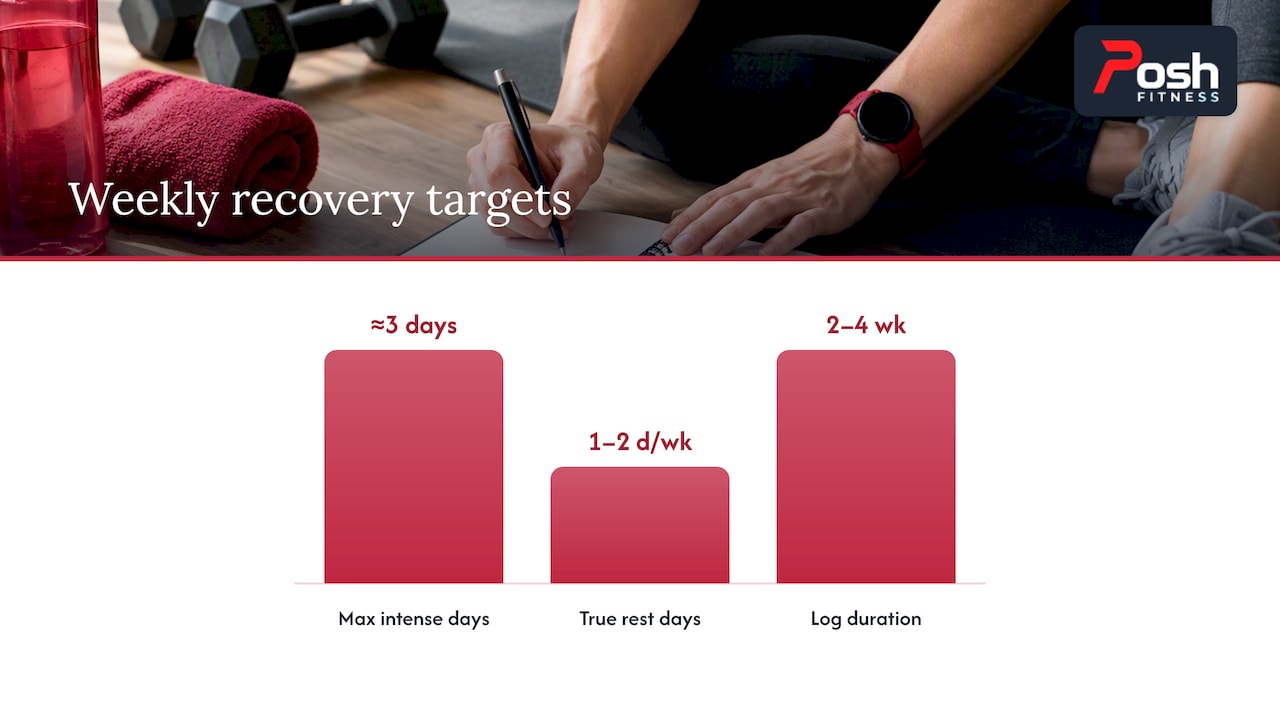
- Cap intense aerobic sessions at roughly three days in a row before inserting an easier day.
- Build in one to two true rest days each week, not just lighter training days.
- Watch for the push-and-crash pattern, where you train hard despite warning signs and pay for it with days of disproportionate exhaustion; pacing strategies that limit sudden spikes in volume, as described by the CDC’s guidance on post-exertional symptoms, help avoid this cycle.
- Track rate of perceived exertion, sleep quality, mood, and performance trends rather than judging recovery by how one single workout felt.
According to ACSM’s guidance on the endurance athlete, overtraining shows up as a multi-week pattern of persistent fatigue and performance decline despite rest, not a single rough session, which is exactly why trend-watching matters more than reacting to any one day.
Pro Tip: Keep a short training-and-recovery log for two to four weeks, noting sleep hours, perceived effort, and mood; patterns that repeat are far more informative than any single bad day.
When tiredness is abnormal: red flags and the diagnostic checklist
Most post-workout fatigue is routine, but a short list of symptoms means you should stop troubleshooting on your own and get evaluated. Watch for:
- Dark, tea-colored urine, which can signal muscle breakdown severe enough to stress the kidneys.
- Fainting, chest pain, or breathlessness during or after exercise.
- Severe, persistent weakness that stops you from managing normal daily tasks.
- Fatigue that lasts into the next day or days rather than clearing within hours.
Dark urine paired with severe muscle pain and weakness are hallmark signs of rhabdomyolysis, a condition the CDC notes can occur even in well-conditioned athletes and requires urgent emergency department evaluation rather than home management.
For non-emergency but persistent fatigue, bring a clear symptom timeline and recent training history to your clinician, and ask about a complete blood count for hemoglobin, ferritin, a TSH and T4 thyroid panel, a basic metabolic panel for electrolytes, and creatine kinase if muscle damage is suspected. These tests help separate training load from medical causes, since conditions like iron-deficiency anemia or thyroid dysfunction can masquerade as simple overtraining.
Persistent post-exercise fatigue can reflect undiagnosed medical causes such as iron-deficiency anemia or hypothyroidism, and blood tests including hemoglobin, ferritin, and TSH or T4 help distinguish medical causes from training load. Source: Harvard Health
When personalized diagnostics and coaching help: an example workflow
When self-care steps do not resolve recurring exhaustion, a diagnostics-first evaluation can connect the dots between training, nutrition, and biology. Posh Fitness structures its coaching this way, reviewing bloodwork alongside training load and sleep patterns before adjusting a client’s plan:
- Bloodwork review to flag markers worth discussing with a physician.
- Nutrition audit to check whether fueling timing matches training demands.
- Training load analysis to spot accumulating fatigue before it becomes a pattern.
- Sleep assessment, including circadian timing, through the Biological Timing Reset service.
This kind of individualized approach fits readers whose fatigue persists despite sensible self-management, while straightforward red flags still warrant primary care first.
The impact of sleep disorders like sleep apnea on recovery
Sleep quality, not just sleep quantity, shapes how well you bounce back from training, and undiagnosed sleep disorders are an underappreciated cause of chronic post-workout exhaustion. Sleep apnea interrupts the deep, restorative stages of sleep where much of the body’s tissue repair and hormonal regulation takes place, so even eight hours in bed can leave you waking up unrefreshed and dragging through workouts that used to feel manageable.
For active people, the giveaway is often a mismatch: you are following solid training and nutrition habits, yet fatigue persists and seems disconnected from your actual workload. Loud snoring, witnessed pauses in breathing, morning headaches, or daytime sleepiness unrelated to training volume are signs worth raising with a clinician, since sleep apnea is treatable and recovery often improves substantially once it is addressed.
Because recovery depends on consolidated, high-quality sleep rather than just hours logged, anyone whose fatigue does not track with their training load should consider sleep quality as a variable worth investigating, not just an afterthought to diet and hydration.
How hydration before and during exercise affects fatigue levels
Most people think about hydration as something to fix after a workout, but the fluid and electrolyte status you start with shapes how tired you feel well before the session ends. Starting a workout already mildly dehydrated, which is common if you skip fluids with breakfast or train in the late afternoon without drinking through the day, means your body is working against a deficit from the first minute.
During longer or hotter sessions, waiting until you feel thirsty to drink is already behind the curve, since thirst lags behind actual fluid loss. Sipping fluids steadily through a session, and using an electrolyte-containing drink once you pass roughly 60 to 90 minutes of continuous effort, keeps perceived effort lower and delays the point where fatigue sets in. This matters as much for strength training in a warm gym as it does for endurance work outdoors, since sweat losses accumulate in both settings even when they are less obvious.

Treating hydration as a continuous strategy, rather than a single post-workout fix, is one of the simplest changes available to reduce how tired you feel by the end of a session.
Treat recovery as a skill, not an afterthought
Recovery is trainable: the same attention you give to sets and splits belongs on sleep, fueling, and pacing. This week, try two things: eat protein and carbohydrates within two hours of training, and track your sleep and perceived effort for a week to spot patterns. If red flags appear, see a clinician rather than waiting it out.
— Peter
How Posh Fitness can help with persistent post-workout fatigue
If you have tightened up fueling, sleep, and pacing and still feel drained session after session, the next layer of insight often comes from your own biology. Some fitness coaching services build plans around bloodwork and, where relevant, DNA-informed coaching, which means your fueling windows, training intensity, and recovery timing get adjusted to what your results actually show rather than a generic template.

This approach fits people who have already tried the basics and want a plan built around their own markers rather than more guesswork. Services include:
- Health coaching covering nutrition, energy, and lifestyle factors tied to fatigue.
- 4 Week DNA Coaching for a focused diagnostics-driven reset.
- 16 Week Premium Coaching Plan for longevity-focused clients wanting sustained support.
- In-home or virtual delivery, including in-home recovery services for readers who want hands-on guidance.
Visit the Posh Fitness site to review options and request an initial consult suited to your situation.
Sources
- Why am I so tired after exercising? - Harvard Health
- Athlete’s kitchen: optimizing immune response - ACSM
This article is general information, not a substitute for advice from a qualified doctor. Consult a qualified healthcare professional about your own circumstances before acting on anything here.
FAQ
How long does a fitness hangover last?
Normal post-workout fatigue typically clears within a few hours once you refuel, rehydrate, and rest, according to Harvard Health. If exhaustion stretches into the next day or days, it likely reflects training load, poor sleep, or a medical cause worth checking.
Does muscle fatigue mean you’re getting stronger?
Muscle fatigue during a workout reflects the metabolic and contractile demands of that session, not a direct measure of strength gains. Strength adaptations come from consistent training over weeks, monitored through performance trends rather than how tired any single session leaves you.
What are good signs after a workout?
Feeling productively tired but recovering within a few hours, with normal appetite, sleep, and mood the next day, suggests your training load matches your recovery capacity. Steady or improving performance across sessions is a better signal than how depleted you feel immediately afterward.
Why do I feel weaker after rest days?
Occasional stiffness or sluggishness on the first session back after rest is common and usually fades quickly as your body re-adjusts to load. If weakness is severe, persistent, or paired with dark urine or chest pain, that warrants prompt medical evaluation rather than more rest.
When should I get bloodwork for persistent fatigue?
If fatigue persists despite adequate fueling, hydration, and sleep, ask your clinician about a complete blood count, ferritin, and a TSH and T4 thyroid panel, since these help identify treatable causes like iron deficiency or thyroid dysfunction. Bring a clear timeline of symptoms and recent training history to speed up the evaluation.