
GLP-1 medications have changed the weight-loss conversation. For many people, semaglutide and tirzepatide can make appetite control and metabolic health easier to manage.
But the medication does not know whether the weight you lose comes from body fat or muscle.
That is the gap a longevity coach helps fill.
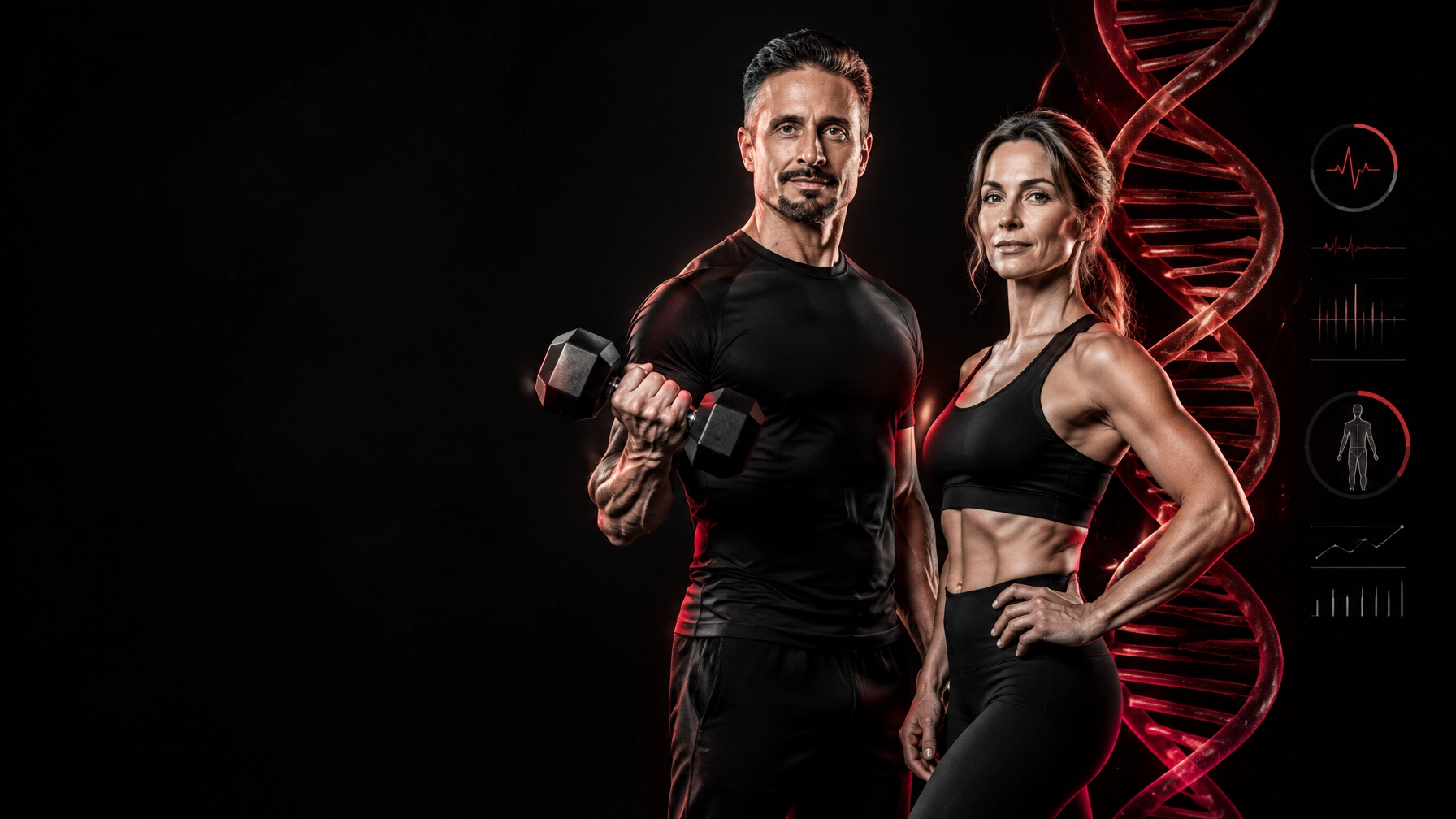
For adults over 40, the goal should not be to weigh less at any cost. It should be to lose excess fat while protecting strength, mobility, energy, and long-term health.
No extreme workouts. No guesswork. Just a coordinated plan that connects your medical care with training, protein-forward nutrition, recovery, and measurable progress.
The Medication Handles Appetite. Who Protects Your Muscle?
Weight loss on a GLP-1 medication is not automatically the same as healthy body recomposition.
Research and expert reviews suggest that approximately 20% to 40% of weight lost during significant calorie restriction may come from lean mass, although estimates vary by medication, study method, starting body composition, age, protein intake, and exercise habits. Some reports have suggested even higher percentages in certain situations (Garthe et al., 2011; Mundi et al., 2024).
That matters because muscle is not simply about appearance.
Muscle helps you:
- Maintain strength and independence
- Support balance and mobility
- Protect bone health
- Manage glucose effectively
- Maintain a healthier resting metabolism
- Recover from illness, travel, stress, and injury
The important point is simple: appetite medication is not a muscle-preservation program.
Your body still needs a clear reason to maintain muscle. That reason usually comes from progressive resistance training, adequate protein, regular movement, and recovery.

Why GLP-1 Support Is Becoming a Premium Coaching Niche
The fitness industry is moving beyond the old debate about whether GLP-1 medications should be used. The more practical question is now:
How can a person use appropriate medical care while protecting strength and improving healthspan?
This is especially important for busy adults over 40 who may already be dealing with:
- Previous dieting and weight regain
- Lower muscle mass
- Joint discomfort
- Poor sleep
- High stress
- Hormonal changes
- Reduced training consistency
- A demanding travel or work schedule
Specialized GLP-1 coaching is increasingly being treated as a premium service because it requires more than sending someone a generic workout.
Your plan may need to change as:
- Appetite changes
- Energy fluctuates
- Body weight declines
- Training tolerance improves
- Sleep changes
- Bloodwork shifts
- Your physician adjusts medical treatment
That is why a longevity coach works as part of a larger team. Your physician manages medication decisions. Your coach helps you apply the lifestyle side consistently.
“Longevity Coach” Is the Label Clients Now Expect
The word longevity has become popular, but the best longevity coaching is not based on vague promises or expensive gadgets.
It is based on measurable outcomes.
A 2026 National Academy of Sports Medicine industry report found that 88% of trainers identified longevity and healthspan as a top client priority (National Academy of Sports Medicine [NASM], 2026).
The difference between ordinary fitness coaching and serious longevity coaching is data.
We want to know whether your plan is helping you become:
- Stronger
- More aerobically fit
- Better recovered
- More metabolically resilient
- More consistent
- More capable in everyday life
Useful markers may include:
- Grip strength
- VO₂ max or an appropriate cardiorespiratory fitness estimate
- Body composition
- Sleep duration and quality
- Resting heart rate and recovery trends
- Training performance
- Bloodwork
- DNA-informed risk and response patterns
- Biological age indicators, including tools such as DNAmFitAge
VO₂ max is widely regarded as one of the strongest modifiable predictors of all-cause mortality. Grip strength offers a simple, low-friction view of neuromuscular function and overall physical reserve. Tracking both over time gives a more complete picture than relying on the scale alone (Ross et al., 2016; Celis-Morales et al., 2018).
The goal is not to chase a perfect number. It is to build a clear baseline and improve your trend.
What GLP-1 Coaching Actually Looks Like
A supportive plan may include the following components.
1. Resistance Training Two to Three Times Per Week
We focus on efficient movements that train several muscle groups at once.
Depending on your experience and energy levels, this may include:
- Squats or sit-to-stand variations
- Hip hinges
- Presses
- Rows
- Step-ups
- Lunges
- Carries
- Core stability exercises
Intensity is adjusted to your current recovery, not to an arbitrary workout template. On a strong day, you may progress. On a low-energy day, we may reduce volume while maintaining the habit.
The goal is consistent muscle stimulus without exhausting you.
2. Protein-Forward Nutrition
Many GLP-1 users experience less hunger. That can be helpful for weight loss, but it can also make it difficult to eat enough protein and essential nutrients.
A commonly used coaching range is approximately 1.2 to 1.6 grams of protein per kilogram of body weight per day, individualized to your body, training, medical history, and physician or dietitian guidance.
We also pay attention to protein quality and leucine-rich sources. Meals may include options such as:
- Eggs
- Fish
- Poultry
- Lean meat
- Greek yogurt
- Cottage cheese
- Tofu
- Legumes
- Carefully selected protein supplements
The objective is not to force-feed you. It is to make each meal count when appetite is reduced.
3. Body-Composition Monitoring
The scale is only one measurement.
A strong plan may track:
- Waist measurement
- Strength levels
- Progress photos, when appropriate
- Body-composition estimates
- Training performance
- Grip strength
- Energy and recovery
- Lean-mass trends
If weight is falling quickly but strength is also declining, that deserves attention. We can then communicate with your medical team and adjust the lifestyle plan appropriately.
4. Sleep and Recovery
Fatigue is not something to ignore.
A 2026 Nature Health study analyzed 410,198 Reddit posts from May 2019 through June 2025 and identified 67,008 users who reported using semaglutide or tirzepatide. About 43.5% reported at least one side effect. Fatigue appeared in 16.7% of users, while reproductive symptoms, including menstrual irregularities, appeared in approximately 4% of those reporting side effects. Chills, hot flashes, and other temperature-related complaints also appeared as real-world signals (Nature Health, 2026).
These findings do not prove that every symptom was caused by medication. Social-media research also has important limitations.
But these signals deserve attention.
They are a reason to keep your clinician and coach in the loop: not a reason to fear appropriate treatment.
Your physician handles medical evaluation and side-effect management. Your coach can help you track sleep, hydration, training tolerance, appetite, energy, and day-to-day patterns so useful information is easier to share.
5. Behavioral Support and Accountability
The best plan is one you can follow during a busy week.
That may mean:
- A workout delivered through the Posh Fitness app
- Simple travel options
- Text and email support
- Weekly accountability
- Meal structure instead of rigid dieting
- Adjustments around fatigue or work demands
- A clear plan for maintaining results over time
As one Posh Fitness client put it, “It’s like having a trainer on call but without the steep price.”
Data-Informed Coaching, Not Medical Advice
Poshfitness does not prescribe medications or provide clinical advice.
Your physician makes decisions about:
- Whether a medication is appropriate
- Medication selection
- Dosing
- Medical contraindications
- Side-effect evaluation
- Treatment changes
Poshfitness supports the training, nutrition, behavior, and lifestyle side of the plan.
We work with GameDay Men’s Health for clinician-guided HRT, peptides, and medical weight-management services. Their licensed clinicians: not Poshfitness: manage medical treatment.
We can also help interpret DNA and bloodwork information for fitness and lifestyle planning. This may include DNA Fitness Coaching and SystemAge testing through Generation Lab.
A Note About Retatrutide and Gray-Market Products
Retatrutide, sometimes called “triple-G,” is receiving significant attention. However, it remains investigational and is not FDA-approved.
There is no legal way to obtain retatrutide in the United States outside an authorized clinical trial. The FDA has stated that retatrutide cannot legally be used in compounding under current federal law because it is not an ingredient in an FDA-approved medication and is not eligible through the applicable compounding pathways (U.S. Food and Drug Administration, 2024).
Do not purchase retatrutide, peptides, or GLP-1 medications from gray-market websites or unverified online sellers. Reports involving unapproved products have included hospitalizations and serious problems such as kidney failure, liver toxicity, and cardiac complications. Eli Lilly has also pursued legal action against certain sellers.
Work with licensed clinicians and verified pharmacies.
For women over 40, medical oversight matters in another growing area: testosterone use during menopause. The United States currently has no FDA-approved testosterone product specifically for women, and regulators are reviewing the evidence. Treatment decisions should remain between a qualified clinician and patient (Davis et al., 2019; U.S. Food and Drug Administration, 2026).
Why This Approach Works for Busy Adults Over 40
You do not need another generic plan that ignores your biology, schedule, or medical context.
You need a coordinated strategy that helps you:
- Lose fat while protecting muscle
- Improve strength and mobility
- Monitor measurable health trends
- Build better recovery habits
- Understand how your bloodwork and DNA may inform lifestyle choices
- Stay accountable without living in the gym
For local clients, Poshfitness provides in-home training in Fairfield County CT, including Greenwich CT. For clients outside the area, our virtual coaching platform provides personalized training, habit coaching, fitness tracking, and community support.
This is elite personal training with a longevity focus. It is also practical, flexible, and personal: what many clients now call ultra personal training.
The prescription may support appetite control.
Your longevity coach helps make sure the rest of your health plan keeps pace.
References
Celis-Morales, C. A., Welsh, P., Lyall, D. M., Steell, L., Petermann-Rocha, F., Anderson, J., Iliodromiti, S., Fan, Y., McGuinness, D., Lewsey, J., Ho, F. K., Pell, J. P., Gill, J. M. R., Sattar, N., & Gray, S. R. (2018). Associations of grip strength with cardiovascular, respiratory, and cancer outcomes: A prospective cohort study of half a million UK Biobank participants. Sports Medicine, 48(3), 569–578. https://doi.org/10.1007/s40279-017-0852-6
Davis, S. R., Baber, R., Panay, N., Bitzer, J., Cichosz, I., de Villiers, T. J., Gass, M., Keller, E., Pinkerton, J., Rees, M., Senturk, L. M., & Wierman, M. E. (2019). Global consensus position statement on the use of testosterone therapy for women. Climacteric, 22(5), 429–434. https://doi.org/10.1080/13697137.2019.1637079
Garthe, I., Raastad, T., Refsnes, P. E., Köhler, A., & Sundgot-Borgen, J. (2011). Effect of two different weight-loss rates on body composition and strength and power-related performance in elite athletes. International Journal of Sport Nutrition and Exercise Metabolism, 21(2), 97–104. https://doi.org/10.1123/ijsnem.21.2.97
Mundi, M. S., et al. (2024). Lean mass changes during weight loss with incretin-based therapies: Clinical considerations for preserving skeletal muscle. Clinical Nutrition. https://pmc.ncbi.nlm.nih.gov/articles/PMC12683586/
National Academy of Sports Medicine. (2026). The state of the personal trainer: 2026 report. https://2494739.fs1.hubspotusercontent-na1.net/hubfs/2494739/2026-State-of-Personal-Trainer-Report-by-NASM.pdf
Nature Health. (2026). Real-world adverse event signals associated with semaglutide and tirzepatide use identified through social media analysis. Nature Health. https://www.nature.com/articles/s44360-026-00108-y
Ross, R., Blair, S. N., Arena, R., Church, T. S., Després, J. P., Franklin, B. A., Haskell, W. L., Kaminsky, L. A., Levine, B. D., Lavie, C. J., Myers, J., Niebauer, J., Sallis, R., Sawada, S. S., Sui, X., & Wisløff, U. (2016). Importance of assessing cardiorespiratory fitness in clinical practice: A case for fitness as a clinical vital sign. Circulation, 134(24), e653–e699. https://doi.org/10.1161/CIR.0000000000000461
U.S. Food and Drug Administration. (2024). FDA’s concerns with unapproved GLP-1 drugs used for weight loss. https://www.fda.gov/drugs/drug-alerts-and-statements/fdas-concerns-unapproved-glp-1-drugs-used-weight-loss
U.S. Food and Drug Administration. (2026). Testosterone information and regulatory review resources. https://www.fda.gov/drugs/postmarket-drug-safety-information-patients-and-providers/testosterone-information
Wilding, J. P. H., Batterham, R. L., Calanna, S., Davies, M., Van Gaal, L. F., Lingvay, I., McGowan, B. M., Rosenstock, J., Tran, M. T. D., Wadden, T. A., Wharton, S., Yokote, K., Zeuthen, N., & Kushner, R. F. (2021). Once-weekly semaglutide in adults with overweight or obesity. The New England Journal of Medicine, 384(11), 989–1002. https://doi.org/10.1056/NEJMoa2032183