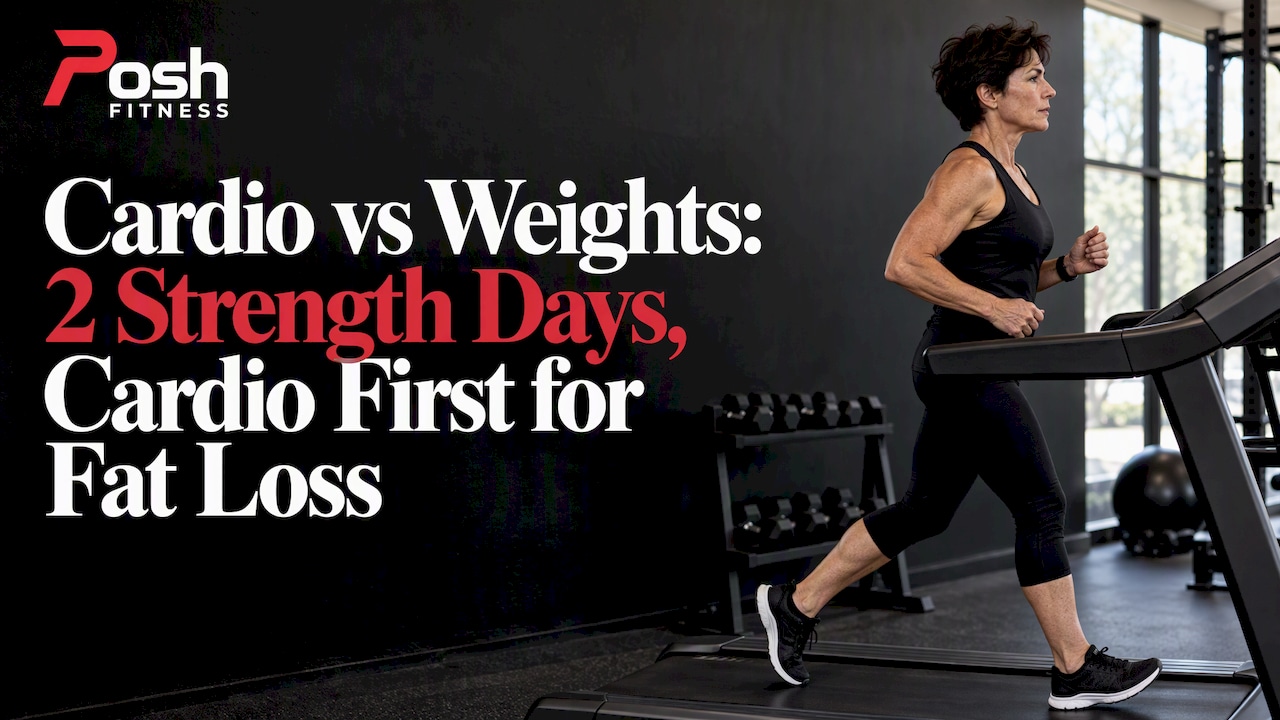

Aerobic exercise is the most time-efficient way to reduce fat mass, while resistance training is what protects and builds the muscle that keeps your metabolism and strength intact as you lean out. Neither replaces the calorie deficit that actually drives fat loss. If your time is limited, we recommend prioritizing consistent cardio sessions and anchoring your week with at least two strength sessions.
Key Takeaways
Cardio is most effective for fat loss, but resistance training preserves muscle and boosts metabolism, making combined routines ideal for efficient, sustainable weight management.
| Point | Details |
|---|---|
| Cardio burns more calories during sessions | Aerobic exercises like running and cycling burn more calories per session than lifting, depending on effort and body mass. |
| Resistance training supports muscle and metabolism | Strength training helps retain lean mass and can modestly increase resting energy expenditure over time. |
| Fat loss primarily depends on calorie deficit | No workout type overrides the need for a consistent calorie reduction to achieve long-term fat loss. |
| Most effective plan includes both cardio and strength | A balanced weekly routine combines three cardio sessions with at least two strength workouts for optimal results. |
| We tailor programs to individual biology | Poshfitness builds plans based on personal assessments, DNA, and bloodwork to optimize fat loss and muscle preservation. |
Table of Contents
- How Cardio and Strength Differ for Calorie Burn and Body Composition
- What Randomized Trials and Major Guidelines Actually Show
- Practical, Time-Smart Workout Templates You Can Start This Week
- Why Calorie Deficit and Protein Still Decide the Outcome
- When Diagnostics Change the Cardio Versus Strength Balance
- The Pragmatic Rules I Use With Clients
- Personalized Coaching That Fits Cardio and Strength to Your Biology
- FAQ
- Sources
How Cardio and Strength Differ for Calorie Burn and Body Composition
Cardio and resistance training affect your body in distinct ways, and understanding both helps you build a week that actually works for your goals.
Aerobic activities like running, cycling, and rowing tend to burn more calories per session than lifting, though the exact number depends heavily on your body mass and how hard you push the pace. Resistance training burns fewer calories in the moment, but it stimulates muscle tissue and can modestly elevate your resting energy expenditure over time, especially if you gain lean mass.
A concept worth understanding here is excess post-exercise oxygen consumption, or EPOC, the extra calories your body burns after a workout as it recovers. According to Cleveland Clinic’s comparison, intense strength training can produce a real EPOC effect, but it tends to be modest and varies by body size, exercise selection, and session intensity.
- Cardio generally wins on calories burned during the session itself.
- Strength training contributes through muscle retention and a smaller, variable EPOC bump afterward.
- Neither effect is large enough to override how much you eat.
EPOC is often misunderstood as a large automatic calorie bonus from lifting. In practice, Cleveland Clinic’s physiology overview frames it as a modest, variable contributor, not a substitute for the deficit itself.
What Randomized Trials and Major Guidelines Actually Show
The strongest evidence on this question comes from the STRRIDE family of randomized trials, which directly compared aerobic training, resistance training, and combined programs in the same population.
- Aerobic training reduced fat mass and visceral fat more than resistance training alone, according to the STRRIDE trial data.
- Combined aerobic plus resistance training increased lean mass but did not produce greater fat loss than aerobic training by itself.
- A related randomized trial found aerobic training reduced visceral fat, liver fat, and insulin resistance more effectively than resistance training.
- Combined programs required significantly more exercise time than aerobic training alone without a proportional fat-loss advantage.
The Physical Activity Guidelines for Americans still recommend both modalities: 150 to 300 minutes of weekly moderate aerobic activity for general health, with higher volumes often needed for substantial weight loss, plus muscle-strengthening work for all major muscle groups at least twice a week. The guidance reflects a practical trade-off: aerobic training edges out resistance training for fat and visceral fat reduction, but skipping strength work altogether puts your lean mass at risk once you start eating less.
Practical, Time-Smart Workout Templates You Can Start This Week
The right template depends on how much time you have and whether your priority is fat loss, strength, or both.
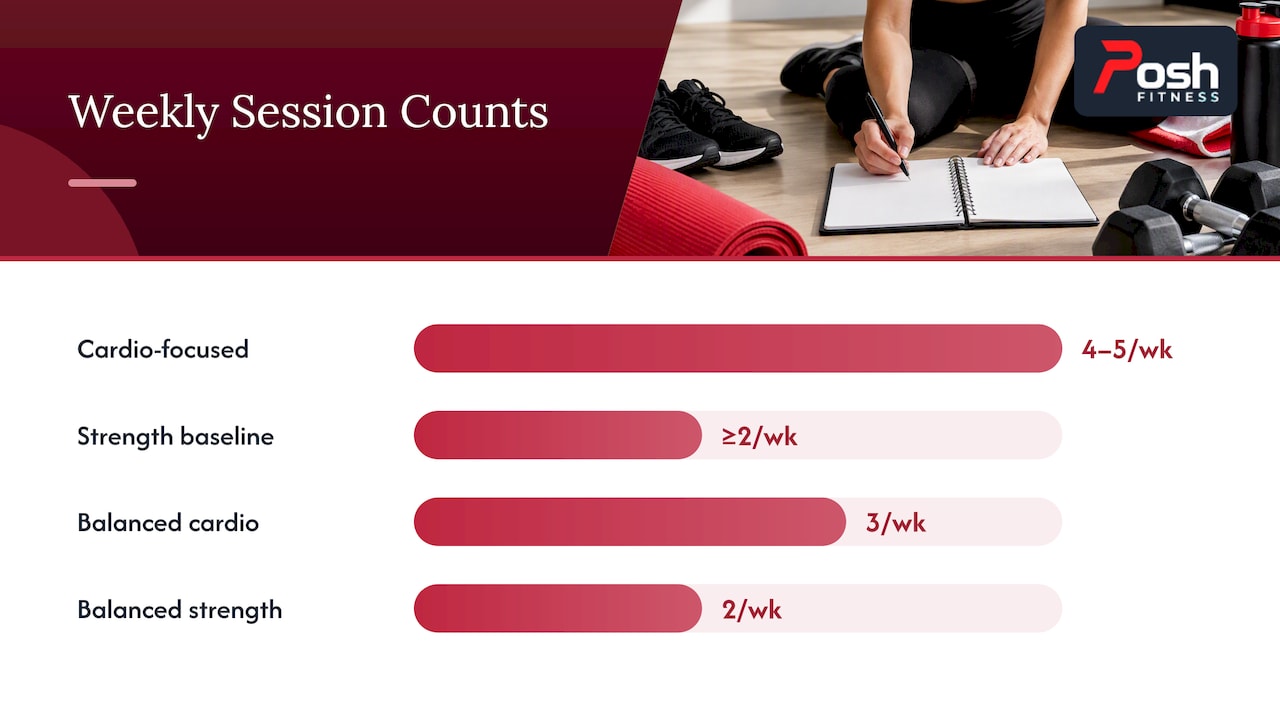
- Cardio-focused week: aim for four to five sessions, mixing steady-state work (30 to 45 minutes at a conversational pace) with one or two shorter HIIT sessions when time is tight.
- Strength baseline: at least two full-body sessions weekly, each covering multiple compound exercises with moderate sets and reps, as Mayo Clinic recommends for maintaining lean mass.
- Balanced combined week: three cardio sessions plus two strength sessions, lifting weights before cardio on shared days if preserving strength is your priority, or placing your best cardio effort on a fresh day if endurance pace matters more.
- Progression: add volume gradually, roughly 10% more time or load every one to two weeks, to avoid burnout and keep recovery on track.
If you are newer to structured training, a beginner-friendly comparison of HIIT versus strength training can help you choose a starting point based on what you will actually stick with, which matters more than theoretical optimization.
Pro Tip: Schedule your strength sessions first on your calendar each week; cardio is easier to slot into whatever time remains.
Why Calorie Deficit and Protein Still Decide the Outcome
No workout split overrides how much you eat. NIH’s weight-control guidance is direct about this: long-term fat loss depends on sustained lifestyle change, specifically reduced calorie intake paired with physical activity, and exercise alone cannot reliably compensate for unrestricted eating.
- A consistent calorie deficit is the mechanism that removes fat, regardless of which workouts you do.
- Protein intake in the range of roughly 1.2 to 1.6 grams per kilogram of body weight daily is a practical bracket many adults use to protect muscle during a deficit, spread across meals rather than loaded into one sitting.
- Very rapid weight loss often costs you muscle along with fat, which is part of why extreme deficits backfire over time.
A sustained calorie deficit, not your choice of cardio or weights, is what ultimately drives fat loss, according to NIH’s guidance on healthy weight control. For a deeper look at preserving muscle while losing weight, our body recomposition versus weight loss breakdown covers the nutrition side in more depth. Alcohol intake also matters here, and our 21 to 30 day look at alcohol’s effect on fat loss is worth a read if that is part of your routine.
When Diagnostics Change the Cardio Versus Strength Balance
General guidance works for most people, but individual biology sometimes shifts the balance. Sleep and recovery signals, hormonal patterns, and metabolic markers from bloodwork can point toward emphasizing strength over cardio, or the reverse, for a given person.
- Elevated stress hormone patterns may call for more strength work and less high-intensity cardio volume.
- Blood markers tied to insulin sensitivity can shift emphasis toward resistance training to improve glucose handling.
- Genetic markers from DNA analysis can inform how someone responds to different training intensities.
A structured six to twelve week block typically starts with an assessment, moves into a tailored plan, and includes progress checks along the way. For readers navigating hormonal shifts specifically, our perimenopause weight loss guide covers how we adjust training to protect muscle during that transition.
The Pragmatic Rules I Use With Clients
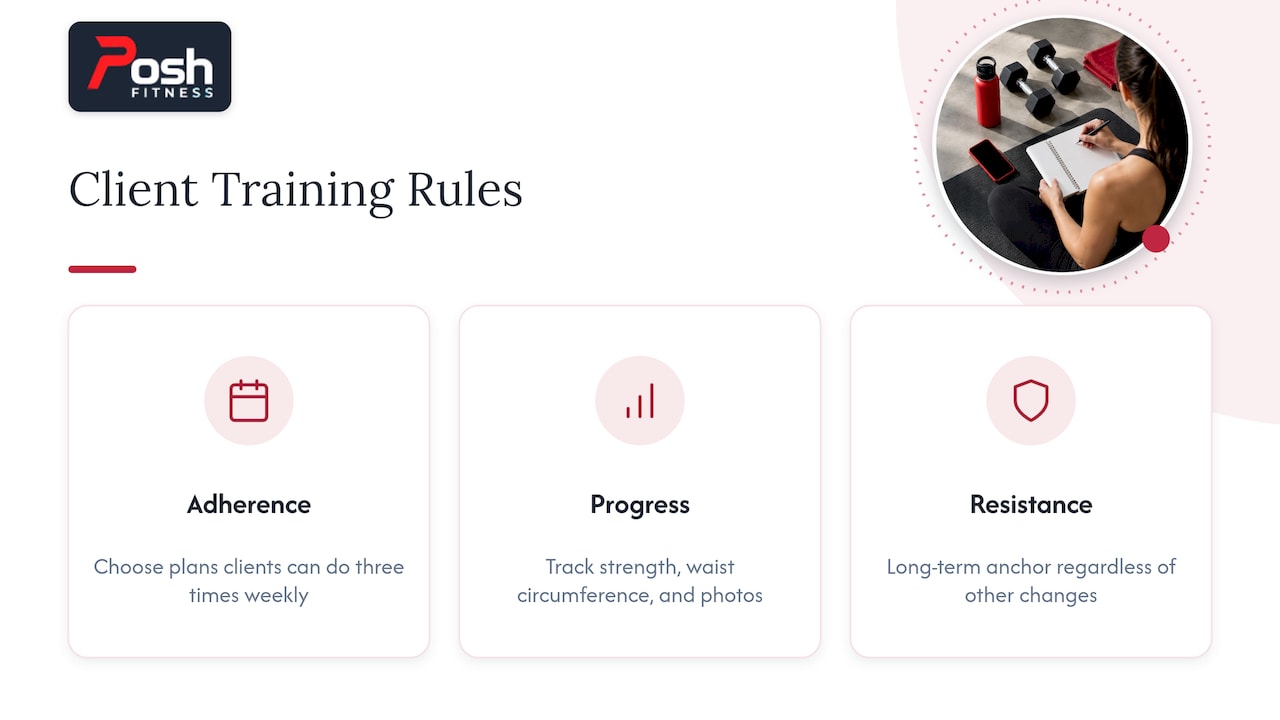
Adherence beats perfection every time. We would rather prescribe a plan a client will actually do three times a week than a theoretically perfect one they abandon after two weeks.
We track multiple markers, not just the scale: strength numbers, waist circumference, and photos tell a fuller story than weight alone. Resistance training stays the long-term anchor regardless of what else changes.
— Peter
Personalized Coaching That Fits Cardio and Strength to Your Biology
Generic fat-loss advice gets you most of the way there, but your sleep, hormones, and metabolism ultimately decide how your body responds to cardio versus strength work. We build plans around DNA analysis and bloodwork so your training reflects your own biology rather than a population average.

A new client typically starts with an assessment, moves into a personalized program, and gets regular progress checks to adjust the plan as your body responds. Depending on what fits your schedule and goals, that might include:
- Personal Training built around your assessment results.
- 4 Week DNA Coaching to identify how your biology responds to different training types.
- Online Personal Fitness Plan Starter at $40 per month for remote clients who want structured guidance without an in-person commitment.
If you are ready to build a plan around your own data rather than guesswork, reach out through our pricing and coaching options to find the right starting point.
FAQ
Which exercise burns the most fat?
Aerobic exercise, such as running, cycling, or rowing, generally reduces fat mass and visceral fat more effectively than resistance training alone, based on randomized trial data. Combining it with strength training preserves muscle but does not reliably add extra fat loss beyond aerobic work by itself.
How much protein do I need for fat loss?
A practical range many adults use is roughly 1.2 to 1.6 grams of protein per kilogram of body weight daily, spread across meals to help protect muscle during a calorie deficit. Individual needs vary with activity level and training intensity, so this range is a starting bracket rather than a fixed rule.
How can I drop 20 pounds quickly?
Rapid weight loss usually comes at the cost of lean muscle, since the body does not distinguish between fat and muscle when calories drop sharply, according to NIH’s guidance on sustainable weight control. A steadier deficit combined with resistance training protects muscle better than aggressive short-term cuts.
What is the 3 3 3 rule for weight loss?
This is not a standard, evidence-based framework referenced in major exercise or nutrition guidelines, and definitions circulating online vary widely. We recommend focusing on the better-supported basics instead: a consistent calorie deficit, regular cardio, and at least two weekly strength sessions.
Sources
- Effects of aerobic and/or resistance training on body mass and fat mass in overweight or obese adults - PubMed
- Effects of aerobic vs. resistance training on visceral and liver fat stores, liver enzymes, and insulin resistance - PubMed
- Cardio vs. Strength Training: Which Is Better?
- Physical Activity Guidelines for Americans, 2nd edition
- NIH: Healthy weight control guidance