
A registered dietitian (RD or RDN) is the only credential trained and legally recognized to provide Medical Nutrition Therapy and to bill insurance for it, while a nutrition coach or health coach focuses on behavior change, habit formation, and accountability. Nutritionist is the wildcard: the title can mean either, depending on the person’s actual training. Knowing which one you need starts with knowing what each one is legally allowed to do.
Key Takeaways
Registered dietitians provide clinical nutrition therapy and bill insurance, while coaches focus on behavior change and habit building, and nutritionists’ qualifications vary widely.
| Point | Details |
|---|---|
| Registered Dietitians | They assess medical history and lab results to create treatment plans for medical conditions and can bill insurance. |
| Health and Nutrition Coaches | They help clients improve habits such as sleep, routine, and activity but do not diagnose or treat medical conditions. |
| Credentials and Training | RD or RDN requires a graduate degree, supervised practice, and passing a national exam; coaching credentials focus on behavior change. |
| Legal and Insurance Boundaries | Medical Nutrition Therapy is a clinical service covered by Medicare and insurers, while coaching is non-clinical and generally not reimbursed. |
| Posh Fitness Approach | Posh Fitness offers personalized, data-driven health coaching and personal training focused on behavior change, not medical diagnosis. |
Table of Contents
- What each role actually does day to day
- Qualifications and credential checklist: what each credential requires
- Where the legal and insurance lines actually sit
- Which professional should you hire? A decision guide
- How to verify credentials before you hire anyone
- How coaching and clinical dietetics work together
- A practical model for combining clinicians and coaches
- Posh Fitness: an evidence-informed coaching option
- Authoritative registries and pages to verify credentials
- Sources
- FAQ
What each role actually does day to day
The confusion between these three titles comes from real overlap in the work, not just marketing. A registered dietitian assesses medical history, lab values, and diagnoses to build a nutrition plan that manages or treats a condition. This is Medical Nutrition Therapy, and it sits squarely in clinical care. RDs work in hospitals, outpatient clinics, and private practice, often coordinating directly with physicians.
A nutrition coach, sometimes called a health coach, works on the behavior side of the equation. Instead of prescribing a therapeutic diet, a coach helps a client build sustainable habits: consistent meal timing, better sleep, more steady movement, and the kind of accountability that turns a plan into a routine. Many hold the National Board Certified Health and Wellness Coach (NBC-HWC) credential, which signals structured training in coaching methodology and ethics.
A nutritionist is where things get murky. In some states, the word describes someone with an advanced nutrition science background, sometimes a Certified Nutrition Specialist (CNS). In others, it has no legal meaning at all, and anyone can adopt the title regardless of training. The SD State Extension explains that nutrition coach and nutritionist titles often carry no standardized legal protection, so education and certification vary widely from one provider to the next.
Typical duties break down like this:
- Registered dietitian: diagnoses nutrition-related conditions, designs Medical Nutrition Therapy plans, and bills insurance for covered services.
- Nutrition or health coach: builds habit-change strategies, provides accountability, and supports general wellness goals without diagnosing.
- Nutritionist: duties depend entirely on the individual’s actual credentials, ranging from clinical-level training to none at all.
The practical difference shows up fastest in complexity. A coach can help a generally healthy adult eat more consistently and move more. Once a diagnosis, medication interaction, or lab abnormality enters the picture, that work usually belongs with a dietitian.
Qualifications and credential checklist: what each credential requires
The letters after someone’s name are not just decoration. They tell you exactly how much supervised, tested training stands behind the advice you’re about to follow.
To become an RD or RDN, a candidate must complete an accredited nutrition degree, and as of January 1, 2024, that means a graduate degree rather than a bachelor’s alone. They also complete supervised practice hours through an ACEND-accredited program, pass the national Commission on Dietetic Registration exam, and maintain continuing education to keep the credential active, according to Tulane’s School of Public Health and Tropical Medicine.
Fast fact: RDN candidates now complete roughly 1,000 hours of supervised practice on top of a graduate degree before they can sit the registration exam. That volume of hands-on training is what separates clinical dietetics from most coaching certifications.
Nutrition coach and nutritionist paths sit on a much wider spectrum. Some practitioners hold master’s degrees in nutrition science or the CNS credential, which requires supervised experience and an exam of its own. Others complete a self-paced online course over a few weekends with no supervised practice at all. Both groups may call themselves a nutritionist depending on the state, which is why the title alone tells you almost nothing.
Here’s how to read the common post-nominals:
- RD or RDN, LD: graduate-level education, supervised clinical practice, national exam, and often state licensure.
- NBC-HWC: structured coach training and a national board exam focused on behavior-change methodology, not clinical nutrition.
- CNS: graduate-level nutrition science education with supervised experience, common among nutritionists working in wellness or research settings.
None of these credentials is inherently better for every situation. They simply indicate different training for different jobs, and matching the credential to your actual need is the whole point of this comparison.
Where the legal and insurance lines actually sit
Medical Nutrition Therapy is a defined clinical service, and Medicare’s rules make the boundary between coaching and dietetics concrete rather than theoretical. Under the National Coverage Determination for Medical Nutrition Therapy, Medicare covers MNT specifically for beneficiaries with diabetes or renal disease, and it typically requires a physician referral. Only registered dietitians or nutrition professionals who meet Medicare’s enrollment requirements can bill for it. Private insurers generally follow a similar structure, tying coverage to a diagnosis and a credentialed provider.

Health and wellness coaches operate under a different, non-clinical scope. The NBHWC Scope of Practice is explicit that coaches should not diagnose conditions, prescribe treatment, or deliver individualized medical nutrition therapy unless they hold a separate clinical credential. Their role is facilitative: helping a client set goals, build habits, and stay accountable, with a clear expectation that they refer out when a medical issue surfaces.
A few practical points worth keeping straight:
- State licensure varies. Some states require a license to practice dietetics or use the term dietitian, while nutritionist and coach titles often go unregulated.
- Insurance coverage tracks diagnosis, not effort. A coaching engagement, however effective, usually isn’t reimbursable the way MNT for diabetes or renal disease can be.
- Jurisdiction matters. What a title legally permits in one state may not apply in another, so it’s worth checking your state’s specific rules before assuming a scope of practice.
If you’re managing a diagnosed condition, medication, or abnormal lab result, that’s the signal to ask for a referral to an RD rather than continuing with general coaching alone.
Which professional should you hire? A decision guide
Matching the right professional to your situation comes down to a few honest questions about complexity, coverage, and goals.
- Do you have a diagnosed condition tied to nutrition, such as diabetes, chronic kidney disease, or a GI disorder? Start with a registered dietitian, and ask your physician for a referral so Medicare or your insurer can potentially cover the visits.
- Are you generally healthy but struggling with consistency, cravings, or building a routine? A nutrition or health coach is built for exactly this kind of behavior-change work.
- Are you an athlete optimizing performance without a medical diagnosis? Either a sports-credentialed RD or an experienced coach can help, depending on how technical your fueling needs are.
- Are you unsure which one you need? Book a short consultation with an RD first. They can confirm whether your situation calls for clinical care or whether a coach would serve you just as well.
- Do you want ongoing accountability alongside a nutrition plan from a physician or RD? A coach can work alongside that plan without duplicating the medical work.
Pro Tip: Before booking anyone, write down your actual goal in one sentence. If that sentence includes a diagnosis, medication, or lab value, start with a dietitian.
A quick checklist for today: identify whether your goal is medical or behavioral, ask any prospective provider for their credential and license number, and confirm whether they bill insurance or charge privately. That’s usually enough to point you toward the right door.
How to verify credentials before you hire anyone
Titles are easy to claim and hard to verify from a bio alone, so a few minutes of checking protects you from expensive, unqualified advice.
To confirm RD or RDN status, search the Commission on Dietetic Registration’s registry or your state’s licensing board, since some states also require a separate dietetics license. To confirm an NBC-HWC credential, check the national board’s public registry directly.
Before hiring, ask:
- What is your education and did you complete a supervised practice or practicum?
- What is your scope of services, and do you bill insurance for any of them?
- How do you handle a client with a diagnosed condition or one taking medication that affects nutrition needs?
- Will you coordinate with my physician or refer me to an RD if something outside your scope comes up?
Red flags include vague credential names, no verifiable registry listing, and reluctance to refer you out when a medical issue is clearly present. If you need Medical Nutrition Therapy, ask directly for an RD referral rather than assuming a coach or nutritionist can provide it.
How coaching and clinical dietetics work together
These roles aren’t competitors so much as different stages of the same work. The NBHWC frames coaching as a behavior-change partnership: coaches help translate a plan into daily habits, while Medicare’s MNT framework keeps diagnosis-driven nutrition prescriptions with credentialed dietitians.
Coaches are accountability partners whose role is facilitative and referral-oriented rather than clinical.
Diagnostics-informed coaching, using tools like DNA analysis, bloodwork, or gut microbiome testing, can sharpen that behavior-change work by personalizing which habits matter most for a given person’s biology, though it doesn’t replace a clinical nutrition prescription when one is needed.
Pro Tip: Ask any coach using diagnostics how their recommendations would change if your labs came back abnormal. A good answer includes a referral to an RD or physician.
A practical model for combining clinicians and coaches
In our experience, the readers who get the best results treat an RD and a coach as teammates rather than alternatives. The RD sets the clinical direction when one is needed: the diagnosis-specific plan, the lab-informed targets, the medical guardrails. The coach handles the follow-through: the weekly check-ins, the habit adjustments, the accountability that keeps a good plan from quietly falling apart.
Coordination works best with clear lines. The RD documents the clinical plan and communicates with the physician. The coach documents habit progress and flags anything that looks medical, sending it back to the RD rather than trying to solve it directly. That division keeps everyone working inside their scope, which is ultimately what keeps you safe.
— Peter
Posh Fitness: an evidence-informed coaching option
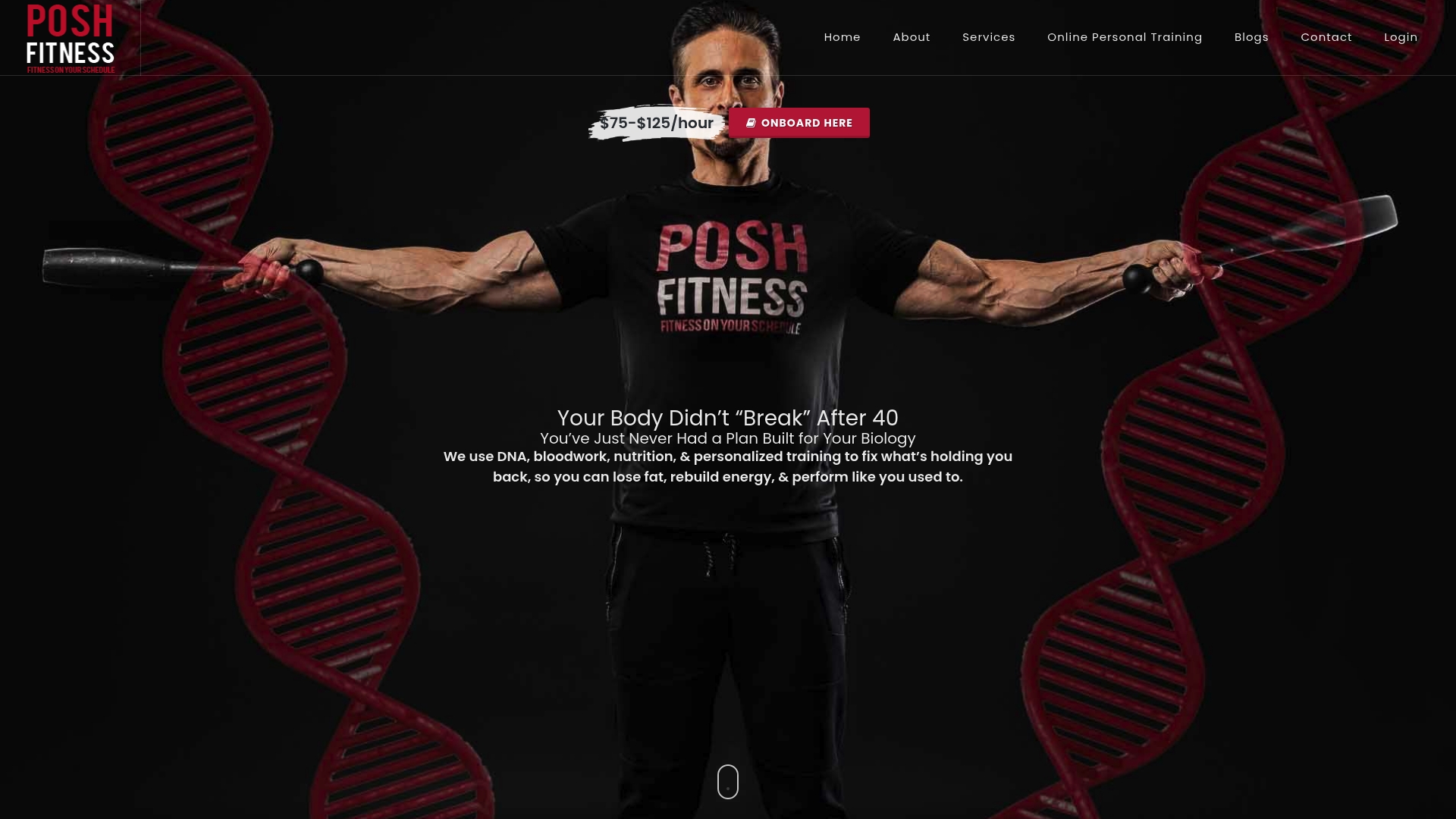
If your goal is building sustainable habits rather than managing a diagnosis, Posh Fitness offers health coaching and personal training built on your own biology rather than a generic template. Some coaching plans may incorporate data such as DNA analysis, bloodwork, and gut microbiome testing to personalize habits, with delivery methods including in-home, virtual, or partner gym sessions.
- Health coaching and personal training focus on behavior change, energy, and body composition, not on diagnosing or treating medical conditions.
- Diagnostics-informed plans use DNA and bloodwork testing to personalize nutrition and training habits.
- Readers managing a diagnosed condition should still work with an RD for Medical Nutrition Therapy; Posh Fitness complements that care rather than replacing it.
If steady, personalized coaching sounds like what you’re missing, explore Health Coaching to see how a plan built around your own data could fit your routine.
Authoritative registries and pages to verify credentials
For direct verification and official guidance, start with the Commission on Dietetic Registration for RD status, the NBHWC registry for coach credentials, and CMS’s Medicare MNT coverage pages for billing rules. Health-system explainers like Cleveland Clinic and university extension programs offer plain-language summaries worth bookmarking, and fitness-focused resources like VO2WOD can help you connect nutrition coaching with a broader training plan.
This article is general information, not a substitute for advice from a qualified doctor. Consult a qualified healthcare professional about your own circumstances before acting on anything here.
Sources
- How to Become an RD | Tulane SPH
- Registered Dietitian vs. Nutritionist | SD State Extension
- National Coverage Determination (NCD) for Medical Nutrition Therapy — CMS
- NBHWC Scope of Practice
FAQ
Is it worth getting a nutrition coach?
For general wellness goals like consistency, energy, or building better habits, a nutrition coach can be genuinely worth it since that behavior-change work is exactly what coaching is trained for. If you have a diagnosed condition, a dietitian is the better first call, with a coach as a helpful addition afterward.
What can a nutrition coach legally do?
A nutrition coach can guide general habit change, meal planning strategies, and accountability, but the NBHWC scope of practice states they should not diagnose conditions or prescribe individualized medical nutrition therapy. Anything tied to a diagnosis or medication typically calls for referral to a registered dietitian.
How much does a nutrition coach get paid?
Pay varies widely by setting, certification, and region, and there’s no single national figure that applies to every coach. The Bureau of Labor Statistics tracks related occupational data for dietitians and nutritionists, though coaching pay specifically depends heavily on credentials and client base.
Can anyone call themselves a nutrition coach?
In most states, yes: the title isn’t legally protected the way “registered dietitian” is, which means training can range from extensive to minimal. That’s why checking for a recognized credential like NBC-HWC, rather than trusting the title alone, matters before you hire someone.