


Zone 2 training is steady, comfortable aerobic exercise performed at roughly 60% to 70% of your maximum heart rate, a pace you could hold for 30 minutes to well over an hour. It builds your aerobic base, supports recovery, and works well as the foundation of a weekly plan. It is not the only intensity that matters, and it is not a shortcut for fat loss. Below we explain how to find your zone, how much to do, and how to combine it with harder work and strength training.
Key takeaways
- Zone 2 is typically defined as 60% to 70% of maximum heart rate, the second step on a five-zone scale, and it should feel sustainable and conversational.
- The talk test is a practical check when you have no monitor: you should be able to speak in short sentences without gasping.
- Most adults do best with a mix. Zone 2 builds the base, while hard intervals and resistance training cover what easy cardio cannot.
- Generic heart rate formulas are coarse. Your real zone depends on genetics, training history, and fitness, which is why individual testing is more accurate.
Table of Contents
- What zone 2 training actually is
- How to find your zone 2 heart rate
- If your heart rate jumps out of zone 2 too quickly
- Activities that work for zone 2
- How much zone 2 per week
- Zone 2 vs. HIIT and steady-state cardio
- How zone 2 fits into a weekly plan
- Does zone 2 burn fat, and what about longevity?
- Our perspective: personalize the zone, then the plan
- Working with a coach on your zone 2 plan
- FAQ
- Sources
What zone 2 training actually is
Heart rate zones divide effort into five bands, from very light (zone 1) to maximal (zone 5). Zone 2 sits just above a warm-up pace. According to the Cleveland Clinic, it is moderate-intensity aerobic exercise at 60% to 70% of your maximum heart rate, usually done for at least 30 minutes.
Physiologically, the target is the effort just below your first lactate threshold, the point where lactate begins to accumulate in the blood faster than you clear it. An expert panel of sports scientists and coaches described zone 2 in these terms, and they stressed that the aim is better metabolic efficiency and mitochondrial function. The mitochondria are the structures in your cells that turn fuel and oxygen into energy.
Cleveland Clinic exercise physiologist Christopher Travers frames the idea as working longer rather than harder: strengthening the heart muscle and building a more efficient cardiovascular system over time. That makes zone 2 a long-term investment, not a quick fix.
How to find your zone 2 heart rate
There are three practical routes, from simplest to most precise.
The talk test
The Mayo Clinic Press describes the talk test as a reliable stand-in when you do not have a heart rate monitor. In zone 2 you can hold a continuous conversation, speaking a few words at a time, without needing to stop for breath. If you could sing, you are probably below the zone. If you cannot talk at all, you have gone past it.
The percentage method
Multiply your estimated maximum heart rate by 0.60 and 0.70. If your maximum is 170 beats per minute, your zone 2 range is about 102 to 119. The common 220-minus-age formula gives a rough maximum, and the American Heart Association publishes target heart rate charts by age if you want a reference point.
Treat the result as a starting estimate. Researchers note that heart rate response varies considerably between people and that generic percentages can push you to train harder than intended. In that study, individual physiological markers such as lactate thresholds gave a more accurate picture of the zone 2 boundary than a fixed percentage.
Lab or field testing
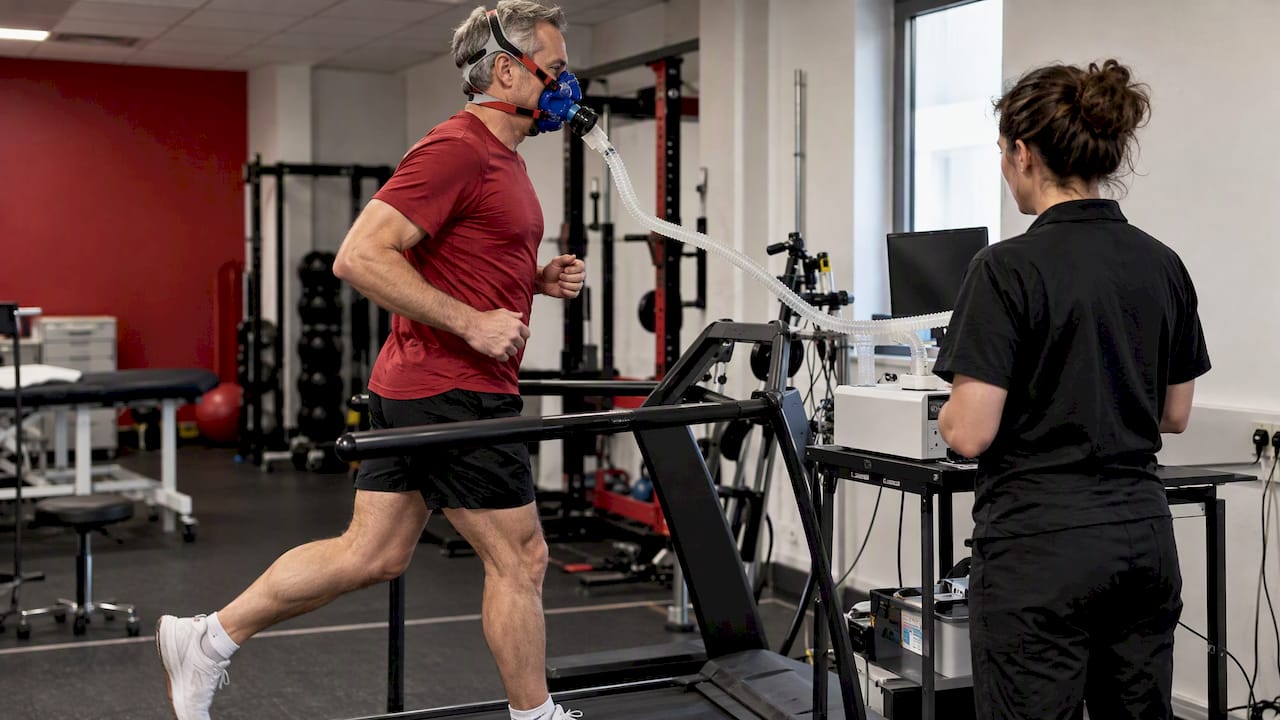
The most precise approach measures your first lactate or ventilatory threshold, or your FatMax, the intensity at which your body burns fat at its highest rate. This is the method the experts’ panel points to for precision. The same panel also advised that consistent, long effort matters more than hitting one exact heart rate number. If testing is out of reach, use the talk test and a heart rate range together and adjust by feel.
If your heart rate jumps out of zone 2 too quickly
Many beginners find that a light jog sends their heart rate well above the zone. According to the Mayo Clinic Press, this commonly reflects an underdeveloped aerobic base. The fix is to slow down, even to a brisk walk or an easy, conversational cycling pace. Over weeks, the pace you can hold inside the zone rises.
A few things help:
- Start with walking, including on a gentle incline, before running.
- Keep sessions at 20 to 30 minutes at first and extend them gradually.
- Check the usual confounders: poor sleep, heat, caffeine, dehydration, and illness all raise heart rate. Our post on hydration and energy covers the hydration side.
- If you feel unusually wiped out after easy sessions, see our checklist for being tired after workouts, which includes red flags that deserve a conversation with your doctor.
Activities that work for zone 2
Any steady, rhythmic activity can work, provided you can control the effort. The Live Science overview lists brisk walking, cycling, rowing, and swimming. Here is how they compare for most people:
| Activity | Why it works | Watch for |
|---|---|---|
| Brisk walking or incline treadmill | Low impact, easy to keep the heart rate steady | You may need an incline to reach the zone if you are fit |
| Stationary or road cycling | Easy to hold a steady effort, gentle on joints | Heart rate can drift upward on long rides |
| Rowing machine | Full-body, steady rhythm | Technique matters; go slower than you think |
| Swimming | Low impact, good for joint pain | Heart rate runs lower in water, so use the talk test |
| Easy jogging | Efficient for time | Only if you can stay conversational |
If you are short on time, you can also pair a steady session with a simple routine. This collection of minimalist workout routines for busy people shows how little equipment a strength day needs, which leaves more of your week for easy cardio.
How much zone 2 per week
There is no single proven dose. Several guides suggest around 150 minutes of zone 2 per week, in sessions of 45 minutes or more, but that figure is a practical target rather than a research-established prescription. For context, the American Heart Association recommends at least 150 minutes per week of moderate-intensity aerobic activity, or 75 minutes of vigorous activity, or a combination, plus muscle-strengthening work at least twice a week.
A sensible progression for a middle-aged beginner looks like this:
- Weeks 1 to 2: Three sessions of 20 to 30 minutes, at a pace where you can talk comfortably.
- Weeks 3 to 6: Three sessions of 30 to 45 minutes. Add a fourth if recovery feels good.
- Weeks 7 to 12: Build toward 150 minutes per week, with one longer session of 60 minutes or more if your schedule allows.
Is 30 minutes enough? It counts. Cleveland Clinic describes 30 minutes as a typical minimum, and consistency across the week matters more than any single long session.
Zone 2 vs. HIIT and steady-state cardio
The comparison is often framed as a contest, but the two do different jobs. Zone 2 is steady-state work: low stress, fast recovery, and a large aerobic base. High-intensity interval training (HIIT) is short, hard efforts with recovery between them. It is more taxing but time-efficient.
A 2025 narrative review of the evidence in the general population cautions that zone 2 is not the only or optimal intensity for improving mitochondrial capacity or cardiorespiratory fitness for everyone. For people with limited training time, higher intensities remain important for cardiometabolic health. The New York Times traced the zone 2 boom to Dr. Peter Attia’s 2023 book Outlive, which brought a once-niche concept to a wide audience.
The enthusiasm also leans on studies of elite endurance athletes who train enormous volumes. Most of us have a fraction of that time. A balanced week typically beats a single-zone approach.
| Factor | Zone 2 | HIIT |
|---|---|---|
| Effort | Comfortable, conversational | Hard, near-maximal bursts |
| Session length | 30 to 90+ minutes | Often 10 to 30 minutes |
| Recovery cost | Low | Higher |
| Main role | Aerobic base, recovery, endurance | Top-end fitness, time efficiency |
| Best for | Beginners, high-stress weeks, base building | Time-pressed adults with a base already built |
For the harder side, see our guide to VO2 max training with zone 2 first and then two to three hard sessions a week.
How zone 2 fits into a weekly plan
In polarized training, roughly 80% of weekly training time is spent in zones 1 and 2, with the remainder at high intensity. That ratio is designed for people who train a lot. If you exercise four or five hours a week, it is a useful reference. If you have three hours, you will probably want a bigger share of harder work and strength.
A realistic week for a busy adult:
- Two or three zone 2 sessions of 30 to 60 minutes.
- Two strength sessions covering legs, back, chest, and core. Resistance training protects muscle and bone as we age.
- One interval session, only once you can do the easy work consistently.
- Daily walking to fill gaps.
If fat loss is the goal, order and balance matter. Our post on cardio versus weights for fat loss lays out how we sequence them. If a thyroid condition affects your energy, start with our hypothyroid workout guide and clear your plan with your physician.
Does zone 2 burn fat, and what about longevity?
The zone is often called the fat-burning zone because a higher share of the calories you burn comes from fat at low intensity. But the share is not the same as total fat lost. A source summarized by Cleveland Clinic says the benefit is improved fat oxidation and mitochondrial function and not a quick weight loss hack. Fat loss still depends on total energy balance, protein intake, sleep, and strength training. Our metabolic flexibility diet post covers the nutrition side.
On longevity, aerobic fitness is strongly tied to health in general, and zone 2 is a gentle, sustainable way to build it. Calling it the only training that matters for a long life goes beyond the evidence, as the narrative review makes clear.
Our perspective: personalize the zone, then the plan
At Posh Fitness, we see the same pattern often. A client has followed a generic heart rate chart, felt flat, and concluded that cardio does not work for them. When we look closer, the zone was set from an age formula, the sessions were too hard, and strength training was missing.
We think the answer is to treat zone 2 as one tool within a plan built around your biology. Our approach uses DNA analysis, bloodwork, gut microbiome testing, and physical assessments to shape training and nutrition, so a middle-aged adult dealing with stalled fat loss or inconsistent energy is not given the same plan as a former college athlete. Diagnostics do not replace a physician, and we work alongside your medical team, especially if you have heart disease, diabetes, or take medications that affect heart rate.
Some practical rules we hold to:
- Set the zone from the talk test and your own data, not from one formula.
- Keep easy days easy, so the hard days can be hard.
- Add strength before adding more cardio volume.
- Measure what you can: resting heart rate, how pace changes at the same heart rate, and how you feel the next morning.
— Peter
Working with a coach on your zone 2 plan
If you want help turning this into a routine, we train clients at home, at affiliated gyms, and virtually. For Fairfield County, we offer in-home personal training in Greenwich, Stamford, Westport, Norwalk, and Darien, and we also serve Westchester, NY.
Online options start with the Online Personal Fitness Plan Starter at $40 per month, and the Truly Personal Plan is $99 per month. If you would like to try a live session first, a Live Virtual Training Session is $80. For a deeper, data-driven start, see our 4 Week DNA Coaching. Not sure where to begin? Take the weight loss readiness quiz.
FAQ
What heart rate is zone 2?
For most people it is about 60% to 70% of maximum heart rate. Because maximum heart rate varies, treat the number as a starting range and confirm it with the talk test. A lactate or ventilatory threshold test gives the most precise answer.
Is 30 minutes of zone 2 enough?
Thirty minutes is a common minimum and still delivers benefit, especially if you repeat it several times a week. Many people build toward 150 minutes weekly over a few months. Longer sessions of 60 minutes or more can add to the aerobic adaptations, but you do not need them to start.
Is it better to train in zone 2 or zone 3?
Neither is better for everyone. Zone 3 is a middle ground that can feel productive but is harder to recover from than zone 2 and less effective than true intervals. Most plans keep easy days easy and add a small amount of hard work.
Does zone 2 actually burn fat?
It uses a higher proportion of fat for fuel, but fat loss depends on your overall energy balance, nutrition, and strength training. Zone 2 is a useful part of a fat loss plan, not a standalone solution.
Can I do zone 2 and HIIT in the same week?
Yes, and most adults should. A common pattern is two or three easy sessions, two strength days, and one interval session. If you have a heart condition or other medical concern, ask your doctor before adding hard intervals.
Sources
- What Is Zone 2 Cardio? Cleveland Clinic
- Zone 2 cardio: What is it and why is it trending online? Mayo Clinic Press
- What Is “Zone 2 Training”? Experts’ Viewpoint, PubMed
- Zone 2 Intensity: A Critical Comparison of Individual Variability, PMC
- Much Ado About Zone 2: A Narrative Review, PubMed
- Is Zone 2 the Magic Effort Level for Exercise? The New York Times
- Zone 2 training: Definition and benefits, Live Science
- Target Heart Rates Chart, American Heart Association
- How much physical activity do you need? American Heart Association
- Zone 2 Cardio Training: A Guide for Longevity, Plotline Health