


If your energy has dropped around 40, you are not imagining it, and it is rarely just “getting older.” In most cases fatigue in your 40s comes from a handful of overlapping factors: sleep, stress, muscle mass, blood sugar, hormones and, occasionally, a medical condition that deserves a proper check. The useful move is to sort which of those applies to you, rule out the medical causes with your clinician, and then build habits that restore energy instead of draining it.
This guide walks through that process in order, including why the afternoon crash happens and how to get your energy back in your 40s.
Key takeaways
- Fatigue in your 40s is often linked to lifestyle imbalances in sleep, diet, stress or activity, but it can also signal thyroid disease, anemia, sleep apnea or heart problems.
- If tiredness lasts several weeks without relief, book a clinical evaluation instead of waiting it out, and bring specific patterns of sleep, mood and daily function.
- Regular exercise is one of the few reliable ways to raise energy, and Harvard Health explains that it improves deep sleep and boosts dopamine and norepinephrine.
- A realistic target is 150 minutes of moderate activity a week plus strength work on 2 days, built up gradually.
- Personalized data, such as bloodwork and DNA analysis, can help shape a plan once serious causes have been checked with your doctor.
Table of Contents
- Why your 40s can feel so tiring
- The most common causes of low energy at 40
- The afternoon energy crash
- When to see a doctor first
- Why exercise is the counterintuitive fix
- Nutrition for steadier energy
- Our perspective: personalize after you rule out the basics
- How we can help
- FAQ
- Sources
Why your 40s can feel so tiring
Fatigue is a symptom, not a disease. Harvard Health notes that it is experienced differently by different people: tiredness from stress or a short night usually lifts after good rest, while other fatigue is more persistent and can be disabling.
For many people at 40, the problem is not a single failing organ. It is a collision. Careers are at their most demanding, kids or aging parents need your time, sleep gets trimmed, and training often drops off at exactly the point when muscle becomes harder to hold on to. Each factor is small. Together they leave you running on empty by 2 p.m.
Clinicians describe fatigue as a final common pathway for many causes. In the primary care literature, fatigue in the 40s is often classed as physiologic rather than a sign of disease, which is encouraging, because lifestyle factors are the ones you can change.
The most common causes of low energy at 40
Sleep quality, not just sleep length
Seven hours in bed is not seven hours of restorative sleep. Alcohol, late screens, night-time worry and undiagnosed sleep apnea all fragment sleep. If a partner notices loud snoring or pauses in breathing, or you wake unrefreshed despite a full night, mention it to your doctor. Sleep apnea is one of the medical conditions the primary care review lists as a secondary cause of fatigue.
Chronic stress and mood
Long-running stress is draining physically as well as mentally, and low mood often shows up first as exhaustion. If you have also lost interest in things you usually enjoy, tell your clinician. Depression and anxiety are real, treatable contributors, and they are easy to dismiss as “just being tired.”
Perimenopause
For women, a change in periods is the hallmark of perimenopause, the years leading up to the last period. ACOG also points out that your 40s and 50s are a time when life’s pressures can be greatest, and the hormone shifts can affect emotions as well as cycles. Mood symptoms in this stage can be more than stress and may need clinical management, so a conversation with an ob-gyn or primary care clinician is the right next step if this sounds familiar. If weight and muscle are part of your concern, our piece on perimenopause weight loss and protecting muscle goes deeper.
Thyroid, anemia and nutrient gaps
Underactive thyroid, anemia and low B12 or vitamin D are the usual suspects clinicians consider. They are checked with blood tests ordered by a physician, not guessed at. If you already have a thyroid diagnosis, our guide to hypothyroid workouts that start with 20 minutes shows how to build back safely.
Muscle loss, blood sugar and inactivity
Less muscle means a smaller engine for glucose handling and daily movement. Big swings in blood sugar after refined, low-protein meals are a common driver of the energy crash that follows lunch. Both are modifiable through resistance training and protein-forward nutrition, which we cover below.
The afternoon energy crash
Some dip after lunch is normal. Your internal body clock, the circadian rhythm, makes you feel sluggish in the early afternoon regardless of what you ate. A crash that is severe, daily and gets worse with age is a signal to look at what feeds it.
Practical levers to test, one at a time:
- Rebuild lunch. Anchor it with protein and fiber instead of a large portion of refined carbohydrate.
- Move for 10 minutes after eating. A short walk is enough to start.
- Hydrate earlier. Mild dehydration blunts focus. We outline a simple approach in our post on hydration and energy, including when to get tested.
- Get daylight and activity before noon. Our two-week morning routine test is a low-effort way to see what moves the needle for you.
- Watch the caffeine cutoff. Late caffeine undermines the sleep you need to feel better tomorrow.
The Cleveland Clinic also offers five ways to restore energy in the afternoon slump if you want a second perspective.
When to see a doctor first
Before you build a training plan around tiredness, make sure nothing medical is being missed. Professionals advise that if fatigue lasts for several weeks without relief, it warrants clinical evaluation. Red flags include unintentional weight loss, fever, abnormal bleeding, chest pain, shortness of breath on mild effort, or a persistent low mood.
Two things are worth knowing about how that visit tends to go.
Routine labs have a limited yield. The same primary care review reports that broad lab testing changes management in only about 5% of patients when no red flags are present. That is why many clinicians watch and wait, and why patients sometimes feel dismissed. A normal result does not mean your fatigue is imaginary. It often means the cause lies in sleep, stress, or movement patterns.
You need to describe patterns, not just “I’m tired.” Research on primary care shows patients often report sleep problems and distress that never appear as distinct diagnoses in the record. Of 571 patients with diagnostic data, 46.9% had received at least one diagnosis that could be associated with fatigue, and many were symptom diagnoses rather than a root cause. Come prepared: when the fatigue started, what time of day it peaks, how you sleep, how your mood has changed, and what you can still do.
Why exercise is the counterintuitive fix
When you are exhausted, a workout feels like the last thing you need. The physiology says otherwise. Harvard Health reports that regular exercise increases deep sleep, the most restorative stage, and raises dopamine and norepinephrine. Over time it also builds the energy-producing mitochondria in muscle cells and improves the body’s capacity to carry oxygen. Rest alone cannot replicate that.
The key is dose. Starting too hard on an empty tank backfires, and if you already feel wiped out after sessions, our checklist on recovering when you are tired after workouts covers the four red flags to watch.
How much activity is enough
The federal Physical Activity Guidelines call for at least 150 minutes of moderate-intensity aerobic activity a week, plus muscle-strengthening work for all major muscle groups on at least 2 days. The same source notes that even 5 minutes a day offers benefit, and gains grow as frequency and intensity build.
Use the talk test to gauge effort: during moderate activity you can hold a conversation, while vigorous activity limits you to a few words between breaths. The government’s adult fact sheet lays out the same targets in plain language.
If you are starting from very little, look at this approach to fitness and clinical fatigue solutions for a sense of how lifestyle changes and medical care can work side by side.
A four-week starting plan
| Week | Aerobic | Strength | Focus |
|---|---|---|---|
| 1 | 10 to 15 minute easy walks, 4 days | 1 short full-body session | Consistency, not intensity |
| 2 | 20 minute walks, 4 days | 2 sessions, 20 minutes each | Learn the basic movements |
| 3 | 25 to 30 minutes, 4 to 5 days | 2 sessions, slightly heavier | Add protein at each meal |
| 4 | 30 minutes, 5 days | 2 sessions, progress load | Review sleep and energy notes |
Keep a simple log: bedtime, wake time, energy at 10 a.m. and 3 p.m., and workouts completed. After four weeks you will have real data to share with a clinician or coach. If weight loss is also a goal, see how we think about cardio versus weights.
Nutrition for steadier energy
You do not need a restrictive diet. You need regular, protein-forward meals, enough fiber, and fewer sharp spikes and drops in blood sugar. Aim to include a protein source at breakfast, which many 40-somethings skip, and avoid long gaps followed by large refined-carb meals. Our article on the metabolic flexibility diet shows three evidence-backed moves, and our post on resetting your metabolism explains why four weeks of habits beat a quick fix.

Our perspective: personalize after you rule out the basics
We see the same story often with clients in Fairfield County and Westchester: a capable, busy adult who used to feel strong, now runs out of steam by mid-afternoon, and has tried generic programs that did not help. The pattern is rarely about willpower.
Our view is that the order matters. First, work with your physician to rule out thyroid disease, anemia, sleep apnea, perimenopause-related issues and mood disorders. Second, fix the foundations: sleep, protein, strength training and a progressive walking habit. Third, if energy is still flat, personalize.
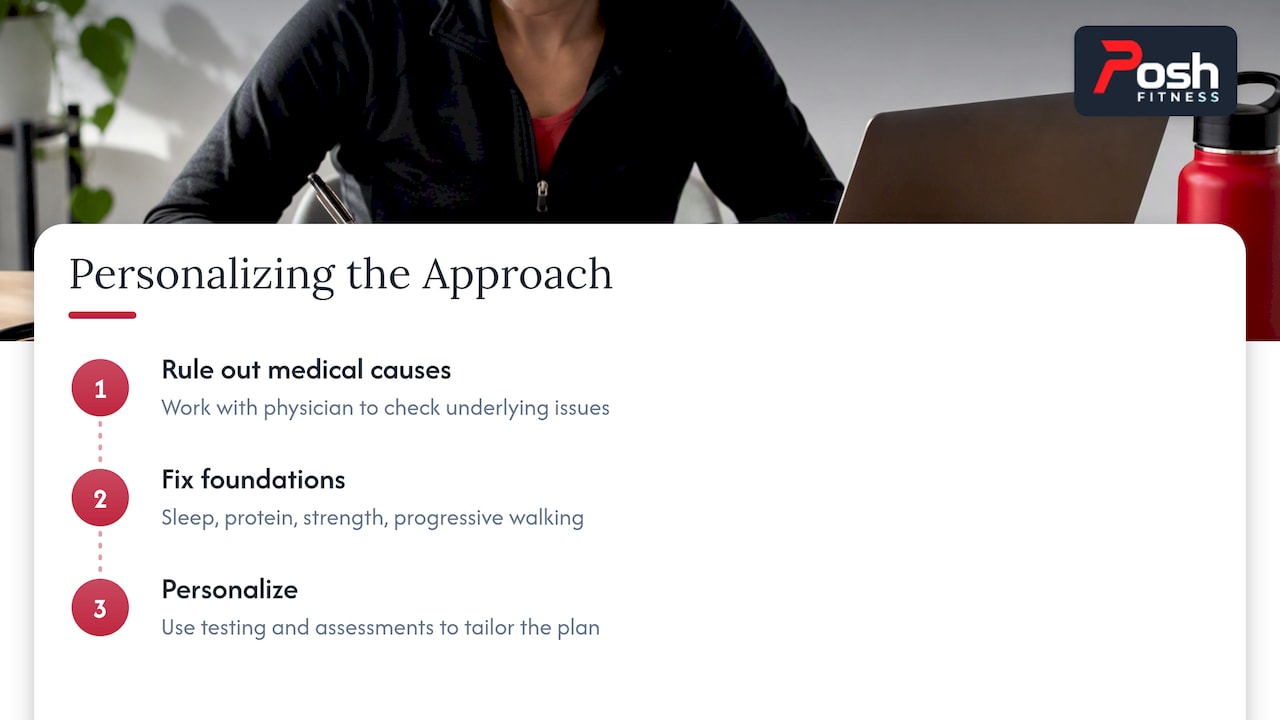
That third step is where we work. We use DNA analysis, bloodwork, gut microbiome testing and physical assessments to build training and nutrition programs around your biology instead of a template. We are not a substitute for medical care, and we do not diagnose. We work alongside your doctor, using the data to decide how hard to train, how to eat, and how to recover so you can rebuild the energy you remember.
The honest caveat: broad testing will not find a single missing nutrient for most people. Its value is in tailoring the plan and tracking progress, not in a magic answer.
— Peter
How we can help
If you live in Fairfield County, CT or Westchester County, NY, we offer in-home personal training, sessions at affiliated gyms and virtual coaching. Our Health Coaching program is built for people whose results have stalled, and our 4 Week DNA Coaching uses your genetic data to shape training and nutrition. For flexible support, our online personal fitness plans include a Starter plan at $40 per month and a Truly Personal Plan at $99 per month. You can also book a Live Virtual Training Session for $80, one-off.
To see all options, visit our in-home personal training page for Greenwich, Stamford, Darien, Westport and Norwalk.
FAQ
How do I get my energy back in my 40s?
Start by ruling out medical causes with your doctor, especially if tiredness has lasted several weeks. Then focus on sleep, regular protein-forward meals and a gradual exercise routine that reaches 150 minutes of moderate activity and 2 strength days weekly. Most people notice the biggest change from consistent movement and better sleep.
Is low energy at 40 normal?
It is common, but it should not be dismissed. Clinical literature often classifies fatigue in the 40s as physiologic, tied to sleep, diet, stress or activity. Still, it can also reflect thyroid problems, anemia, sleep apnea or other conditions, so persistent fatigue deserves an evaluation.
Why am I so tired in the afternoon?
Your circadian rhythm naturally dips after lunch, and a high-refined-carb meal or poor sleep can deepen it. Try a protein-forward lunch, a short walk and earlier hydration. If the crash is severe or daily despite these changes, discuss it with your clinician.
Can perimenopause cause fatigue?
Yes. Perimenopause begins with changes in your periods and can affect sleep and mood, both of which feed fatigue. Because mood symptoms may need clinical treatment, talk with an ob-gyn or primary care provider rather than relying on lifestyle changes alone.
Should I exercise when I feel exhausted?
Gentle, progressive activity usually helps, because exercise improves deep sleep and raises neurotransmitters linked to alertness. Start with 5 to 10 minutes and build. Stop and see a doctor if you have chest pain, unusual shortness of breath or dizziness.
Sources
- Approach to fatigue in primary care (PMC)
- Diagnoses during follow-up of patients presenting with fatigue in primary care (PMC)
- Boosting Your Energy, Harvard Health
- Celebrating Active Aging, odphp.health.gov
- What’s your move? Physical Activity Guidelines fact sheet
- My Periods Have Changed. Is Menopause Around the Corner? ACOG
- Mood Changes During Perimenopause Are Real, ACOG
- Why do I always get an energy crash in the afternoon? BBC Science Focus
- Afternoon Slump? 5 Ways to Restore Your Energy, Cleveland Clinic