
“Longevity coach” has become one of the fastest-growing labels in health and fitness. That is understandable. Most people over 40 are not simply looking for a quick transformation anymore. They want to stay strong, mobile, energetic, and independent for as long as possible.
NASM’s 2026 State of the Personal Trainer report found that 88% of trainers say longevity and healthspan are now among their clients’ top priorities (National Academy of Sports Medicine [NASM], 2026).
That shift is positive. But it also creates an important question:


Is your longevity coach actually measuring longevity?
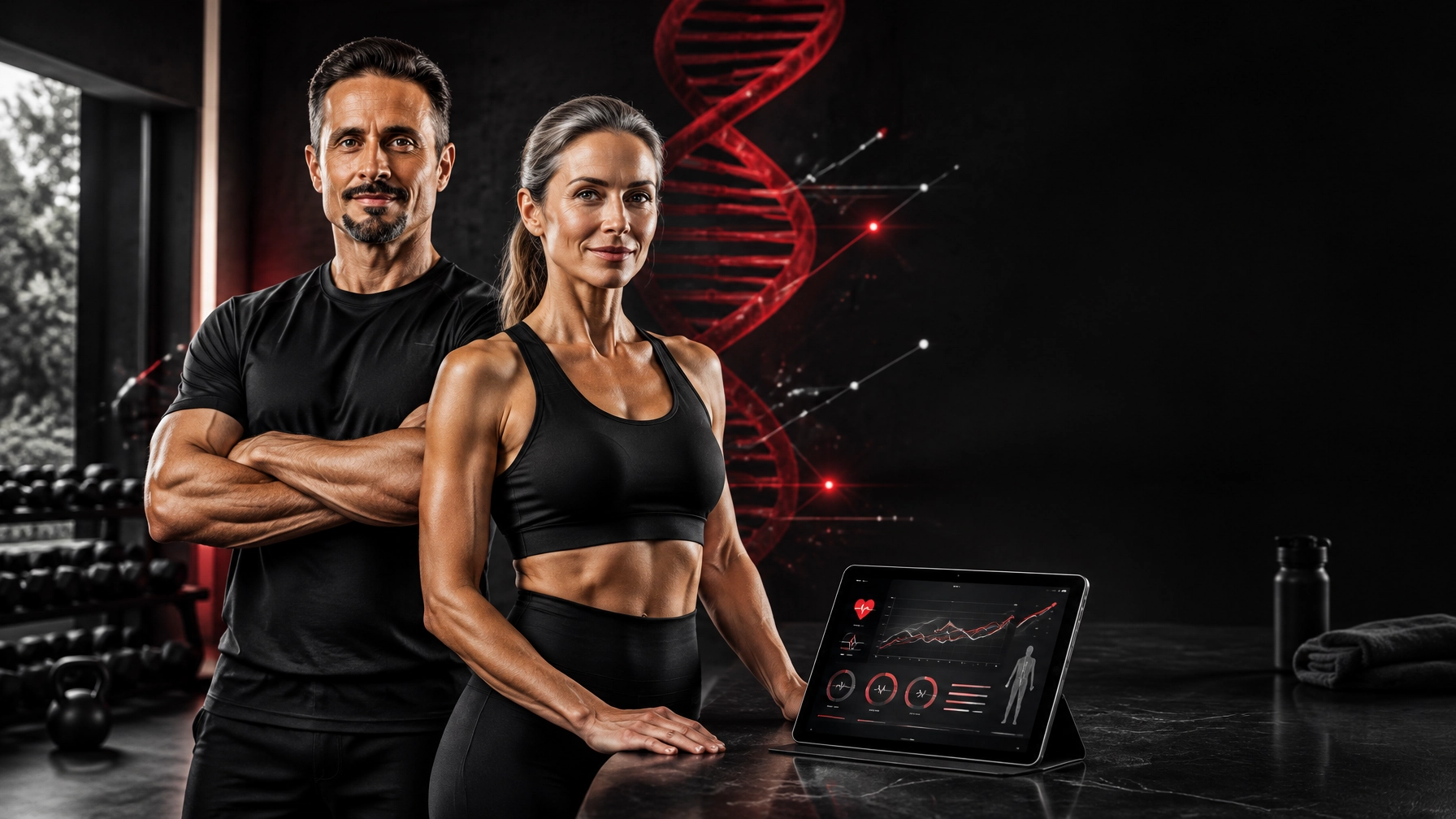
A rebranded personal trainer may give you workouts, encouragement, and before-and-after photos. A genuine longevity coach goes further. They establish a baseline. They track meaningful outcomes. They retest over time. They connect your training with nutrition, sleep, bloodwork, genetics, symptoms, and medical oversight. At Poshfitness, we often say: we’re not just trainers. We’re longevity coaches. That does not mean we promise to reverse aging or replace your doctor. It means we help you build a more complete picture of your health and create a practical plan around the data. Here are four categories your coach should understand and track.1. What is your VO₂ max?
VO₂ max measures how effectively your body uses oxygen during exercise. It reflects your cardiorespiratory fitness and aerobic reserve. In simple terms, it helps answer this question: How much physical capacity do you have when your body is under demand? Higher cardiorespiratory fitness has been strongly associated with lower long-term mortality risk. In a large study of more than 120,000 adults undergoing treadmill testing, the highest fitness categories had substantially lower mortality risk than the lowest categories. The researchers found a progressive relationship between fitness and survival, with no clear upper limit of benefit (Mandsager et al., 2018). That does not mean you need to become an elite athlete. It means improving your aerobic capacity can help you:- Walk, climb stairs, and travel with less fatigue.
- Recover faster between activities.
- Support cardiovascular health.
- Maintain more independence as you age.
- Handle physical stress with greater reserve.
2. How strong is your grip?
Grip strength is one of the easiest functional metrics to measure. It requires a handheld dynamometer and takes only a few minutes. It is also more useful than many people realize. Grip strength acts as an accessible proxy for broader neuromuscular health. It is associated with functional capacity, frailty risk, and overall vitality. In the UK Biobank study, lower grip strength was associated with cardiovascular disease, respiratory disease, cancer outcomes, and higher all-cause mortality risk (Celis-Morales et al., 2018). Grip strength does not diagnose a specific disease. It is not a perfect measure of total-body strength. But it can provide a valuable signal. A decline may encourage a closer look at:- Resistance training consistency.
- Protein intake.
- Recovery and sleep.
- Nerve or joint symptoms.
- General physical function.
- Unintentional weight or muscle loss.
3. Are you losing fat, or valuable lean mass?
The scale is only one part of the story. Body composition tells you how much of your weight comes from fat mass, lean mass, and other components. This becomes especially important when someone is using a GLP-1 medication for weight management. GLP-1 medications can be highly effective tools for appropriate patients. However, weight loss may include some reduction in lean mass. The amount varies by person, medication, dose, nutrition, activity level, and measurement method. Research from the STEP 1 body-composition substudy found that semaglutide reduced fat mass substantially, while absolute lean mass also declined. However, lean mass made up a larger percentage of total body weight after treatment (Wilding et al., 2021). The BELIEVE phase 2b trial offers another useful perspective. It examined bimagrumab alone, semaglutide alone, and the combination of bimagrumab with semaglutide. The combination produced greater weight and fat-mass loss than semaglutide alone while preserving more lean mass. Bimagrumab alone increased lean mass in the trial (Heymsfield et al., 2026). Related body-composition research in The Lancet Diabetes & Endocrinology has also reinforced why clinicians and coaches should pay attention to fat mass, muscle, and physical function, not just body weight (Sattar et al., 2025). That is why a thoughtful plan may include:- Progressive resistance training.
- Sufficient protein.
- Body-composition testing when appropriate.
- Measurements of strength and physical performance.
- Monitoring for excessive fatigue or weakness.
- Regular communication with the prescribing clinician.
4. How do bloodwork and genetics fit together?
DNA can provide useful context. It does not tell you exactly what is happening in your body today. Your genetic results should be considered alongside:- Bloodwork.
- Sleep quality.
- Training history.
- Nutrition.
- Symptoms.
- Family history.
- Medical conditions.
- Current medications.
- Your actual response to a plan.
Why should these measurements be repeated?
Neither VO₂ max nor grip strength is a perfect standalone diagnostic. One result can be affected by sleep, illness, hydration, recent exercise, equipment, and testing conditions. That is why trends are more useful than isolated numbers. Depending on your goals and health situation, testing every three to six months may be appropriate. Some people may benefit from quarterly tracking. Others may need biannual testing. The important questions are:- Did your aerobic capacity improve?
- Is your strength stable or increasing?
- Are you preserving lean mass?
- Are your blood markers moving in a better direction?
- Do your sleep and recovery support your training?
- Do you feel stronger in daily life?
What should you ask before hiring a longevity coach?
Before you commit, ask direct questions:- What will you measure before creating my plan?
- How often will we retest?
- Do you track VO₂ max, strength, body composition, sleep, or blood markers?
- How do you use bloodwork and DNA results?
- Who handles the medical side?
- How do you coordinate with my physician?
- What happens if my results do not improve?
- What is included in the fee, and what costs extra?
What about hormones and people over 40?
Hormone decisions are another reason data and clinician oversight matter. Testosterone use among menopausal women is rising, while U.S. regulators are reviewing the evidence and prescribing practices. There is currently no FDA-approved testosterone product specifically for women in the United States (Reuters, 2026). This does not mean every hormone conversation is inappropriate. It means the decision requires careful evaluation, appropriate monitoring, and a qualified clinician. Poshfitness does not prescribe medication. All medical decisions regarding GLP-1s, peptides, or HRT remain with the physician or the GameDay Men’s Health partnership. Our role is to help support the lifestyle side: training, nutrition, recovery, habit change, and measurable progress.How can Posh Fitness help?
For clients seeking longevity coaching as a part of your personal training in Fairfield County CT, including Greenwich CT, Poshfitness can bring individualized coaching directly to your home. Peter Marino bridges:- In-home training.
- Online fitness tracking.
- Nutrition and habit coaching.
- Genetics.
- Bloodwork context.
- Body-composition goals.
- Recovery and sleep habits.
- Communication with your medical team when appropriate.