
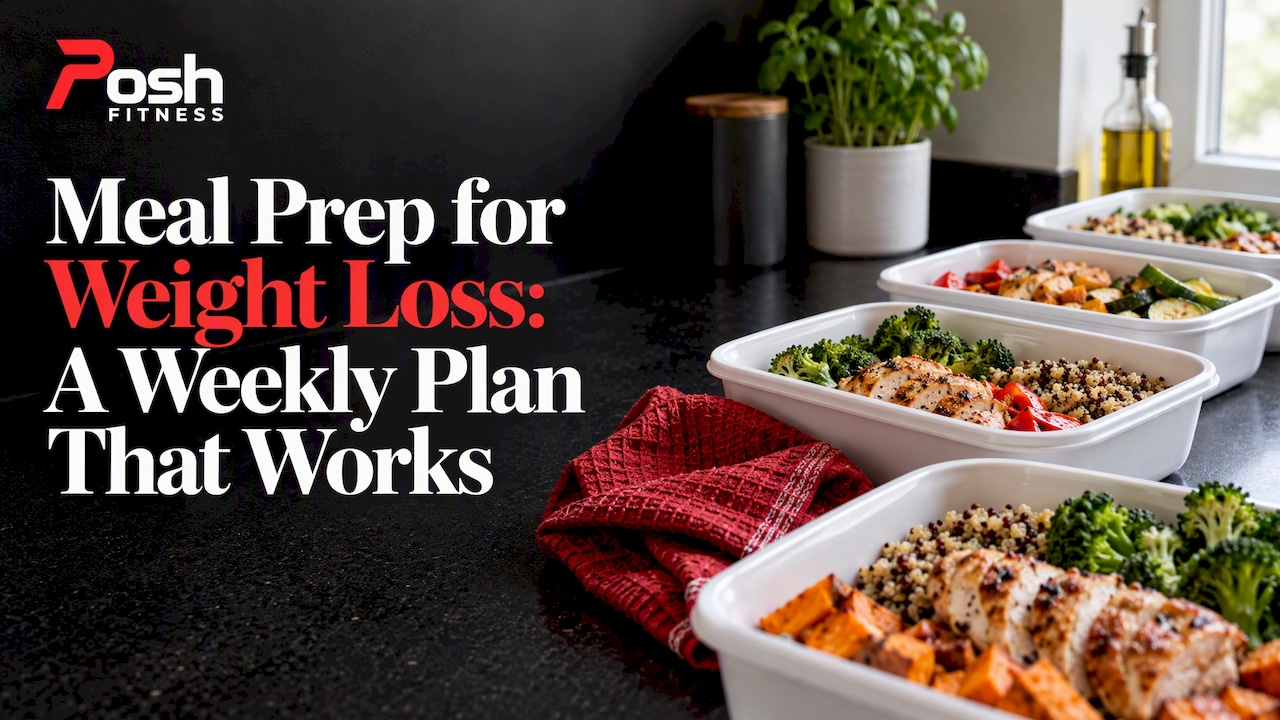

Meal prep helps you lose weight because it takes decisions out of your busiest hours. You cook protein, grains and vegetables once, portion them, and eat according to a plan instead of whatever is closest at 6 p.m. This guide shows you how to set calorie and protein targets, what to cook on prep day, a sample week, how to store food safely, and how to keep the cost down.
Key takeaways
- Meal prep supports fat loss by making a modest calorie deficit easier to hold, not by any special food. A loss of about 1 to 2 pounds a week is the realistic, sustainable range.
- Build every container around protein, fiber and vegetables. Prep the long-cooking staples once and assemble different meals from them.
- Start with three or four prepped meals a week, not all 21. Small wins last longer than a perfect Sunday.
- Refrigerate cooked food within two hours, eat it within three to four days, and reheat to 165°F.
- If a well-run plan stalls, the cause may be biological, such as sleep, hormones or metabolic markers, and testing can show where to look.
Table of Contents
- Why meal prep works for weight loss
- Set your targets before you cook
- The container formula
- How to build a weekly meal prep plan
- A sample week of high-protein meal prep
- Keep prepped food safe
- Make meal prep affordable
- Common mistakes that stall progress
- When a good meal prep plan still stalls
- Our perspective: prep is the how, biology is the why
- How we can help
- FAQ
- Sources
Why meal prep works for weight loss
Weight loss comes down to a sustained calorie deficit, and a deficit is far easier to keep when your meals are already decided. Meal prep can support weight loss by helping you maintain that deficit while leaning on whole, minimally processed foods. It also removes the moments when hunger, fatigue and a drive-through collide.
There are other practical gains. You know what is in each meal, so portions stop being guesses. You spend less time in the kitchen on weeknights. And you stop making ten small food decisions a day, which matters if your energy is already low by late afternoon.
Meal prep is a tool, not a diet. It works with a higher-protein plan, a Mediterranean-style plan or a lower-carb plan. What matters is that the plan fits your preferences, your schedule and your health.
Set your targets before you cook
Before you buy a single container, decide what you are prepping toward. Three numbers matter: calories, protein and fiber.
Calories and pace
The CDC’s lifestyle program materials note that cutting 500 to 1,000 calories a day is associated with losing 1 to 2 pounds a week. The same source advises that you should not go below 1,200 calories a day without medical supervision. Separately, the CDC says that gradual, steady loss of about 1 to 2 pounds a week is more likely to be kept off than faster loss.
That answers a question many people ask: is 2 pounds a week realistic? For some people at the start, yes. For many others, especially in their 40s and beyond, 1 pound a week is a strong result. Be wary of rigid plans under 1,500 calories a day, and work with a healthcare professional to set a range that suits you, particularly if you take medication or have a thyroid, blood sugar or cardiovascular condition.
Protein
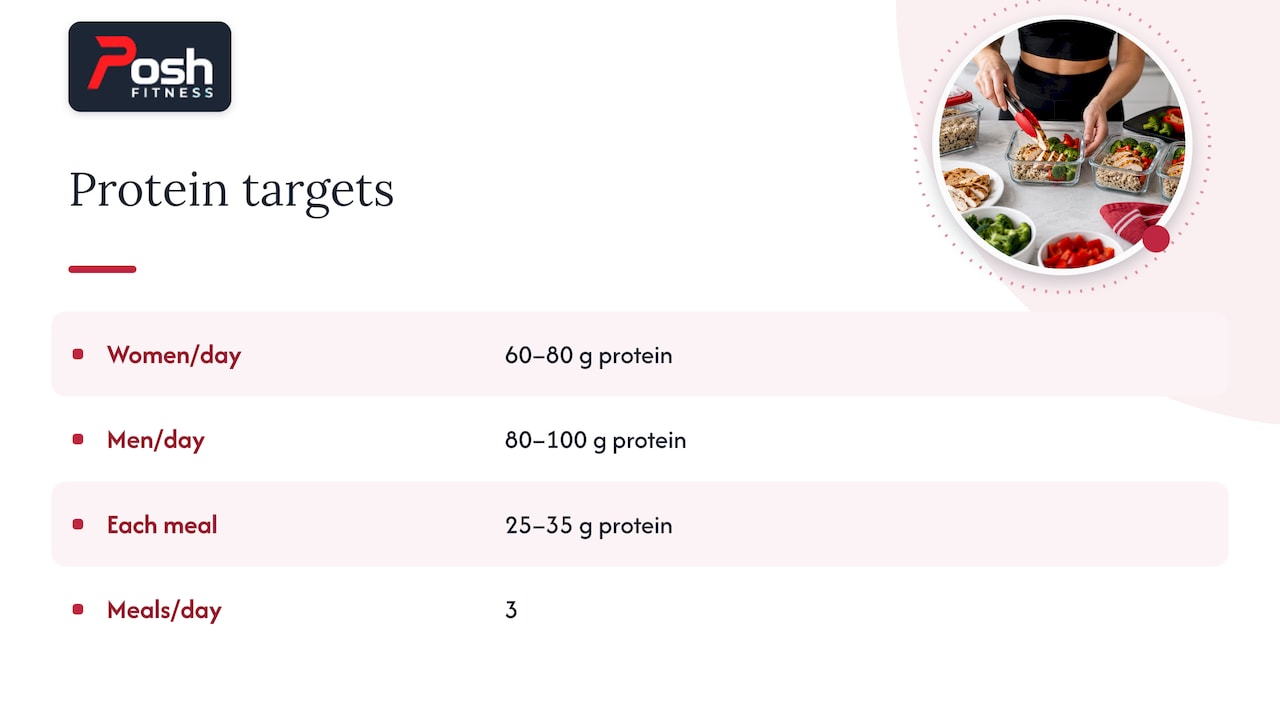
Protein keeps you full and helps protect muscle while you lose fat. Stanford Health Library suggests 60 to 80 grams a day for women and 80 to 100 grams a day for men for weight loss support. Those figures come from a toolkit written for people using GLP-1 medications, so treat them as a reasonable starting range and ask your clinician or dietitian whether your own needs differ, for example with kidney disease.
A simple way to hit the number: aim for 25 to 35 grams of protein in each of three meals, then fill any gap with a snack. Eggs, chicken, fish, Greek yogurt, beans and lentils are all high-protein options that prep well. If you like variety in your snacks, high-protein snack ideas such as roasted chickpeas can help close the gap between meals.
Fiber
Fiber slows digestion and makes meals more satisfying. Stanford recommends 25 to 38 grams a day, increased gradually. Raise it over a couple of weeks, drink more water as you go, and expect your digestion to adjust. Beans, lentils, oats, berries, vegetables and whole grains are the easy prep-day choices.
The container formula
Instead of following recipes to the letter, use a template. Every lunch and dinner container gets four parts:
- Protein (a palm to two palms): chicken, turkey, fish, lean beef, eggs, tofu or beans.
- Vegetables (half the container): roasted broccoli, peppers, zucchini, green beans, spinach or a raw salad base.
- A fiber-rich carbohydrate (a cupped handful): quinoa, brown rice, lentils, sweet potato or whole-grain pasta.
- A small portion of fat and flavor: olive oil, avocado, nuts, or a sauce you measured.
This works because you can swap each part without changing the structure. It also makes it easy to adjust. If you want a lower-carb week, shrink the grain portion and add vegetables. If you are training hard, grow it.
How to build a weekly meal prep plan
The Harvard T.H. Chan School of Public Health suggests you choose one day to plan, shop and prep, then cook proteins such as chicken and fish and grains such as quinoa, and wash greens or chop fruit. Its guidance is to focus on long-cooking staples, such as whole grains, proteins and roasted vegetables, on that day.
Here is a workable sequence for a 90-minute session:
- Plan (10 minutes, before shopping). Pick two proteins, two vegetables, one or two grains and one breakfast. Write the list by grocery aisle.
- Start the slow items. Put sheet pans of chicken thighs or salmon and chopped vegetables in the oven. Start a pot of quinoa or rice.
- Prep the no-cook items. Hard-boil eggs, mix overnight oats, wash and dry greens, portion Greek yogurt with berries.
- Cool and portion. Divide into shallow containers while the food is still warm, then refrigerate (see the storage section below).
- Label. Write the day you cooked it on the lid.
If this sounds like a lot, begin smaller. Beginners can prep just a few meals a week rather than the whole week. Lunches are the best place to begin, since they are the meal most often lost to takeout.
A sample week of high-protein meal prep
This sample uses two proteins, two vegetables and a few staples. Portions are for you to scale to your calorie and protein targets.
| Meal | What to prep | Approx. protein focus |
|---|---|---|
| Breakfast | Overnight oats made with Greek yogurt and berries, or egg and vegetable muffins | Eggs or yogurt |
| Lunch | Chicken and vegetable stir-fry over brown rice, or a tuna or salmon salad | Chicken, fish |
| Dinner | Sheet-pan salmon with roasted broccoli and quinoa, or turkey sausage with zucchini noodles | Fish, turkey |
| Snack | Hard-boiled eggs, Greek yogurt, edamame, chopped vegetables with hummus | Eggs, yogurt, beans |
These are close to the quick meal prep ideas Cleveland Clinic lists, including overnight oats, veggie omelet muffins, salads with tuna or salmon, and chicken and vegetable stir-fry with brown rice. The same page offers entrees such as zoodles with turkey sausage and sun-dried tomatoes.
How the week runs
- Monday to Wednesday: eat the freshest meals, such as the salmon, which is best early in the week.
- Thursday: this is the third or fourth day after cooking. Eat what is left or move portions to the freezer on Monday so they are ready.
- Friday to Sunday: leave room for flexibility. Eat out once, cook one fresh meal, or use a freezer portion. A plan that allows for real life holds up better than one that does not.
A useful habit is to prep in two shorter sessions, one on Sunday and one on Wednesday. Each covers three or four days of food, which solves the freshness problem and keeps variety higher.
Keep prepped food safe
Batch cooking only helps if the food is safe to eat on day four. The USDA-backed FoodSafety.gov guidance is clear on the main points:
- Refrigerate within two hours. Perishable food left out longer can enter the danger zone between 40°F and 140°F.
- Use shallow containers. Small, shallow containers cool leftovers faster than one big pot.
- Eat within three to four days. Leftovers keep three to four days in the refrigerator in covered, shallow containers. Freeze what you will not eat by then.
- Reheat to 165°F. Use a food thermometer. In a microwave, cover the food and rotate it so it heats evenly.
This is why a Sunday-only, seven-day prep is a weaker plan than two sessions. If you are pregnant, older, or immunocompromised, ask your doctor about stricter limits for leftovers.
Make meal prep affordable
Does meal prep save money? Usually, yes, mostly because you waste less food and buy fewer takeout meals. Harvard’s guide recommends you plan meals before shopping and use sales and coupons to stock up on shelf-stable staples.
Some habits that keep a weekly plan inexpensive:
- Buy frozen vegetables and fruit. They are nutritious, last longer and cut waste.
- Shop for seasonal produce, which in Connecticut means squash and apples in the fall and tomatoes and berries in summer.
- Buy dry beans, lentils, oats and rice in bulk.
- Choose cheaper proteins such as eggs, chicken thighs, canned fish and dried legumes.
- Reuse the same ingredients across meals so nothing spoils.
Common mistakes that stall progress
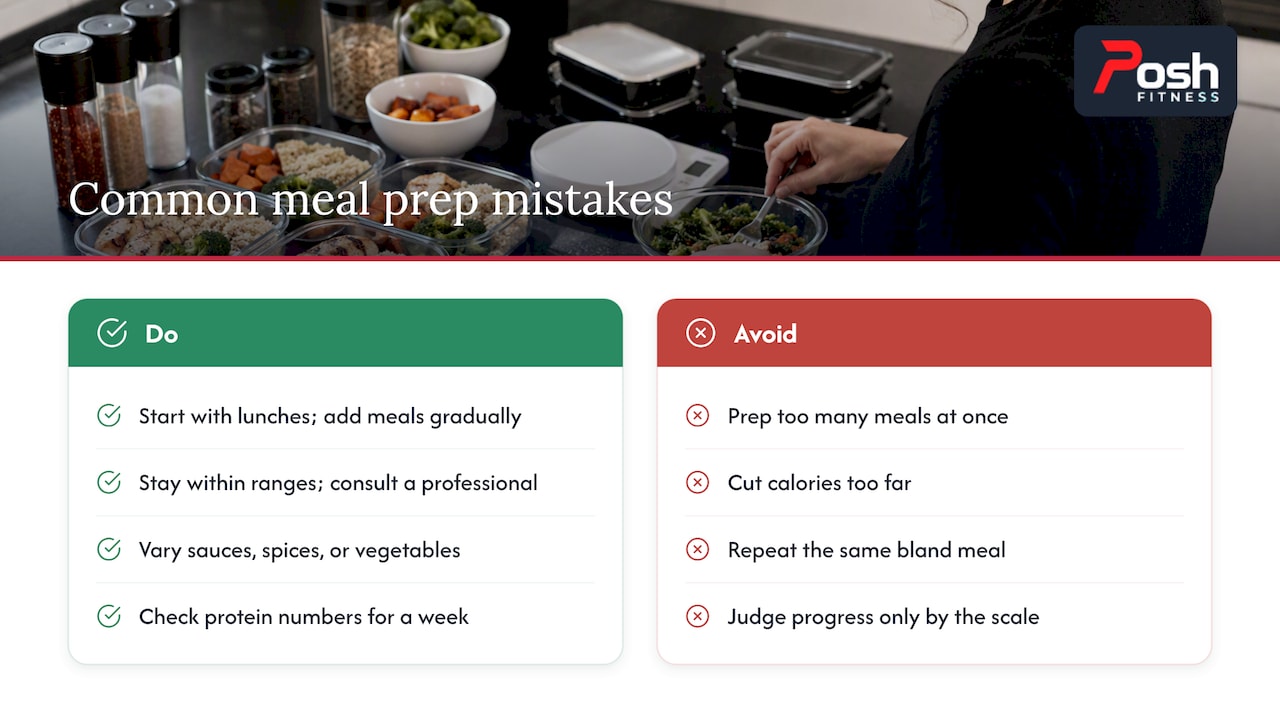
Prepping too many meals at once. Burnout is the main reason people quit. Start with lunches and add.
Cutting calories too far. Very low intake leads to hunger, low energy and muscle loss. Stay inside the ranges above and talk to a professional if you need to go lower.
Eating the same bland meal. Change the sauce, spice or vegetable and the same base becomes a different meal.
Ignoring protein. A container of rice with a little chicken leaves you hungry by 3 p.m. Check your numbers for a week.
Judging only by the scale. Focus on behaviors such as cooking at home and drinking more water, not just the number on the scale. Waist measurements, strength and energy tell you more. Our guide on losing fat while keeping muscle explains why.
Forgetting maintenance. The CDC notes that keeping weight off matters as much as reaching a goal weight, and usually means continuing to monitor food and activity. If you are thinking about the longer term, this GLP-1 weight maintenance plan covers how to keep results after a medical weight loss program.
When a good meal prep plan still stalls
Sometimes you do everything right and the scale will not move. Before you cut more calories, audit the basics: portions, weekend eating, alcohol, sleep and protein. Our post on breaking a weight loss plateau walks through that audit, and how alcohol affects fat loss shows what a few weeks without it can change.
If the basics are solid, the cause may be biological. Thyroid function, blood sugar, hormones and inflammation can all change how you respond to the same food. For women in midlife, perimenopause changes how muscle and fat behave. Understanding which lab markers are worth testing with your physician is often the next step. If you want to know where you stand, our weight loss readiness quiz is a quick place to start.
Our perspective: prep is the how, biology is the why
We coach adults who have usually tried everything: the meal plans, the apps, the early-morning workouts. Many of them can meal prep well. What they lack is a plan built around their own physiology.
A container of chicken, rice and broccoli is a fine meal. But two people can eat it and respond very differently, depending on their metabolic health, hormones, gut function and training history. That is why we use DNA analysis, bloodwork and gut microbiome testing, alongside physical assessments, to shape nutrition and training. The meal prep stays simple. The targets behind it become specific.
We also work as allies to your physician, not replacements. If you have a medical condition or take medication, your food plan should be set with your clinician. Our role is to turn that guidance into a weekly routine you can actually keep, and to adjust it as your numbers change.
If you would like help beyond what any article can offer, start with the basics here. Choose three lunches, set a protein target, and keep your portions steady for two weeks. Then look at what the data says.
— Peter
How we can help
If you live in Fairfield County, CT or Westchester County, NY, we offer personal training and health coaching at your home, at affiliated gyms or virtually. Our plans use DNA, bloodwork and gut microbiome testing to set your nutrition and training targets. We also offer a low-carb meal delivery option for weeks when you do not want to cook.
Options include:
- Online personal fitness plans: a Starter plan at $40 per month and a Truly Personal plan at $99 per month.
- A live virtual training session at $80 one-off.
- Health coaching and 4 week DNA coaching for a personalized nutrition plan.
- The Ultra Membership, five sessions a week, at $2000 per month, on our pricing page.
To see what in-person training near you looks like, visit our Westchester in-home training page or the Fairfield County health coaching page.
FAQ
How many meals should I prep to lose weight?
Start with three to four meals a week, usually lunches, then add as the habit settles. There is no need to prep every meal. A partial plan is easier to sustain and reduces the risk of food going past its safe window.
What is a good simple high-protein meal prep?
Sheet-pan chicken or salmon with roasted vegetables and quinoa, Greek yogurt with berries, hard-boiled eggs, and bean or lentil bowls all prep easily. Aim for roughly 25 to 35 grams of protein per meal, and confirm your daily target with a clinician or dietitian.
How long does meal prep last in the fridge?
Cooked leftovers keep three to four days in covered, shallow containers in the refrigerator. Reheat them to 165°F. If you cook for more than four days, freeze the later portions on the day you prep.
Is it realistic to lose 2 pounds a week?
The CDC describes 1 to 2 pounds a week as a gradual, steady pace more likely to last. For many people, especially in midlife, 1 pound a week is a good result. If you want to lose faster or need fewer than 1,200 calories a day, do it only under medical supervision.
Does meal prep actually save money?
For most people it does, as long as you plan before you shop and use up what you buy. Frozen produce, seasonal vegetables, eggs, beans and bulk grains keep the weekly cost down.
Sources
- The Ultimate Guide to Meal Prepping for Weight Loss, Healthline
- Group Lifestyle Balance Program, CDC
- Steps for Losing Weight, CDC
- GLP-1 Nutrition Toolkit: Protein, Fiber & Hydration, Stanford Health Library
- Meal Prep Guide, The Nutrition Source, Harvard T.H. Chan School of Public Health
- Meal Prep Ideas for Breakfast, Lunch and Dinner, Cleveland Clinic
- Leftovers: The Gift that Keeps on Giving, FoodSafety.gov
- Thanksgiving Leftovers for Safe Keeping, FoodSafety.gov
- How to Start a Beginner-Friendly Weight Loss Program with Meal Planning
One thought on “Meal Prep for Weight Loss: A Weekly Plan That Works”