

The lab markers most useful for weight loss are a comprehensive metabolic panel (CMP), HbA1c or fasting glucose, a lipid panel and thyroid-stimulating hormone (TSH). A complete blood count (CBC), vitamin D, high-sensitivity C-reactive protein (hs-CRP) and, in some cases, fasting insulin add context. Together they won’t tell you how to lose weight. They show where you are starting, which health risks to watch, and whether something medical is working against you.
This guide covers each marker, what a result can and can’t tell you, and how we use bloodwork at Posh Fitness to shape training and nutrition for adults in Fairfield County, CT and beyond.
Key takeaways
- There is no universally accepted “weight loss panel.” A 2026 primary care study found that no single test was more likely to be abnormal in patients with recognized weight loss, so a short, targeted list beats a giant one.
- A sensible baseline is CMP, HbA1c or fasting glucose, lipids and TSH. Vitamin D, CBC, hs-CRP and fasting insulin are useful add-ons when your history points to them.
- Labs set a baseline and track risk. They are not a verdict on your effort, and some values, such as liver enzymes, can shift during rapid weight loss.
- Unintentional weight loss is a different problem. It needs a clinician’s evaluation, not a do-it-yourself panel.
Table of Contents
- What lab markers can and can’t do for weight loss
- The core markers most clinicians start with
- Insulin resistance labs: what a normal glucose can miss
- Thyroid markers: when TSH is worth checking
- Add-on markers: vitamin D, CBC, inflammation and liver enzymes
- Blood tests for fitness and athletic performance
- GLP-1 medications and bloodwork
- When weight loss is the problem: unintentional loss
- How to use your results without overreacting
- Our perspective: labs are where personalization starts
- Turn your lab results into a plan
- FAQ
- Sources
What lab markers can and can’t do for weight loss
Bloodwork answers three practical questions. Is a medical issue, such as thyroid dysfunction or prediabetes, making fat loss harder? Which health risks, such as blood sugar or cholesterol, should improve as you lose weight? And what is your baseline, so you can see change over months rather than guess?
What bloodwork cannot do is diagnose “a slow metabolism” or tell you which diet will work. Clinicians who work with metabolic testing caution that tests are often treated as solutions when they are really status indicators. The goal is a physiological baseline and monitoring of related conditions, not chasing numbers that move naturally during active weight loss.
That matches what we see. Someone arrives frustrated that fat loss has stalled. The labs often reveal a handful of modifiable factors (fasting glucose creeping up, low vitamin D, a borderline TSH), and those change what we do in the gym and the kitchen. They rarely reveal a single secret cause.
The core markers most clinicians start with
The first group is the one you will see on most baseline profiles. Labcorp’s weight management profiles, for example, combine a CMP, HbA1c, lipids and TSH.
| Marker | What it shows | Why it matters for weight loss |
|---|---|---|
| CMP | Glucose, kidney and liver function, electrolytes | Safety baseline before changing diet or training load |
| HbA1c | Average blood sugar over roughly 2 to 3 months | Screens for prediabetes and diabetes |
| Fasting glucose | Blood sugar after an overnight fast | Complements HbA1c |
| Lipid panel | Total cholesterol, HDL, LDL, triglycerides | Cardiovascular risk, which often improves with weight loss |
| TSH | Thyroid signaling | Rules out thyroid dysfunction as a contributor |
Blood sugar: HbA1c and fasting glucose
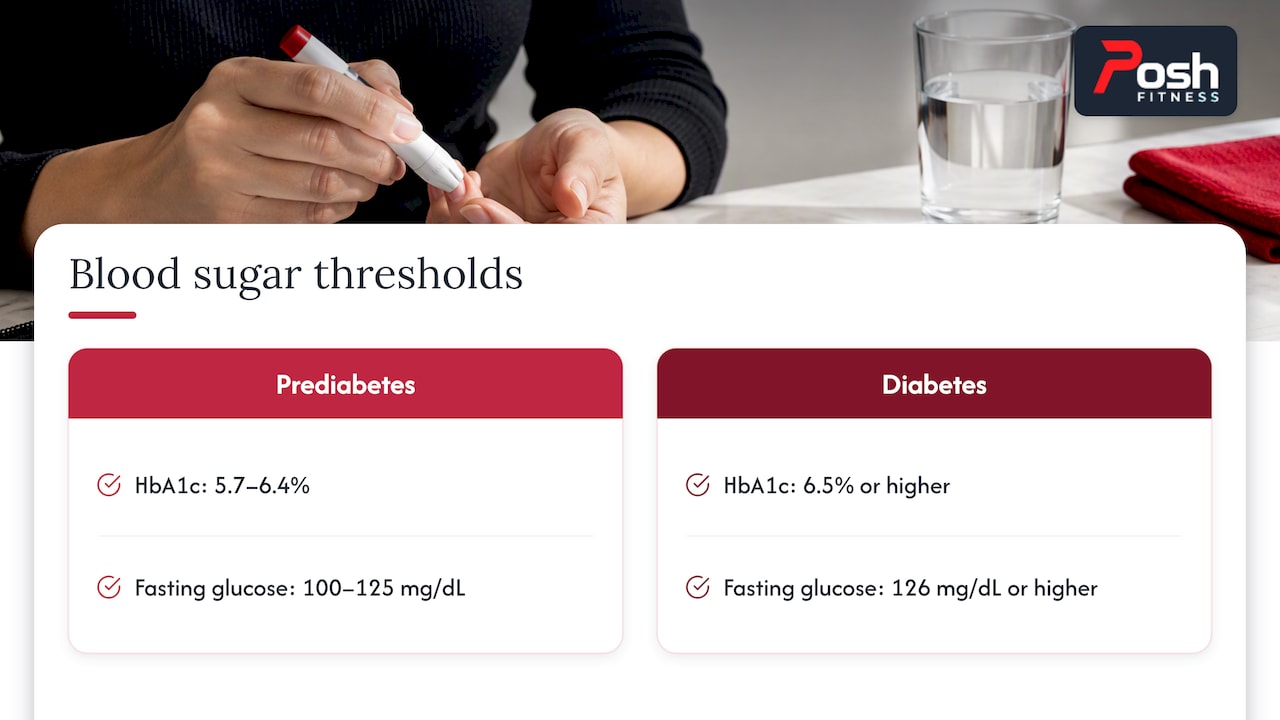
The same Labcorp page lists the standard cutoffs. Prediabetes is an HbA1c of 5.7 to 6.4% or a fasting glucose of 100 to 125 mg/dL. Type 2 diabetes starts at an HbA1c of 6.5% or higher, or a fasting glucose of 126 mg/dL or higher.
The U.S. Preventive Services Task Force recommends screening for prediabetes and type 2 diabetes in adults aged 35 to 70 who have overweight or obesity (BMI of 25 or higher). If that describes you and you haven’t been screened recently, this is the first test to ask your primary care clinician about.
Lipids
A lipid panel reports total cholesterol, HDL, LDL and triglycerides. Triglycerides and HDL tend to respond well to training, better sleep and lower refined carbohydrate intake. This is one of the clearest places where you can see lifestyle changes show up on paper within a few months.
Comprehensive metabolic panel
The CMP covers 21 markers across liver, kidney and electrolyte function. For us it is also a safety check. Before we raise training intensity or change protein intake, we want to know that kidney and liver values are in a reasonable range.
Insulin resistance labs: what a normal glucose can miss
This is the most-searched topic in this area, and the most misunderstood. According to Medscape’s clinical workup summary, no single laboratory test is used to diagnose insulin resistance. Diagnosis rests on clinical findings corroborated by labs.
Why glucose alone can mislead: if your pancreas is compensating by producing extra insulin, your blood glucose can look normal for years. The problem hides in the insulin level.
That is why some practitioners add fasting insulin. A calculation called HOMA-IR, derived from fasting glucose and fasting insulin, is common in research to estimate insulin sensitivity. It is generally not used in standard clinical practice to diagnose insulin resistance, so treat it as a clue rather than a diagnosis.
Here is how we think about the pattern:
- Fasting glucose and HbA1c tell you whether blood sugar has already moved out of range.
- Fasting insulin can hint at earlier strain when glucose still looks normal.
- Triglycerides and HDL often shift alongside insulin resistance, so the lipid panel adds context.
- Waist circumference, blood pressure and your history (family diabetes, PCOS, fatty liver) complete the picture.
If these point toward insulin resistance, the lifestyle response is well established: resistance training, daily walking, adequate protein and fewer ultra-processed carbohydrates. We cover the eating side in our guide to a metabolic flexibility diet.
Thyroid markers: when TSH is worth checking
TSH is the standard first screen for thyroid dysfunction, and it is on nearly every baseline profile. An underactive thyroid can bring fatigue, cold intolerance, constipation and weight gain. If you have those symptoms, don’t wait for a gym coach to notice. Ask your primary care clinician or an endocrinologist to review TSH and decide whether further thyroid testing is needed.
If thyroid disease is confirmed, exercise is still possible and useful. Our post on hypothyroid workouts explains how to start with 20 minutes and build gradually. For food planning around a thyroid diagnosis, this 7-day thyroid-friendly meal planning guide is a practical starting point to discuss with your clinician or dietitian.
Add-on markers: vitamin D, CBC, inflammation and liver enzymes
These tests are common in personalized assessments, according to Labcorp, to identify systemic gaps that a core panel can miss.
- CBC. Flags anemia, which can masquerade as poor training capacity and low energy. If you feel flat during workouts, this matters.
- Vitamin D. Low levels are common and easy to address with your clinician’s guidance. It is worth knowing before you attribute everything to willpower.
- hs-CRP. A general inflammation marker. Persistently high values call for a conversation with your clinician, not a supplement.
- ALT and AST. Liver enzymes. They can rise temporarily during rapid weight loss because of metabolic shifts, which is why metabolic experts warn against reading them without context.
If you feel tired all the time, a CBC, TSH, glucose markers and vitamin D cover the most common and treatable contributors. Sleep, stress, depression and medication effects matter too, and a clinician is the right person to sort through them.
Blood tests for fitness and athletic performance
Many people who ask about bloodwork for fitness aren’t trying to lose weight. They want to train harder and recover better. The same short list applies: CBC and iron-related markers for oxygen delivery, TSH, vitamin D, glucose and lipids, and a CMP for kidney and liver function. More exotic panels rarely change what a coach does.
The useful question is: will this result change my plan? If it won’t, skip it. If low iron or poor glucose control would change your training load, your food or your referral, it is worth testing.
GLP-1 medications and bloodwork
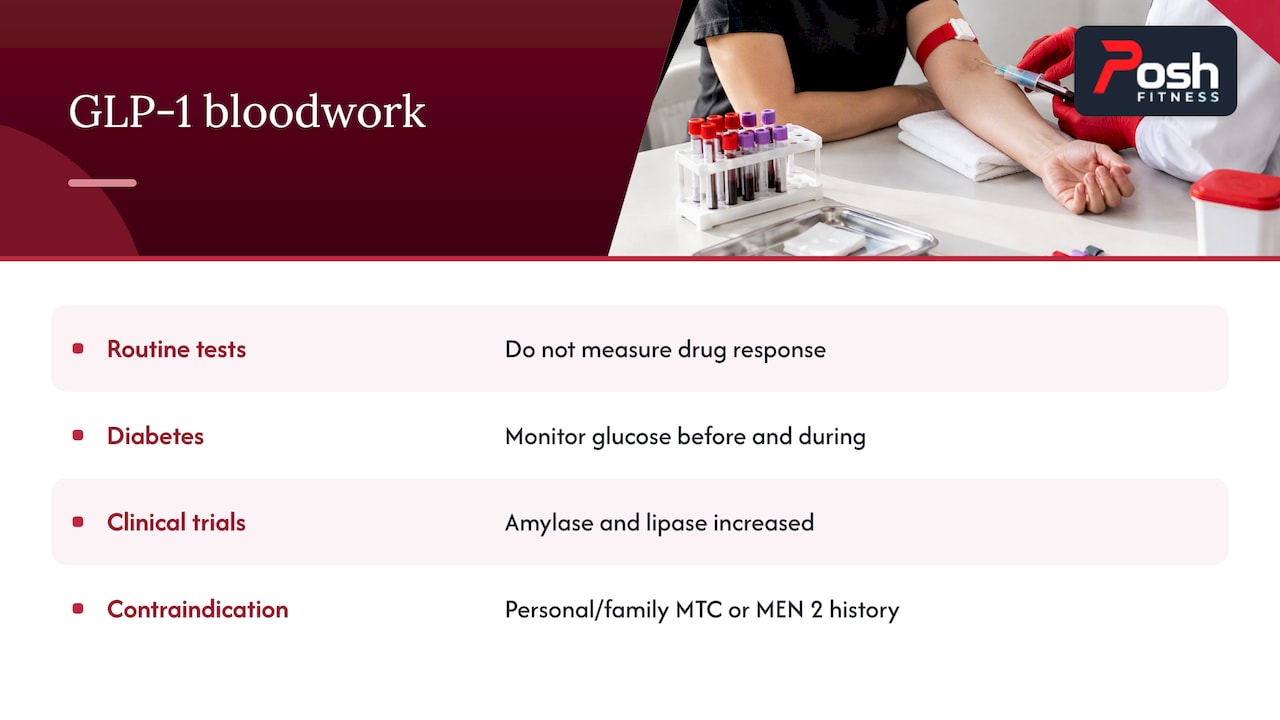
A common question is whether GLP-1 drugs such as semaglutide or tirzepatide show up in bloodwork. Routine diagnostic blood tests are not used to measure whether these drugs are working. Per the FDA label for Wegovy, people with diabetes need blood glucose monitoring before and during treatment. The label also notes increases in amylase and lipase in clinical trials, and these medications are contraindicated with a personal or family history of medullary thyroid carcinoma or MEN 2.
If you take one of these medications, your prescriber decides which labs you need. What we add is protection of lean mass through resistance training and protein-forward nutrition, since the drug does not know whether the weight you lose is fat or muscle. Our comparison of body recomposition vs. weight loss shows how to aim for 1 to 2 pounds per week while keeping muscle.
When weight loss is the problem: unintentional loss
Everything above assumes you are trying to lose weight. If you are losing weight without trying, stop treating this as a fitness question. Unintentional weight loss needs a directed medical evaluation. For older adults, baseline workups typically include a CBC, basic metabolic panel, liver tests, thyroid tests, CRP, ESR and urinalysis, often alongside age-appropriate cancer screening, as described in a review of how clinicians approach weight loss in adults.
That review also cautions against “cancer marker” blood tests for this purpose, since they have low specificity and produce false positives. Recognition is a real gap: a 2023 primary care study found that physicians recognized only 21% of unintentional weight loss cases. Weigh yourself weekly, write the numbers down, and bring them to your primary care clinician.
How to use your results without overreacting
- Test once for a baseline, then retest on a schedule. Three to six months is a reasonable interval to see change from lifestyle work. Weekly retesting just produces noise.
- Look at trends, not single values. Weight trends are generally more actionable than any single lab result.
- Bring the full report to a clinician. Reference ranges differ by lab, and your history changes how a number should be read.
- Match the intervention to the finding. Rising glucose points to strength training, walking and carbohydrate quality. Low vitamin D or anemia points to a medical conversation first.
- Avoid panel shopping. The Obesity Medicine Association’s clinical practice statement frames lab assessment as part of a broader evaluation of history, physical exam and body composition. Labs are one input.
If your weight has plateaued despite consistent effort, audit your habits before ordering more tests. Our guide to breaking a weight loss plateau walks through that audit, and the perimenopause weight loss plan addresses the hormonal shifts many women face in midlife.
Our perspective: labs are where personalization starts
Most fitness plans assume that two people with the same goal should do the same thing. Bloodwork is one of the quickest ways to show that they shouldn’t. At Posh Fitness we combine bloodwork with DNA analysis, gut microbiome testing and physical assessments, then build training and nutrition around the result.
We are careful about what labs mean. We are coaches, not your physician. We do not diagnose, and we don’t promise that a number will move by a certain date. What we do is translate your results into a plan you can follow: how many strength sessions, how much protein, where walking fits, what to change first. When a result looks outside the typical range, we send you back to your clinician and work alongside them.
The clients who get the most from testing are usually middle-aged adults who did everything “right” and stopped seeing results. A baseline gives them something better than another guess. Pair it with consistent resistance training and you have a measurable path. For more on timeline expectations, see our piece on resetting your metabolism with four weeks of habits, and on how markers can shift over months, our look at lowering biological age.
— Peter
Turn your lab results into a plan
If you live in Fairfield County, CT or Westchester County, NY, we can train you in your home, at an affiliated gym or virtually. Our longevity coaching uses DNA and bloodwork to guide training and nutrition, and our 4 Week DNA Coaching is a shorter way to start. You can also test a gut-health angle through our microbiome testing and coaching.
Prefer to start online? Our online personal fitness plans start at $40 per month for the Starter plan, with the Truly Personal Plan at $99 per month. A live virtual training session is $80. Full details on membership options are on our pricing page.
FAQ
What lab tests are recommended for weight loss?
Most clinicians start with a CMP, HbA1c or fasting glucose, a lipid panel and TSH. A CBC, vitamin D, hs-CRP and fasting insulin are common add-ons depending on your symptoms and history. No guideline defines one standard weight loss panel, so ask your clinician which tests fit you.
Can blood tests show why I can’t lose weight?
Sometimes they point to a contributor, such as prediabetes, an underactive thyroid or anemia. More often they show a baseline and a few modifiable risks. A normal result doesn’t mean your effort is wasted, and an abnormal one is a reason to talk to your clinician, not to panic.
Do GLP-1 medications show up in bloodwork?
Routine blood tests are not used to confirm that these drugs are working. Your prescriber may monitor blood glucose, especially if you have diabetes, and other labs as they see fit. Ask the prescribing clinician which monitoring applies to you.
Which labs should I get if I’m exhausted all the time?
A CBC, TSH, glucose markers (HbA1c or fasting glucose) and vitamin D cover common, treatable contributors. Fatigue also has causes that labs miss, including poor sleep, stress, mood and medications. See your primary care clinician if it persists.
How often should I repeat bloodwork while losing weight?
For most people, a baseline and a recheck after three to six months of consistent habits is enough. Markers like liver enzymes can move temporarily during rapid weight loss, so frequent retesting can create confusion rather than clarity.
Sources
- Labcorp: weight management lab profiles and glucose thresholds
- PubMed: 2026 primary care study on laboratory testing in weight loss
- Medscape: insulin resistance workup
- USPSTF: screening for prediabetes and type 2 diabetes
- FDA: Wegovy prescribing label
- Ulta Lab Tests: weight management testing overview
- PMC: approach to weight loss in adults
- PMC: recognition and diagnostic practices in unintentional weight loss
- PMC: Obesity Medicine Association clinical practice statement