

Functional medicine weight loss means looking beyond calories to the factors that shape how your body stores and burns fat: sleep, stress, hormones, gut health, medications and muscle. That wider lens is useful. The evidence is clear on one thing, though: no test replaces a structured plan of nutrition, strength training and consistent habits. The best results come when lab data, a licensed clinician where needed, and hands-on coaching work together. That is where we fit.
Key takeaways
- Functional medicine is a root-cause, personalized approach to care. For weight, its most useful contribution is a thorough look at sleep, stress, medications, hormones and lifestyle.
- The strongest evidence for weight loss still favors intensive, multicomponent behavioral programs: dietary change, physical activity and regular follow-up.
- DNA and microbiome tests can inform a plan, but current evidence does not support using them alone to dictate a diet. Interpret them with a qualified professional.
- Strength training protects muscle, which matters more as you move through your 40s, 50s and beyond.
- If you live in Fairfield County, CT or Westchester County, NY, we can build the training and nutrition side in your home, at an affiliated gym or virtually.
Table of Contents
- What functional medicine weight loss actually means
- What the evidence says about losing weight
- Where personalization helps, and where it is oversold
- The hidden drivers: sleep, stress and medications
- Strength training is the part most plans skip
- Plateaus: where most programs fail
- Our perspective
- What a biology-informed program looks like with us
- Getting started in Fairfield County and Westchester
- FAQ
- Sources
What functional medicine weight loss actually means
The Institute for Functional Medicine describes the field as a personalized approach that asks detailed questions about your history and life to find the root causes of dysfunction. Applied to weight, practitioners typically review:
- Sleep and stress, including how they affect appetite and food choices
- Hormones, such as thyroid function and, for many women, the changes of perimenopause
- Gut health, including diet quality and, in some cases, microbiome testing
- Medications that can influence hunger or energy use
- Nutrient status and metabolic markers from bloodwork
- Movement habits and how much muscle you carry
This is a reasonable checklist. Many people who say “I eat well and train, and nothing moves” have never had anyone examine more than two of those items.
It is also worth being plain about the limits. Functional medicine is practiced by licensed clinicians, such as physicians and nurse practitioners, who can diagnose and prescribe. A fitness and health coaching company does not diagnose or treat disease. We build and coach the training, nutrition and lifestyle plan, and we work alongside your medical providers.
What the evidence says about losing weight
Before spending money on testing, it helps to know what has the strongest research behind it.
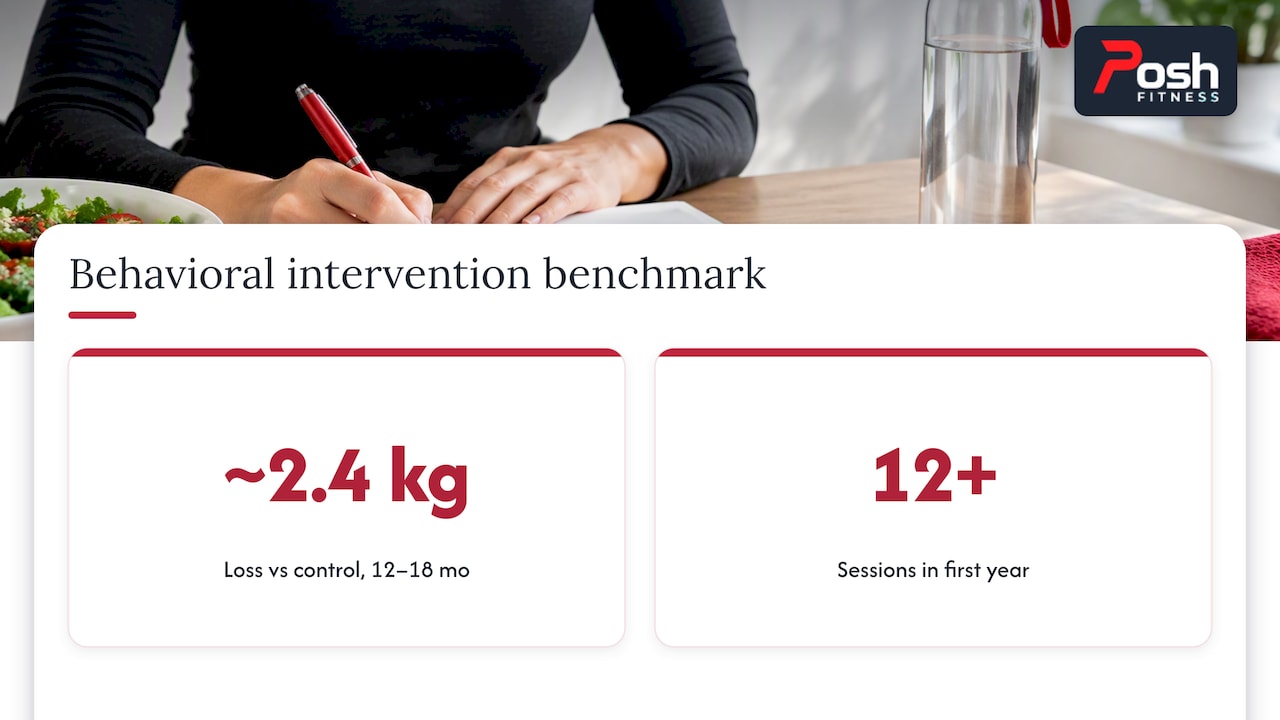
The U.S. Preventive Services Task Force recommends intensive, multicomponent behavioral interventions for adults with obesity, combining dietary change with physical activity. In its evidence review, participants in these programs lost about 2.4 kg (5.3 lb) more than control groups at 12 to 18 months. That is a modest average, and it is worth knowing. It also shows why follow-up, self-monitoring and problem-solving matter: the programs that worked best involved 12 or more sessions in the first year.
The National Institute of Diabetes and Digestive and Kidney Diseases (NIDDK) frames weight management as a long-term effort rather than a quick fix. Healthy eating and regular activity come first, and for some people medical support is part of the picture. The CDC likewise describes healthy weight loss as eating patterns, activity, enough sleep and stress management working together.
In other words, the “functional” part of the plan is only as good as the behaviors it helps you sustain.
Where personalization helps, and where it is oversold
Personalized nutrition is promising but unfinished science. A recent review of personalized nutrition trials in cardiometabolic health found that results vary and no standard framework exists for how to apply it. One plausible reason people do well on personalized programs is simpler than the test itself: they get structure, accountability and a plan that fits their life.
That is a point in favor of personalization, not against it. A plan you follow beats a perfect plan you abandon.
DNA tests
The FDA cautions that direct-to-consumer genetic tests should not be the sole basis for dietary or treatment decisions. Genetic risk is one factor among many, and the agency suggests discussing results with a genetic counselor or qualified healthcare professional. We take that seriously. In our work, DNA data is one input that helps us choose between reasonable options, for example how to emphasize certain foods or how to pace training. It is never a verdict.
Gut microbiome tests
Research on the gut microbiome and body weight is active. A 2026 review traces how the field has moved from early mouse studies to questions about dietary, surgical and drug interventions in obesity care. Still, a 2021 review of microbiota and body weight control shows that managing weight remains an unsolved clinical problem, and microbiome results are not a standalone blueprint for fat loss. We treat them as a way to refine food choices, not to promise outcomes.
Bloodwork
Bloodwork is the most practical of the three. It can flag issues your clinician should look at, such as thyroid or blood sugar markers, and it gives you a baseline to compare against. If something looks off, that conversation belongs with your physician, and we adjust training and nutrition around their guidance.
The hidden drivers: sleep, stress and medications
Many people arrive expecting a test to explain everything. More often, the barriers are less glamorous.
NIDDK points to medicines that can affect energy balance, including some used for epilepsy, depression or psychosis, along with sleep and stress as factors that shape weight. If you take any of these, do not change a dose on your own. Raise it with the prescribing doctor.
Sleep deserves its own mention. Short or broken sleep affects hunger and cravings, and it makes it harder to train consistently. This overview of how sleep affects weight loss is a good place to read more about the science. A practical starting point is a fixed wake time and a wind-down routine for two weeks, which we cover in our post on testing a simple morning routine.
If you feel unusually tired after workouts, check our recovery checklist and four red flags before pushing harder. Persistent fatigue is also a good reason to talk with your doctor.
Strength training is the part most plans skip
When the scale drops, you want the loss to come from fat, not muscle. That matters most in midlife, when muscle is harder to hold on to.
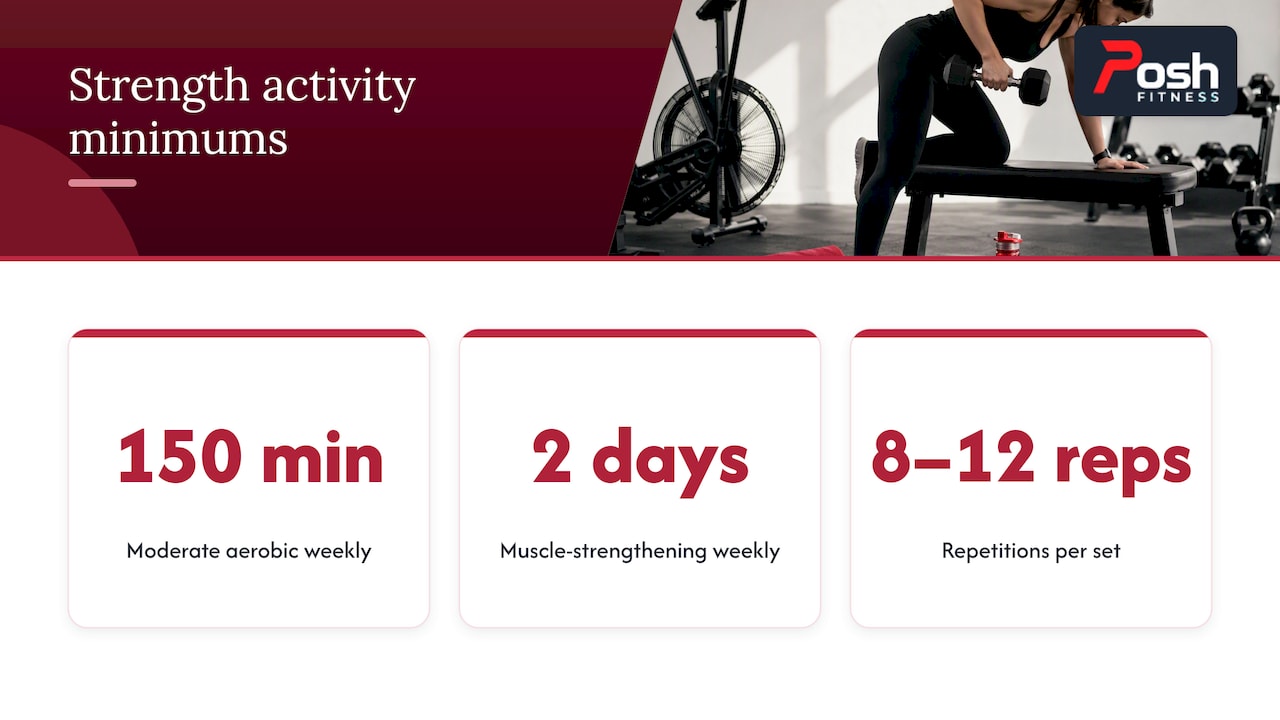
The CDC recommends adults get at least 150 minutes of moderate aerobic activity weekly plus two days of muscle-strengthening work, taken to the point where another repetition is hard, typically 8 to 12 repetitions per set. Those are minimums. People trying to change body composition usually benefit from more structure than that, including progression, which is hard to build alone.
If you use a GLP-1 medication under a physician’s care, muscle preservation is even more relevant. This guide to strength training on GLP-1 medication lays out one weekly volume target and the reasoning behind it. Your prescriber should guide the medication itself. We build the resistance training and protein-forward nutrition around it.
For a deeper look at the trade-off between losing weight and changing composition, read our post on body recomposition versus weight loss.
Plateaus: where most programs fail
The first weeks are usually the easy part. The harder phase is the plateau, when metabolism, stress and accumulated habits push against you. NIDDK’s guidance on long-term management supports a shift from short diet sprints to a maintenance mindset that handles stress, sleep and activity consistently.
When progress stalls, audit before you cut calories further:
- Track protein, steps and sleep honestly for one week.
- Check training progression: are you lifting more than you did a month ago?
- Review stress, alcohol and medication changes.
- Ask your doctor whether labs are due.
Our plateau audit walks through this in detail, and our piece on resetting your metabolism with four weeks of habits shows what a realistic reset looks like.
Our perspective
We came to this work because standard programs fail a particular kind of client: the 45-year-old who used to respond quickly to training and now does not. Telling that person to eat less and run more rarely helps.
Our approach combines diagnostics with coaching. We use DNA analysis, bloodwork and, when it is useful, gut microbiome testing through partnered labs, then pair the results with physical assessments and a plan built on resistance training, protein-forward nutrition and recovery. Our trainers are scientifically credentialed, and we say so because the details of programming matter.
We are equally clear about what we do not do. We do not diagnose, and we do not treat a test result as destiny. If bloodwork suggests something your doctor should see, we send you there and adapt the plan to their direction. The most valuable result of testing is often not the data. It is that you finally have a specific, individual plan and someone holding you to it.
That is how we define “resetting biology”: consistent sleep, managed stress, progressive strength work and food that fits you, repeated until your energy returns.
— Peter
What a biology-informed program looks like with us
We offer several entry points, depending on how much support you want.
| Option | What it is | Price |
|---|---|---|
| Online Personal Fitness Plan Starter | App-based personal plan | $40 per month |
| Truly Personal Plan | Individualized online plan | $99 per month |
| Truly Personal Fitness Plan | Annual version of the personal plan | $1,000 per year |
| Live Virtual Training Session | One live session with a trainer | $80 one-off |
| Ultra Membership 5 a Week | Five sessions weekly | $2,000 per month |
Other services, including 4 Week DNA Coaching, Longevity Coaching and the 16 Week Premium Coaching Plan, health coaching and in-home personal training, are priced after a conversation about your goals. You can compare the online tiers on our online personal training page or see the live virtual session options.
Getting started in Fairfield County and Westchester
If you want training in person, we come to you. We serve Fairfield County, CT and Westchester County, NY with in-home sessions, and we also work at affiliated gyms or virtually. A sensible first step looks like this:
- Share your history. Medications, past results, injuries, sleep and stress.
- Decide on testing. DNA, bloodwork or microbiome testing are options, not requirements. See our pages on DNA testing for fitness and nutrition and microbiome testing and coaching.
- Loop in your clinician. Share results and plans, especially if you have a diagnosed condition.
- Train and adjust. Expect a progressive strength plan, a nutrition target and regular check-ins.
When you are ready, book personal training or view our pricing page. Questions about logistics are answered in our FAQ.
FAQ
Can a functional medicine doctor help you lose weight?
A functional medicine clinician can review hormones, medications, labs and lifestyle for factors that make weight loss harder, and can prescribe or refer when appropriate. The core of weight loss still rests on nutrition, activity, sleep and follow-up. Many people pair a clinician with a coach for the daily work.
Do DNA and microbiome tests improve weight loss results?
The evidence does not support using them alone to choose a diet. They can help refine a plan, and the FDA advises discussing genetic results with a qualified healthcare professional. The structure and accountability of a personalized plan may matter as much as the test.
How can I mimic Ozempic naturally?
No food or supplement reproduces a prescription medication. What you can do is support appetite control with protein at each meal, fiber-rich foods, regular strength training and adequate sleep. If you are considering medication, ask your physician, and see the NIDDK page on prescription weight loss medications.
How long does it take to see results?
It varies. Behavioral programs in the USPSTF review measured results at 12 to 18 months, and the average difference was modest. A realistic aim is steady progress in strength, energy and measurements over the first 12 weeks, with weight following more gradually.
Sources
- Institute for Functional Medicine
- USPSTF recommendation on behavioral interventions for adults with obesity
- USPSTF evidence summary
- NIDDK: Prescription medications to treat overweight and obesity
- NIDDK: Factors affecting weight and health
- CDC: Steps for losing weight
- CDC: What counts as physical activity for adults
- FDA: Direct-to-consumer tests
- Personalized nutrition and cardiometabolic health review (PubMed)
- Gut microbiome and obesity care (PMC, 2026)
- Microbiota and body weight control (PMC, 2021)